
 Anil Patel
Fuel delivery businesses are operating on thinner margins than ever. Today, losses rarely come from selling less fuel; they come from data gaps. A mismatch between gallons delivered, prices applied, or invoices generated can quietly eat into profits and create compliance risks.
This is why fuel delivery ERP integration has become essential. It connects the operational side of the business, POS systems, driver apps, and cardlock terminals, with the ERP systems that manage pricing, inventory, finance, and credit. Without this connection, teams rely on manual exports, spreadsheets, and delayed updates. With real-time POS ERP integration, every transaction flows instantly into the back office, improving accuracy and decision-making.
The fuel industry is also moving away from rigid, legacy POS setups toward cloud-based platforms built for API-driven integration with ERP systems. This shift enables real-time pricing updates, automated credit checks, and tighter control over inventory and compliance.
This guide is written for fuel jobbers, retail station owners, and fleet operators who want to replace manual processes with connected, real-time workflows. We’ll explore how POS software integration, automated tank gauge (ATG) connectivity, and live data synchronization help fuel businesses protect margins, reduce risk, and scale operations with confidence.
What Is Fuel Delivery ERP Integration?
Fuel delivery ERP integration refers to the seamless connection between operational fuel systems and enterprise back-office platforms, enabling real-time data flow across sales, inventory, finance, and compliance. Unlike basic software connections, this integration is designed to handle the complexity, volume, and regulatory requirements unique to fuel operations.
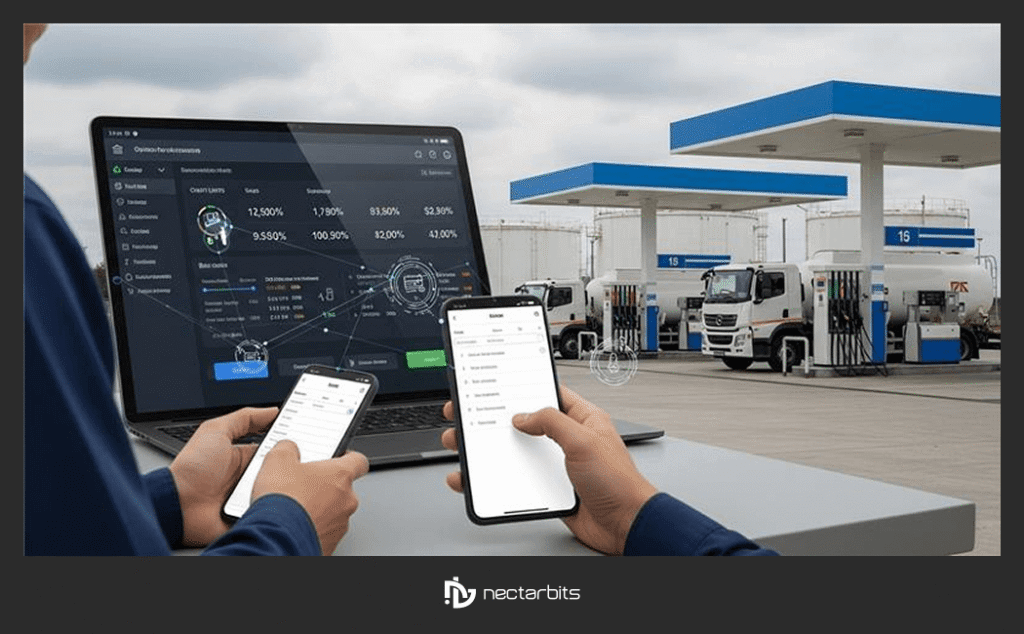
1 The Fuel Technology Ecosystem: The “Holy Trinity.”
At the core of every modern fuel business is a three-part technology ecosystem.
POS (Point of Sale) systems operate at the transaction level. These include forecourt controllers at retail stations, mobile driver apps used for bulk or fleet deliveries, and cardlock or unattended terminals that authorize fueling. Modern fuel delivery app development focuses on creating these mobile solutions that capture when, where, and how much fuel is delivered.
ERP (Enterprise Resource Planning) systems act as the financial and operational brain of the business. They manage general ledger and invoicing, procurement and supplier pricing, customer credit limits, and accounts receivable and payable. Without ERP integration, these processes rely heavily on delayed or manual inputs.
Between these systems sits the middleware or integration layer. This layer uses APIs or secure connectors to synchronize data reliably, ensuring that sales, pricing, inventory, and financial records remain consistent across platforms. Effective POS ERP integration depends heavily on this layer working in real time.
2 Why Fuel POS Integration Is Different from Retail
Fuel delivery is far more complex than traditional retail POS integration. Transactions are based on volumetric data, gallons or liters, often requiring temperature correction before financial posting. Fuel businesses must also account for multiple layers of excise taxes, VAT, and environmental levies, which vary by location. Compliance logic frequently depends on where the fuel is delivered, not just where it is sold.
3 How Fuel Delivery ERP Integration Works (High-Level)
Modern fuel platforms rely on REST or SOAP APIs to enable real-time synchronization between POS and ERP systems. Legacy environments may still use flat-file or batch uploads, which introduce delays and reconciliation risks. Event-based integrations trigger updates instantly, while scheduled syncs process data at defined intervals, depending on operational needs.
Business-Critical Benefits of POS & ERP Integration in Fuel Delivery
For fuel delivery businesses, integrating POS and ERP systems is not a technology upgrade—it is a strategic necessity. When fuel delivery ERP integration is implemented correctly, it eliminates revenue leakage, strengthens compliance, and creates a single source of truth across operations.
1 Real-Time Credit Limit Enforcement
One of the most valuable outcomes of POS ERP integration is real-time credit control. In B2B fuel delivery, customers often operate on credit terms. Without integration, drivers or unattended terminals may continue authorizing fuel even when a customer has exceeded their credit limit.
With ERP-driven credit logic connected directly to the POS or driver app, authorization decisions happen instantly. If an account is on hold or over its limit, the fueling transaction is automatically blocked before delivery occurs. This proactive control prevents bad debt, reduces disputes, and protects cash flow, especially for high-volume fleet accounts.
2. Dynamic Fuel Pricing Synchronization
Fuel prices change frequently, sometimes multiple times a day. When pricing updates are handled manually, delays can result in under-billing or margin erosion. Through real-time ERP system integration, rack price changes and contract pricing updates are pushed instantly from the ERP to POS systems and mobile delivery apps.
This ensures every gallon is sold at the correct price, even during volatile market conditions. For fuel jobbers and multi-location operators, dynamic pricing synchronization is essential for maintaining consistent margins across all sales channels.
3 Unified Tax, Compliance, and Reporting
Fuel delivery comes with complex regulatory requirements.
- Automatic calculation of federal and state excise taxes
- Built-in handling of cross-border VAT and environmental fees
- Centralized, audit-ready tax records inside the ERP
Integrated systems reduce compliance risk and eliminate manual tax reconciliation.
4. Operational Efficiency and Error Reduction
Manual data entry creates delays and mistakes.
- Sales and delivery data sync automatically into the ERP
- Fewer reconciliation issues between operations and accounting
- Faster month-end closing with accurate numbers
POS software integration removes the “swivel-chair” workflow and lets teams focus on higher-value tasks.
Ensuring smooth synchronization between POS orders, ERP records, and delivery logs can prevent miscounts and inconsistencies. See how multi-vendor stores handle inventory synchronization in our detailed guide
5 Complete Customer and Account Visibility
By combining pump-level transaction data with ERP customer records, fuel businesses gain a complete view of each account. This enables smarter contract management, targeted loyalty programs, and advanced fleet analytics, helping businesses move from reactive operations to data-driven growth.
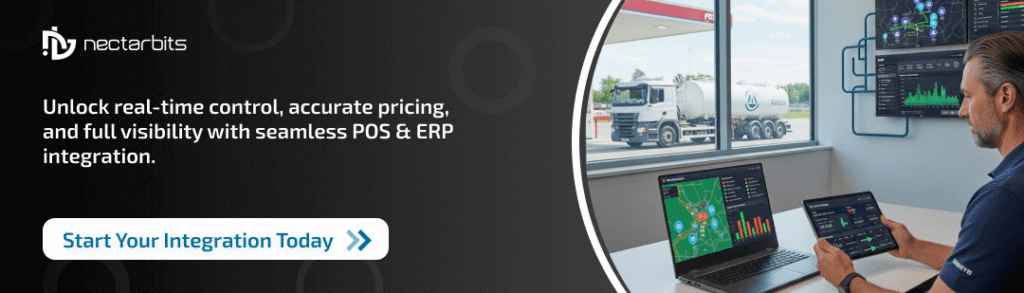
The Missing Link: ATG & Wet Stock Integration with ERP
Most blogs discussing ERP system integration stop at POS and finance. In the fuel industry, that’s a costly mistake. True profitability depends on inventory accuracy, and that can only be achieved by integrating Automated Tank Gauging (ATG) systems into your ERP.
This is where fuel inventory management moves from estimation to precision.
1. Why Inventory Accuracy Is Everything in Fuel
In fuel operations, two systems track inventory, but they tell very different stories:
- POS systems record sales (what should have left the tank)
- ATG systems measure actual fuel levels inside underground or above-ground tanks
When these numbers don’t match, the variance points to serious issues—fuel shrinkage, temperature-related volume changes, leaks, calibration errors, or even theft. Without ERP-level visibility, these losses often go unnoticed until month-end reconciliation, when it’s already too late to act.
Integrating ATG data into the ERP allows fuel businesses to detect problems early and protect margins proactively.
2. Connecting ATG Systems to ERP Platforms
Modern ATG systems generate highly accurate, real-time tank data, but that data only becomes actionable when integrated into ERP workflows.
Common ATG vendors include:
- Veeder-Root (widely used in retail and commercial fueling)
- Franklin Fueling Systems
- Other ATG providers supporting API or controller-based data export
Through secure connectors or middleware, ATG readings are fed into the ERP, aligning physical fuel levels with financial and operational records. This creates a single source of truth across sales, inventory, and procurement.
3. Key Capabilities Enabled by ATG–ERP Integration
The table below shows how ATG-ERP integration transforms fuel operations:
| Capability | What Happens | Business Impact |
| Automated Reconciliation | POS sales data is automatically compared with ATG tank levels | Instant detection of shrinkage or losses |
| Temperature Correction | Fuel volumes are normalized before ERP posting | Accurate margins and compliant reporting |
| Automated Replenishment | ERP triggers purchase orders when tank levels drop | Prevents run-outs and costly emergency deliveries |
With this level of ERP system integration, fuel businesses move from reactive inventory checks to predictive control. Beyond operational efficiency, centralized ERP data improves KPI tracking and financial reporting across fuel delivery channels, giving management complete visibility into performance metrics and profitability drivers. Learn from the PetroApp ERP integration and business model case study.
By connecting POS, ATG, and ERP systems, fuel operators gain real-time visibility into what’s sold, what’s stored, and what’s missing. This not only strengthens fuel inventory management but also improves compliance, forecasting, and long-term profitability—making ATG integration one of the most overlooked yet powerful components of fuel delivery ERP integration.
How Fuel Delivery ERP Integration Works: A Practical Technical Walkthrough
A successful fuel delivery ERP integration is not about connecting two systems and hoping for the best. It requires a structured approach that respects fuel-industry complexity, real-world delivery conditions, and data accuracy requirements. Below is a practical step-by-step walkthrough used in real fuel integration projects.
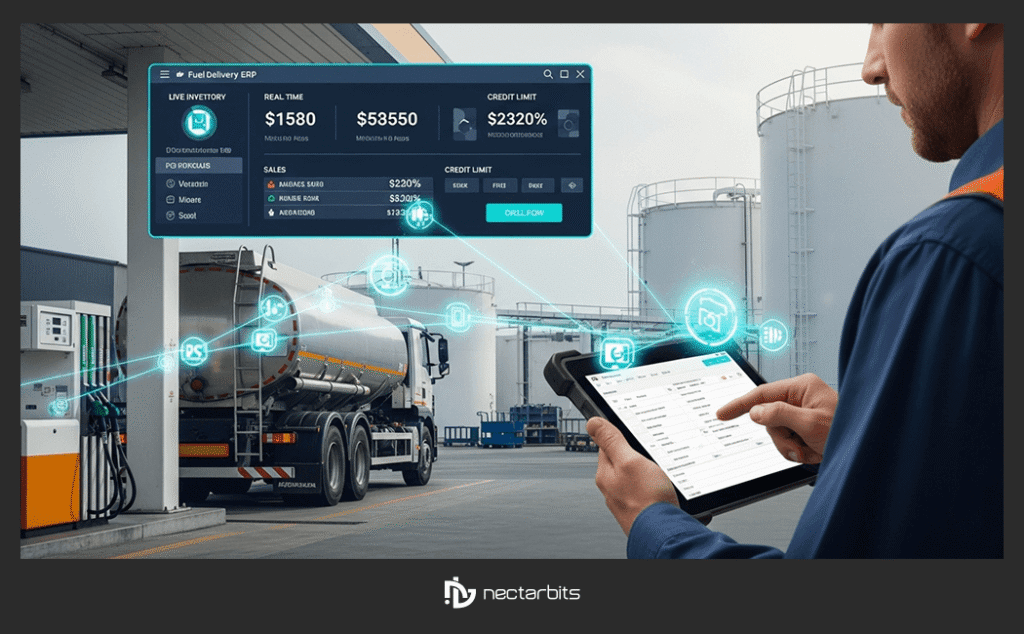
Step 1: Audit the Existing Architecture
The first step is understanding what systems are already in place and how they communicate.
On the POS side, this often includes platforms such as PDI, Dover Fueling Solutions, or mobile driver apps used for bulk and fleet deliveries. These systems handle transaction authorization, fueling data, and customer identification.
On the ERP side, platforms like NetSuite, SAP, or Microsoft Dynamics manage pricing, invoicing, credit limits, procurement, and compliance. In parallel, ATG systems and telematics endpoints provide real-time tank levels and vehicle data.
An architecture audit identifies integration gaps, legacy constraints, and which systems will act as the source of truth.
Step 2: Choose the Right Integration Protocol
Not all integration protocols are created equal, especially in fuel operations.
- REST APIs are the preferred option for modern fuel delivery ERP integration, enabling real-time, event-driven data exchange. custom software development services can help design and implement these API-based integrations tailored to your specific fuel delivery infrastructure.
- ISO 8583 is often used for secure financial transactions and card-based fueling.
- IFSF standards are common in forecourt environments and legacy fuel infrastructure.
The choice depends on hardware capabilities, security requirements, and real-time data needs.
Step 3: Data Mapping and Normalization
Fuel data must be standardized before it moves between systems.
This step involves mapping:
- Fuel grades such as Regular, Premium, and Diesel
- Product SKUs and pricing structures
- Tax codes, customer IDs, and delivery references
Without proper normalization, mismatched records lead to billing errors, compliance risks, and reconciliation issues. Accurate data mapping is the foundation of a reliable ERP system integration.
Step 4: Define Data Flow Direction
Fuel systems exchange data in specific directions to maintain accuracy.
- ERP → POS: pricing updates, contract terms, and credit limits
- POS → ERP: completed sales, delivery confirmations, and transaction data
- ATG → ERP: real-time inventory levels and temperature-corrected volumes
Defining this flow ensures that each system receives only the data it needs, when it needs it.
Step 5: Testing, Offline Scenarios, and Validation
Fuel delivery doesn’t always happen in connected environments.
- Mobile tankers may operate in areas with poor connectivity
- POS systems must support offline fueling with secure data storage
- Store-and-forward syncing ensures data uploads once connectivity is restored
Thorough testing includes bulk upload recovery, error handling, and reconciliation checks to guarantee data integrity under all conditions.
When implemented correctly, this technical approach transforms fuel delivery ERP integration into a resilient, scalable backbone capable of supporting real-time operations, regulatory compliance, and long-term growth.
Common Fuel‑Specific Integration Challenges
Integrating POS, ATG, and ERP systems in fuel delivery settings is complex. Unlike traditional retail or logistics verticals, fuel operations face unique barriers related to connectivity, taxation, and aging hardware. Understanding these challenges helps businesses plan smarter and avoid costly pitfalls in real‑world fuel delivery ERP integration projects.
- Connectivity in Remote or Underground Locations
Fuel deliveries often happen in areas with weak or no network coverage, such as rural farms, construction sites, or underground garages. In these environments:
- Cloud-based POS systems may struggle to process transactions in real time.
- Drivers may be unable to log deliveries, process payments, or capture signatures immediately.
Modern fuel POS and driver apps solve this with offline-first logic, storing transactions locally and syncing automatically with the ERP once connectivity is restored. Specialized logistics & transportation industry solutions address these connectivity challenges unique to fuel delivery operations.
This approach ensures operations continue smoothly, even in low-signal or remote locations, and is explained in detail in our guide on fuel delivery software and ERP integration.
- Multi‑State & Cross‑Border Tax Complexity
Fuel taxation isn’t uniform. Businesses delivering across state or provincial lines face multiple overlapping tax layers, including federal excise taxes, state fuel taxes, municipal levies, and environmental or spill fees. These rates can change depending on the exact GPS location of the delivery, making compliance tricky.
To manage this complexity:
- Integration must include GPS‑based tax determination routines.
- ERP rules must be jurisdiction‑aware, automatically applying correct tax rates based on delivery coordinates at the time of service.
- Real‑time calculation and reporting help reduce compliance risk and audit headaches.
Generic flat‑rate tax implementations are insufficient for fuel delivery businesses that operate across varied regions and tax jurisdictions.
- Legacy Pumps & Controllers
A major technical hurdle in fuel integration is the continued presence of legacy pumps and forecourt controllers that lack modern, open APIs. These older systems were not built for cloud connectivity or real‑time data exchange, which makes true ERP system integration challenging.
When native API support is missing:
- Middleware or protocol converters are required to bridge older hardware to modern software.
- Hardware gateways or specialized controllers translate between pump protocols and digital platforms.
- These adapters add cost and complexity but are often the only way to unify legacy equipment with modern ERP workflows.
Modernizing infrastructure is ideal, but not always feasible. Using intelligent middleware ensures legacy assets still participate in an integrated, end‑to‑end fuel delivery stack.
Connectivity issues, tax complexity, and outdated hardware represent some of the most persistent and expensive challenges in fuel delivery ERP integration. By planning for these realities, as well as adopting flexible offline and middleware strategies, fuel businesses can create resilient, accurate, and compliant integrated systems that support growth and profitability.
Best Practices for Successful POS & ERP Integration
Implementing fuel delivery ERP integration is more than connecting systems; it’s about creating a resilient, accurate, and secure workflow that drives efficiency, protects margins, and ensures compliance. Following best practices can help businesses maximize the benefits of integration while avoiding common pitfalls.
1 Master Data Management (MDM)
A strong integration begins with clean, consistent data. Mismatched customer IDs, fuel SKUs, or tax codes can lead to billing errors, compliance issues, and reconciliation headaches.
- Standardize customer accounts, fuel grades, and pricing structures across all systems before turning on synchronization.
- Assign a single source of truth for key data elements to prevent discrepancies between POS and ERP.
- Regularly audit and update master data to reflect changes in customers, contracts, or fuel products.
Good MDM ensures that POS ERP integration runs smoothly, with minimal manual intervention and fewer errors.
2 Real-Time vs. Batch Sync Decisions
Not every piece of data needs to flow instantly. Understanding what should be real-time versus batch can optimize system performance and reduce costs:
- Real-time sync: Critical operations such as credit checks, pricing updates, and delivery confirmations.
- Batch sync: Less time-sensitive data, like end-of-day reporting, inventory summaries, or historical analytics.
By carefully segmenting data flows, fuel businesses can ensure ERP system integration remains fast, reliable, and scalable—even across remote locations with limited connectivity.
3 Security & Tokenization
Fuel transactions often involve sensitive customer and payment information. Security is non-negotiable:
- Use tokenization for fleet card data to prevent exposure of sensitive details.
- Encrypt data during transmission between POS, ATG, and ERP systems.
- Implement role-based access to limit who can view, edit, or approve transactions.
Strong security practices not only protect your business but also ensure compliance with financial and data protection regulations.
4 Monitoring & Continuous Optimization
Integration is not “set and forget.” Ongoing monitoring and optimization are key:
- Track transaction success rates, data latency, and error logs.
- Use dashboards to monitor fuel volumes, sales, and inventory across all locations in real time.
- Regularly review workflows to optimize for speed, accuracy, and compliance.
Fuel businesses that continuously refine their POS ERP integration can detect issues before they impact operations, improve efficiency, and scale confidently.
By implementing strong master data management, choosing the right mix of real-time and batch synchronization, enforcing robust security, and continuously monitoring workflows, fuel companies can fully realize the benefits of fuel delivery ERP integration, improving margins, accuracy, and operational efficiency across the entire supply chain.
The Future of Fuel Delivery ERP Integration: AI, IoT & Automation
The landscape of fuel delivery ERP integration is evolving rapidly. Emerging technologies like artificial intelligence (AI), the Internet of Things (IoT), and automation are transforming traditional fuel operations into intelligent, predictive, and highly efficient systems. These innovations are not just optional; they are becoming essential for businesses aiming to stay competitive in a dynamic market.
Predictive Fuel Ordering with AI
AI is enabling ERP systems to anticipate fuel demand before tanks run low. By analyzing POS trends, ATG inventory data, historical consumption patterns, and even weather forecasts, ERP platforms can automatically trigger purchase orders and optimize deliveries.
Generative AI & data-driven solutions are transforming how fuel businesses forecast demand, optimize routes, and make strategic inventory decisions based on predictive analytics.
This predictive capability minimizes emergency refueling, reduces operational costs, and ensures fleets always have the fuel they need. It turns traditional reactive management into a data-driven, proactive strategy, helping businesses protect margins and improve operational efficiency.
Frictionless Fueling Through Automation
Automation is redefining the fueling experience. Technologies like license plate recognition allow ERP systems to identify vehicles as they arrive at the pump, automatically record transactions, and trigger billing.
This frictionless process reduces human error, speeds up fueling operations, and enhances customer satisfaction. For fleet managers and station operators, it means less administrative work and more accurate, real-time transaction tracking.
Blockchain for Fuel Traceability and Compliance
Blockchain technology offers immutable records of every fuel transaction, providing end-to-end traceability for fuel provenance, taxes, and compliance. Every sale, delivery, and adjustment is securely logged in a tamper-proof ledger.
This innovation simplifies audits, strengthens regulatory compliance, and builds trust across the supply chain. Fuel businesses can confidently demonstrate accountability and accuracy to regulators, auditors, and clients.
Building a Smarter, More Profitable Fuel Network
By combining AI, IoT, and blockchain, fuel companies can transform POS ERP integration from a simple operational tool into a strategic asset. Predictive ordering, automated fueling, and traceable compliance help businesses reduce costs, improve accuracy, and scale efficiently.
Companies that adopt these technologies now will be well-positioned for the future, operating fully integrated, automated fuel delivery networks where data drives every decision, and operational excellence is standard.
Conclusion: Fuel Delivery ERP Integration Is Essential
In today’s fuel industry, fuel delivery ERP integration is no longer optional—it is the backbone of accurate, efficient, and profitable operations. Disconnected systems and manual processes lead to errors, lost margins, and compliance risks, while integrated POS, ERP, and inventory systems provide real-time insights into sales, pricing, deliveries, and tank levels.
Top-performing fuel businesses treat data as a strategic asset, using it to optimize fuel ordering, enforce credit limits, and streamline operations. Automation and predictive analytics turn everyday workflows into smarter, error-free processes that protect margins and improve decision-making.
Whether you’re looking to modernize with mobile application development for driver apps or implement comprehensive ERP integration, the path forward is clear: connected, real-time systems are the foundation of competitive fuel delivery operations.
Continue Your Fuel Management Journey: Must-Read Guides for Industry Success
Optimizing Fuel Delivery Routes: Reduce Costs by 30% with Technology
Learn how real-time route optimization, dynamic fuel pricing, and AI-powered fleet management can cut operational costs, improve delivery efficiency, and boost profitability. This guide provides actionable strategies to make your fuel operations more data-driven and cost-effective.
FAQs:
Fuel delivery ERP integration connects your POS, ATG, and ERP systems to streamline operations, ensure accurate billing, manage inventory, and enforce credit limits. It reduces errors, improves efficiency, and protects margins in fuel businesses.
Yes. Middleware, protocol converters, and hardware gateways can bridge older pumps and POS devices with modern ERP systems, enabling automated data flows without replacing all hardware.
Integrated systems automatically apply state, federal, and environmental taxes based on GPS location and fuel type, reducing manual errors and ensuring audit-ready reporting.
Not always. Critical data like credit checks, pricing, and deliveries should sync in real time, while less time-sensitive data (end-of-day sales, reports) can be batch-synced. This balance optimizes system performance and reliability.