
 Anil Patel
In the high-stakes world of fuel logistics, running on empty isn’t just a metaphor—it’s an operational nightmare. For decades, fuel delivery businesses relied on reactive models: a client calls, a truck is dispatched, and fuel is delivered. But in 2026, this model is obsolete. The industry is shifting aggressively toward predictive analytics fuel delivery, a data-driven approach that anticipates needs before they arise.
Why the sudden shift? Because volatility is the new normal. Fluctuating global oil prices, erratic weather patterns, and the complexity of modern fleet management demand precision. By leveraging fuel demand forecasting, companies are not just saving money; they are completely redefining efficiency. This guide explores how your business can harness this technology to stay ahead of the curve.
What is Predictive Analytics in Fuel Delivery?
Definition:
Predictive analytics in fuel delivery uses historical data, machine learning algorithms, and real-time external factors (like weather and traffic) to forecast exactly when a customer or fleet vehicle will need a refill.
Why It Matters:
Traditionally, fleets relied on “stick reading” or manual checks. This leads to two extremes:
- Emergency Refueling: Expensive, rushed deliveries that disrupt routes.
- Wet Hooping: Overfilling tanks, leading to spillage and safety hazards.
Predictive analytics eliminates this guesswork. It creates a “digital twin” of your fuel ecosystem, allowing you to schedule deliveries with surgical precision.
The Engine Room: How Fuel Demand Forecasting Works
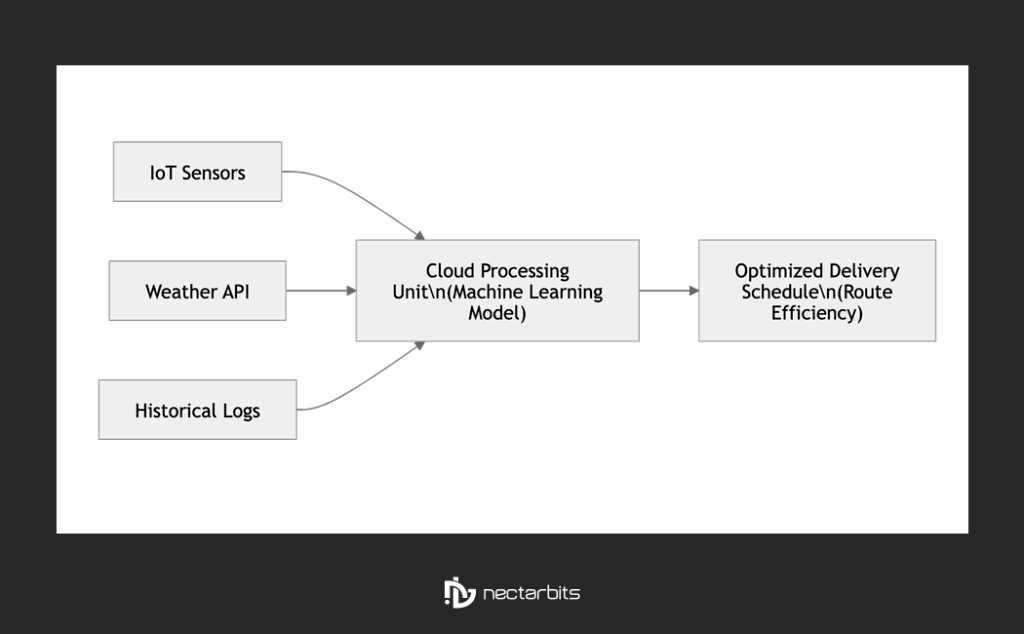
To build a robust forecasting system, you need to understand the data inputs. It’s not magic; it’s math. A sophisticated Fuel Delivery App Development strategy integrates three layers of data:
1. Historical Consumption Data
This is the baseline. Algorithms analyze past usage rates to identify patterns. For example, a construction site might use 20% more diesel during the foundation phase than the finishing phase.
2. Real-Time Telematics (IoT)
Smart sensors in tanks transmit real-time levels to the cloud. This is where the transition happens. As discussed in our article on how IoT and predictive analytics enable businesses to transition from reactive to proactive service providers, these sensors are the eyes and ears of your operation.
3. External Variables
This is where true intelligence shines. A flat historical curve might spike due to:
- Weather: A cold snap increases heating oil demand by 30%.
- Events: A local concert increases generator fuel needs.
- Traffic: Route optimization data feeds back into delivery schedules.
The Strategic Advantages: Why You Need This Now
Implementing predictive analytics isn’t just about keeping up with tech trends; it’s about survival and profitability.
1. Dynamic Route Optimization
Predictive analytics allows you to group deliveries by geographic zones based on predicted tank levels, rather than static schedules. This reduces mileage and fuel costs for your own delivery fleet.
2. Eliminating “Stockouts” and Downtime
For industries like mining or construction, a dry tank means thousands of dollars in idle machinery. Predictive models ensure fuel arrives hours before the tank hits critical levels.
3. Inventory Management for Depots
It’s not just about the customer; it’s about your supply chain. Forecasting helps you manage your own depot inventory, ensuring you aren’t holding expensive stock that isn’t moving or running dry during a rush.
Statistical Insight:
According to a report by McKinsey, logistics companies utilizing advanced analytics have seen a 15% reduction in fuel costs and a 20% improvement in delivery reliability.
Deep Dive: The Role of Algorithms in Forecasting
For those looking into MVP Development for Fuel Delivery Startups, understanding the complexity of the algorithm is vital. You don’t need to build a supercomputer on day one, but you need scalable logic.
| Algorithm Type | Best Used For | Complexity |
| Moving Average | Stable demand (e.g., backup generators) | Low |
| Exponential Smoothing | Seasonal trends (e.g., heating oil) | Medium |
| Neural Networks (AI) | Complex, multi-variable forecasting | High |
Most modern apps utilize a hybrid approach. They start with simple smoothing models and layer AI on top to catch anomalies.
Real-World Application: Fleet Management vs. On-Demand
The application of predictive analytics differs based on your business model.
Scenario A: Dedicated Fleet Management
Here, you fuel your own trucks or a contracted client’s fleet. The goal is Real-Time Fuel Delivery Tracking & Fleet Management. You track the truck and the tank.
- The Prediction: “Truck #45 is at 30% capacity and has a long haul tomorrow. Schedule a refill at 6:00 AM at the depot.”
- The Benefit: The driver doesn’t stop to fuel during operational hours.
Scenario B: On-Demand Fuel Solutions
For businesses serving residential or small commercial clients, you need On-Demand Fuel Delivery Solutions that anticipate bulk orders.
- The Prediction: “Temperature dropping to -10°C next week. Customer X usually orders 500L of heating oil when temps drop below -5°C. Notify dispatch to slot them in.”
- The Benefit: You beat the competition to the punch.
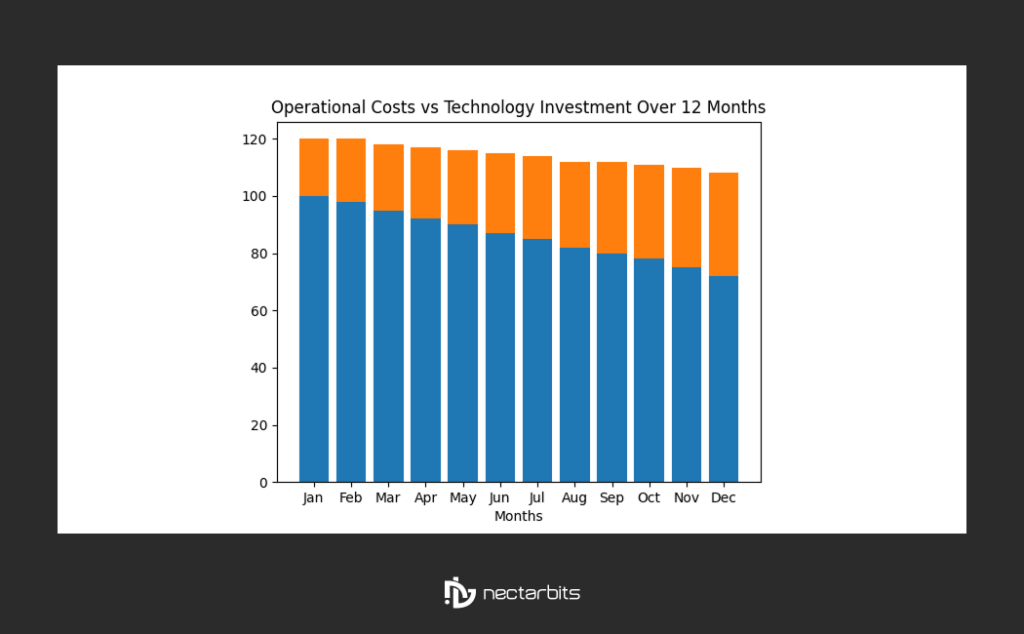
Statistical Data: The ROI of Prediction
To justify the investment, let’s look at the numbers.
Impact of Predictive Analytics on Operations
| Metric | Without Analytics | With Predictive Analytics | Improvement |
| Delivery Accuracy | 75% | 95% | +20% |
| Fleet Mileage | 10,000 mi/month | 8,500 mi/month | -15% |
| Emergency Calls | 20% of volume | 3% of volume | -85% |
| Customer Churn | 12% | 4% | -66% |
Source: Aggregated industry benchmarks from logistics tech reports (2023-2025).
Implementation Guide: Building Your Tech Stack
Ready to adopt predictive analytics? Here is a roadmap for development.
Phase 1: The MVP (Minimum Viable Product)
Don’t boil the ocean. Start with a basic app that allows drivers to input tank levels and uses a simple algorithm to flag “Low Risk” vs “High Risk” customers.
- Resource: Consult experts in MVP Development for Fuel Delivery Startups to ensure your foundation is scalable.
Phase 2: IoT Integration
Add smart sensors (ultrasonic or pressure-based) to client tanks. This automates the data entry process, removing human error.
Phase 3: AI & Machine Learning Layer
Once you have 6-12 months of clean data, implement machine learning models to start predicting future consumption based on seasonality.
Phase 4: The Customer Interface
Build a client-facing dashboard. Allow customers to see their own usage trends. This transparency builds trust and retention.
Challenges to Anticipate (E-E-A-T: Experience)
While the benefits are clear, implementation isn’t without hurdles. Drawing from real-world experience in app development, here are the top three challenges:
- Data Silos: Often, route data is in one software and tank data in another. Integrating these disparate sources is the hardest part of Fuel Delivery App Development.
- Connectivity Issues: Remote mining sites or rural areas may have poor cellular coverage. Your app must have “Store and Forward” capabilities to cache data until connectivity is restored.
- User Adoption: Drivers are used to their instincts. Training them to trust an algorithm over their “gut feeling” requires a cultural shift and intuitive UI design.
Future Trends: Generative AI and Beyond
Looking toward 2026 and beyond, we see the rise of Generative AI in logistics. Imagine an app that doesn’t just give you a spreadsheet of numbers, but converses with the dispatcher:
“Hey, Dispatch, storm warning in District 4. I’ve automatically prioritized the hospital generators and rerouted Truck #7 to avoid the highway closure. Shall I confirm?”
This level of automation moves us from fuel demand forecasting to fully autonomous supply chain management.
Conclusion: The Proactive Edge
The era of reactive fuel delivery is over. In a sector with razor-thin margins, the efficiency gained through predictive analytics fuel delivery is the difference between leading the market and lagging. By integrating IoT, leveraging historical data, and utilizing smart route planning, you transform your business from a simple delivery service into a strategic energy partner.
Start small, think big, and let data drive your decisions.
Related Blog: Continue Learning
Explore More On-Demand Innovations:
Want to see how this technology applies to other sectors? Check out our comprehensive guide on On-Demand Fuel Delivery Solutions to understand the broader market landscape.
FAQs:
With modern machine learning models, accuracy can reach up to 95% for stable consumption patterns. However, sudden unforeseen events (like a pandemic lockdown) can skew results unless the AI is trained to recognize “black swan” anomalies.
While you can run basic predictions on manual entry data, smart sensors (IoT) increase accuracy by 40% and reduce the administrative burden of data collection.
No. Small to mid-sized distributors benefit arguably more, as optimizing routes saves a larger percentage of their operational budget compared to giant corporations with economies of scale.
The weather is a primary variable. A 10-degree drop in temperature can increase heating oil demand by 10-20%. Predictive models pull weather API data to adjust delivery schedules 48-72 hours in advance.
Costs vary based on complexity (MVP vs. Enterprise). Basic MVPs can start effectively, while full-scale AI-integrated platforms require higher investment but offer higher ROI. Consulting with a development firm is the best way to get a tailored quote.