
 Anil Patel
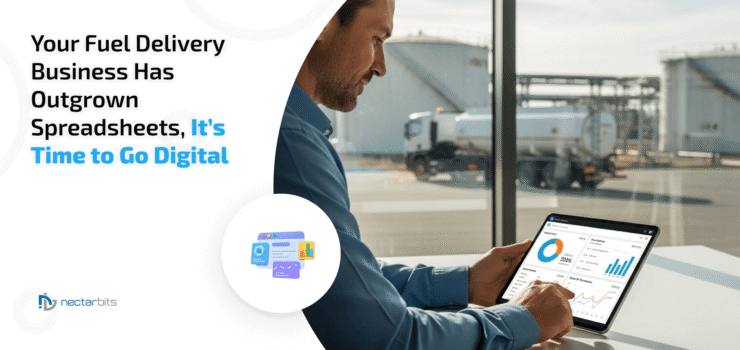
Running a fuel delivery business on spreadsheets might work when you’re handling a handful of orders a day. But as your customer base grows, so does the chaos. Missed deliveries, scheduling conflicts, billing errors, and driver miscommunication become your daily reality, not your exception.
If this sounds familiar, it’s time to replace spreadsheets with digital tools built specifically for fuel delivery. According to a McKinsey report, companies that digitize field service operations reduce operational costs by up to 30% and improve customer satisfaction scores significantly. In this blog, we’ll walk you through why your fuel business has outgrown spreadsheets, what to look for in a Fuel Delivery Management Software, and how going digital can transform your entire operation.
The Spreadsheet Problem: Why Manual Management Is Holding You Back
Spreadsheets were never designed for the complexity of fuel delivery logistics. They’re static, error-prone, and offer zero real-time visibility. Let’s look at the key pain points:
| Pain Point | Impact on Business | Estimated Cost |
| Manual data entry errors | Wrong delivery volumes, customer complaints | Up to $62/error |
| No real-time tracking | Delayed deliveries, poor customer trust | 15-20% customer churn |
| Disconnected dispatch | Driver idle time, route inefficiencies | 20-30% wasted fuel costs |
| Manual invoicing | Late payments, billing disputes | Avg. 14-day payment delay |
| No compliance tracking | Regulatory risk, failed audits | Heavy fines & legal exposure |
Research by Gartner shows that businesses that rely on manual processes spend up to 40% more time on administrative tasks compared to those using automated systems. For a fuel delivery business, this directly translates to fewer deliveries per day and lower revenue
What Is Fuel Delivery Management Software?
Fuel Delivery Management Software is a purpose-built digital platform that helps fuel distributors and delivery businesses manage the full order-to-delivery lifecycle. It combines dispatch automation, real-time tracking, route optimization, billing, compliance management, and customer communication into a single unified system.
Think of it as the operating system of your fuel delivery business — replacing dozens of disconnected tools and manual processes with one intelligent platform.
Core Components of a Fuel Delivery Management System
| Module | Functionality |
| Order Management | Receive, process, and prioritize fuel delivery orders automatically |
| Fuel Dispatch & Scheduling System | Automate driver assignment and route planning in real time |
| Real-Time GPS Tracking | Live driver and vehicle tracking on a central dashboard |
| Inventory & Tank Monitoring | Monitor fuel levels and trigger auto-reorder alerts |
| Automated Billing & Invoicing | Generate invoices instantly upon delivery confirmation |
| Customer Portal & Notifications | Self-service ordering, delivery ETA, and SMS/email alerts |
| Compliance & Reporting | DOT/EPA-ready logs, fuel usage reports, and audit trails |
Modern platforms, such as those built as On-Demand Fuel Delivery Apps– integrate all these modules and are accessible from mobile devices, giving drivers and dispatchers full visibility on the go.
Signs Your Fuel Business Has Outgrown Spreadsheets
Not sure if you’re ready to leap? Here are the telltale signs:
- You’re experiencing frequent delivery errors — wrong delivery times, volumes, or locations due to data entry mistakes.
- Dispatching is reactive, not proactive — your team scrambles to assign drivers manually every morning.
- Customer complaints are rising — customers don’t know when their delivery will arrive.
- You can’t scale without hiring more admin staff — every new customer means more manual work.
- Invoicing takes days — billing is done manually after deliveries, causing cash flow delays.
- Compliance documentation is a nightmare — generating reports for audits takes hours of manual compilation.
- You have no real-time visibility — you don’t know where your drivers are or how much fuel is in your tanks.
According to Statista, global data volumes are growing at 23% per year. Fuel delivery businesses that cannot process and act on data in real time will increasingly lose ground to tech-enabled competitors.
Key Benefits of Switching to Fuel Delivery Management Software
1. Automate Fuel Delivery Operations End-to-End
Automation is the #1 reason businesses switch from spreadsheets. With a fuel business software solution, order processing, driver dispatch, route planning, proof of delivery, and invoicing all happen automatically, reducing manual effort by up to 70% (Source: McKinsey Digital).
2. Optimize Your Fuel Dispatch and Scheduling System
A smart fuel dispatch and scheduling system uses AI-driven algorithms to assign the right driver, the right route, and the right vehicle — in real time. This can reduce route distances by 15-25% and cut fuel costs significantly. According to PwC, route optimization alone delivers average savings of $0.50 per mile for fleet operators.
3. Real-Time Visibility Across Your Entire Fleet
Know where every driver is, how much fuel each truck carries, and which deliveries are completed, all from a single dashboard. Real-time GPS tracking reduces idle time, improves accountability, and helps dispatchers respond to exceptions instantly.
4. Faster Billing and Improved Cash Flow
Automated invoicing triggered by delivery confirmation means invoices go out within minutes, not days. Businesses that automate billing collect payments an average of 8 days faster, directly improving working capital.
5. Customer Experience That Builds Loyalty
Customers get self-service ordering portals, live delivery tracking, and automated ETAs via SMS or email. This transparency reduces inbound support calls and builds customer loyalty in a commoditized market.
6. Regulatory Compliance Made Easy
Auto-generated logs, fuel usage reports, and delivery documentation keep you audit-ready at all times, without the manual paperwork that currently takes your team hours to compile.
Benefits at a Glance
| Benefit | Before Software | After Software |
| Dispatch Time | 1-2 hours manual | Minutes (automated) |
| Invoice Generation | 24-48 hours | Instant on delivery |
| Route Efficiency | Gut-based planning | AI-optimized routes |
| Customer Complaints | High (no visibility) | Low (live tracking) |
| Compliance Readiness | Manual, time-consuming | Auto-generated reports |
| Scalability | Hire more admin staff | Scale with no extra headcount |
How to Transition: From Spreadsheets to a Fuel Business Software Solution
Moving from spreadsheets to a digital platform doesn’t have to be disruptive. Here’s a proven transition roadmap:
Step 1: Audit Your Current Processes
Map out every manual process — order intake, dispatch, billing, compliance. Identify the biggest time drains and error-prone steps. These become your software requirements.
Step 2: Define Your Must-Have Features
Not all software is equal. Prioritize features based on your pain points. Must-haves typically include dispatch automation, mobile driver apps, customer notifications, and API integrations with your accounting software.
Step 3: Choose Between Off-the-Shelf and Custom Development
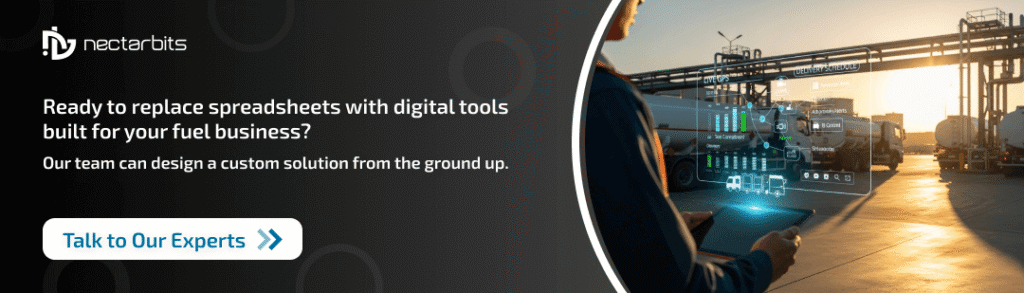
Generic SaaS tools offer quick deployment but limited customization. A Custom fuel delivery app development Company can build a platform tailored to your exact workflows, integrations, and branding — giving you a competitive edge that off-the-shelf tools can’t match.
Step 4: Start with an MVP
Rather than building everything at once, start lean. An MVP for fuel delivery solutions lets you validate core features, order management, dispatch, and tracking, before investing in full-scale development. This reduces risk and accelerates time to value.
Step 5: Train Your Team and Go Live
The best software fails without adoption. Run training sessions for dispatchers, drivers, and billing staff. Most modern platforms have intuitive mobile-friendly interfaces that reduce the learning curve significantly.
Step 6: Measure and Optimize
Track KPIs like deliveries per day, billing cycle time, route efficiency, and customer satisfaction scores. Use the data your new software generates to continuously improve operations.
Understanding the Cost: Is Custom Fuel Delivery Software Worth It?
One of the biggest hesitations businesses have is cost. The truth is, the ROI of fuel delivery management software far outweighs the investment. Here’s a simplified breakdown:
| Core dispatch, tracking, and billing | Estimated Range (Custom Dev) | Notes |
| MVP Development | $15,000 – $40,000 | Core dispatch, tracking, billing |
| Full Platform Development | $40,000 – $120,000+ | All modules, integrations |
| Monthly SaaS License | $300 – $2,000/month | Off-the-shelf options |
| Annual ROI (savings) | $50,000 – $200,000+ | Route savings, billing speed, admin reduction |
For a detailed breakdown of development economics, see our Cost Breakdown for Fuel Delivery App Development.
The ROI math is simple: if your fleet makes 50 deliveries per day, and automation saves just 15 minutes per delivery in planning and admin time, that’s 12.5 hours of labor saved daily. At $30/hour, that’s $137,250 in annual savings, from a single operational improvement.
What Makes a Great Fuel Delivery Management Software? Key Features to Look For
| Feature Category | Must-Have Features |
| Order Management | Multi-channel order intake, priority queuing, auto-confirmation |
| Dispatch & Routing | AI route optimization, real-time rerouting, load balancing |
| Driver Mobile App | Offline capability, proof of delivery, navigation integration |
| Customer Experience | Self-service portal, live tracking, automated notifications |
| Billing & Finance | Auto-invoicing, multiple payment methods, accounting integration |
| Analytics & Reporting | Custom dashboards, KPI tracking, compliance logs |
| Integrations | ERP, CRM, accounting software (QuickBooks, Xero), GPS hardware |
For a deep dive into dispatching technology, explore our Fuel Delivery Dispatch Software Full Guide.
On-Demand Fuel Delivery: The Future Is Already Here
The market is moving fast. On-Demand App Development Solutions are enabling fuel businesses to compete with on-demand models, where customers can order fuel the same way they order a ride or groceries.
According to MarketsandMarkets, the global on-demand fuel delivery market is projected to grow at a CAGR of 8.2% through 2028. Businesses that adopt digital management platforms now will be positioned to capture this growth. Those that don’t risk being disrupted by tech-first competitors who can serve customers faster and cheaper.
Conclusion
Spreadsheets had their moment, but your fuel delivery business has moved beyond what they can handle. Every day you spend managing deliveries manually is a day of missed efficiency, potential errors, and slower growth.
The switch to Fuel Delivery Management Software is not just a technology upgrade; it’s a business transformation. You’ll automate fuel delivery operations, deploy a smart fuel dispatch and scheduling system, and give your customers the digital experience they expect.
Whether you start with an MVP or go straight to a full-featured platform, the right technology partner makes all the difference.
Want to Learn More?
If you found this guide helpful, explore our next resource: The Complete Guide to Fuel Delivery Dispatch Software — Everything You Need to Know. Learn how modern dispatch systems work, what features matter most, and how to choose the right platform for your fleet.
FAQs:
Fuel Delivery Management Software is a digital platform that helps fuel businesses manage orders, dispatch drivers, track deliveries in real time, and automate billing from a single system.
Spreadsheets often lead to manual errors, delayed invoicing, and poor delivery tracking. Digital tools automate fuel delivery operations, improve accuracy, and provide real-time visibility.
A fuel dispatch and scheduling system automatically assigns drivers, optimizes routes, and tracks deliveries in real time, reducing delays and saving operational costs.
Yes. Even small fleets can reduce manual work, avoid scheduling mistakes, and scale operations faster using fuel delivery management software.
Costs vary depending on features and customization. Basic SaaS platforms may start from a few hundred dollars per month, while custom solutions require a higher one-time development investment.