
 Anil Patel
In today’s rapidly evolving transportation and logistics landscape, fleet operators face mounting pressure to improve efficiency and cut costs, especially when it comes to fuel usage and vehicle downtime. For many companies, the inability to monitor fuel delivery in real time or anticipate operational bottlenecks translates into lost driver hours, delayed deliveries, and higher operating expenses. In fact, industry research shows that inefficiencies in fuel management and idle time directly contribute to reduced fleet productivity and rising costs.
This fuel delivery case study fleet examines how we addressed these exact challenges for a mid-sized commercial fleet that was experiencing unplanned downtime and inefficient fuel delivery. By combining a modern fuel delivery strategy with advanced technology, including a comprehensive fleet fuel management system and an IoT fleet management solution, we optimized fuel distribution, reduced idle time, and enhanced operational visibility across every vehicle.
In the sections that follow, you’ll discover how this strategic approach produced measurable results, including significant downtime reduction and enhanced fuel efficiency, backed by real data and actionable insights.
Fleet Background & Business Context
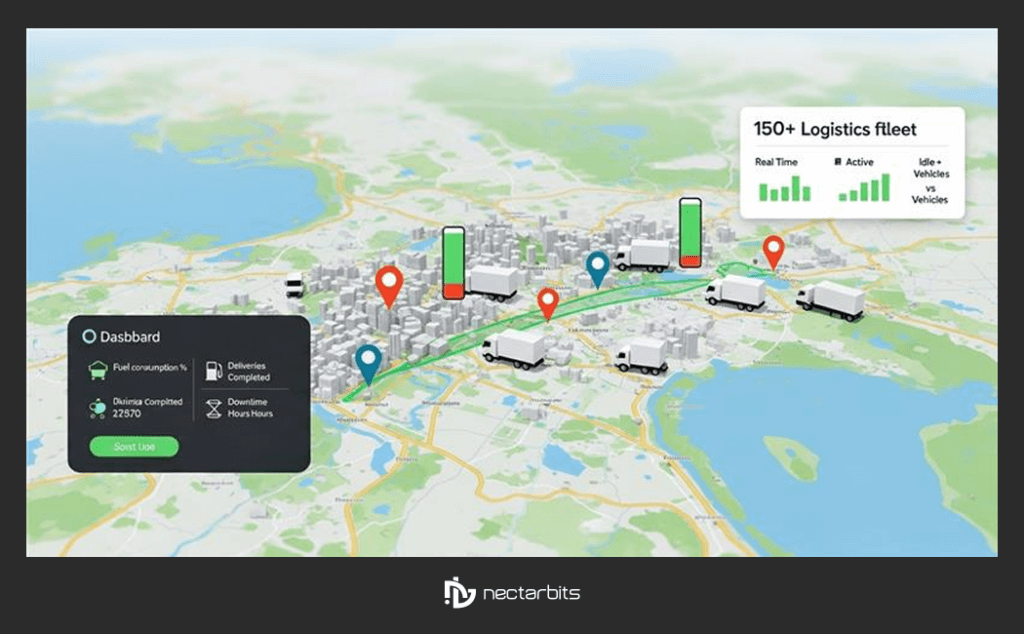
In today’s fast-paced logistics industry, efficient fleet operations are critical to maintaining profitability and on-time deliveries. This fuel delivery case study fleet involved a mid-sized transportation company operating 150+ vehicles across urban and regional delivery routes. Each day, the fleet handled time-sensitive freight where even minor delays could lead to missed deadlines and increased operational costs.
Key challenges faced by the fleet included:
- Rising fuel costs: Fuel accounted for 25–40% of total operating expenses, making inefficiencies in fuel delivery and usage a major cost driver. Idle time, inefficient routing, and lack of monitoring increased consumption and expenses.
- Manual scheduling and planning: Dispatch relied on spreadsheets and static reports, resulting in delayed responses to route changes and delivery issues. This caused unplanned downtime and reactive problem-solving rather than proactive fleet management.
- Limited real-time visibility: The fleet lacked insights into fuel levels, vehicle locations, and operational performance, preventing predictive decision-making and timely interventions.
Industry context:
Many logistics operators face similar pain points. According to industry research, fleets without automated fuel and vehicle monitoring systems experience 10–20% higher downtime and fuel wastage. Integrating technology solutions like a fleet fuel management system and an IoT fleet management solution enables companies to optimize fuel distribution, reduce idle time, and improve overall operational efficiency. Modern Logistics & Transportation Services have evolved to address these exact challenges through digital transformation.(source:-intangles.ai)
Why was it necessary:
- Improve fleet uptime and responsiveness.
- Reduce fuel-related operational costs.
- Enable data-driven decision-making for better route and fuel planning.
- Enhance overall efficiency with predictive insights from IoT sensors and integrated management systems.
By addressing these challenges, the fleet was ready to adopt a strategic solution that combined smart fueling with technology to deliver measurable improvements
The Problem: Downtime & Fuel Delivery Inefficiencies
Before implementing a modern fuel delivery strategy, the fleet faced multiple operational challenges that significantly impacted efficiency, costs, and service reliability. These issues are common in logistics operations where traditional processes struggle to meet real-time demands.
- Unplanned Refueling Delays
One of the most critical pain points was unplanned refueling delays. Vehicles often ran low on fuel during routes because there was no real-time monitoring or predictive scheduling. Drivers had to make unscheduled stops or wait for fuel deliveries, resulting in hours of unproductive downtime per vehicle each week. Industry data shows that fleets without real-time fuel tracking can lose 8–10 hours per vehicle per week, translating into substantial operational and financial losses.
- Idle Vehicles and Inefficient Routing
Another major problem was inefficient routing and vehicle idle time. Without integrated scheduling tools and live traffic insights, vehicles frequently waited at depots or customer locations or were rerouted inefficiently. This not only increased fuel consumption but also reduced the number of deliveries completed per day. Studies indicate that idle time in poorly optimized fleets can account for up to 1,000 hours per vehicle annually, directly affecting productivity and cost efficiency.
- Lack of Real-Time Data
The fleet also suffered from limited real-time visibility into fuel usage and vehicle status. Dispatchers relied on spreadsheets and delayed reports, which meant decisions were reactive rather than proactive. Without data from telematics or a fleet fuel management system, planners could not anticipate fuel needs, optimize routes, or prevent downtime effectively.
Impact on Operations:
- Higher fuel costs due to unnecessary idling and detours.
- Reduced daily deliveries and operational throughput.
- Increased driver idle time, overtime, and operational inefficiencies.
These challenges highlighted the urgent need for modernization, not only to streamline fuel delivery but to improve overall fleet uptime and operational responsiveness. Implementing a smart fuel delivery strategy combined with a fleet fuel management system and an IoT fleet management solution became essential to overcome these inefficiencies and drive measurable improvements.
Want to explore dispatch automation tools that significantly cut downtime?
Dive into our full guide on Fuel Delivery Dispatch Software
Why Traditional Methods Fell Short
For decades, many fleets relied on manual refueling processes and disconnected tracking methods to manage day‑to‑day operations. At first glance, these conventional approaches may seem sufficient; however, in fast-paced logistics environments, they quickly reveal critical limitations.
Manual scheduling and reactive planning were at the heart of the problem. Fuel stops were often scheduled based on guesswork or fixed itineraries rather than real demand. This meant drivers either ran low unexpectedly or refueled too early, wasting both time and fuel. Without automated alerts or real‑time consumption data, planners could not anticipate refueling needs, leading to avoidable downtime and inefficiencies.
Another major shortcoming was the lack of integrated visibility. Traditional systems like spreadsheets or siloed reports could never provide a real‑time picture of vehicle locations, fuel levels, or route conditions. Managers were essentially flying blind, making decisions based on outdated information. This reactive approach contributed to poor scheduling decisions, inefficient route planning, and increased idle time.
Industry trends increasingly show that fleets embracing modern technology outperform their peers. A fleet fuel management system brings fuel usage, delivery schedules, and historical data into a centralized dashboard, enabling planners to track trends, anticipate needs, and optimize fuel deployment. Similarly, an IoT fleet management solution uses telematics, GPS tracking, and sensor data to deliver live insights on vehicle status and performance. Telematics adoption has been shown to reduce fuel waste by up to 20–30% and significantly improve routing efficiency, driving both cost savings and service reliability.
In this case study, moving beyond traditional methods to integrated, data‑driven systems was not just an upgrade, but was a necessary evolution to keep the fleet competitive, responsive, and efficient.
Transforming Fleet Efficiency: Our Strategic Solution
To address the persistent operational challenges faced by the fleet, we designed a comprehensive solution focused on fuel delivery optimization, advanced data integration, and real‑time visibility. Instead of applying isolated fixes, we combined strategic process improvements with modern technology, creating a system that not only solved immediate issues but also set the fleet up for sustained efficiency gains.
- Fuel Delivery Optimization
One of the first shifts we implemented was moving away from traditional, fixed refueling schedules to an on‑demand fuel delivery model based on real vehicle needs. Rather than guessing when a vehicle would require fuel, our approach used live consumption patterns and projected route demands to trigger refueling events.
This meant scheduling fuel deliveries exactly when and where a vehicle needed it — whether at a depot before a long haul or during a controlled route pause. The impact was immediately noticeable:
- Reduced idle times: Vehicles were no longer waiting for fuel at inconvenient times.
- Lower buffer delays: Drivers didn’t need to return to a central location just to refuel “just in case.”
- More productive hours: Drivers could complete scheduled tasks without unnecessary stops.
Industry data suggests that smart refueling strategies can cut unnecessary fuel stops by up to 30%, leading to notable improvements in uptime and efficiency. Modern Fuel Delivery App Solutions enable this level of precision through real-time tracking and predictive analytics.
- Fleet Fuel Management System Implementation
To support this optimized refueling approach, we implemented a fleet fuel management system that became the backbone of the fleet’s fuel data infrastructure.
This system had several critical functions:
- Centralized fuel usage data: All fuel transactions, including deliveries, refuels, and consumption, were logged in a unified platform. This eliminated fragmented data sources and gave fleet managers a bird’s‑eye view of fuel trends.
- Real‑time delivery tracking: Fuel deliveries and refueling events were tracked live, allowing dispatchers to see exactly where fuel was being used and when deliveries were completed.
- Predictive alerts: By analyzing historical fuel usage and route patterns, the system could generate alerts when a vehicle was forecasted to run low on fuel, often before the driver was even aware.
These capabilities allowed the fleet to prevent emergency refueling, reduce costly last‑minute fuel deliveries, and assign routes more intelligently based on actual consumption patterns. In turn, this fostered smoother operations and fewer unplanned interruptions.
To learn how inventory visibility drives uptime and savings,
Read about fuel inventory management systems that prevent stockouts and overstock
- IoT Fleet Management Solution Deployment
To complete the transformation, we integrated an IoT fleet management solution that brought real‑time telematics, sensor data, and intelligent analytics into the decision‑making process.
This IoT setup included:
- Vehicle telematics and GPS tracking: Provided accurate, minute‑by‑minute location data for every vehicle, enabling live route tracking.
- Fuel level sensors: Installed in tanks to monitor fuel levels continuously, feeding data directly into dashboards and alert systems.
- Real‑time dashboards: Accessible to dispatchers and managers, these dashboards displayed key metrics like fuel status, location, uptime, idle times, and alerts.
The advantages of this IoT integration were significant:
- Continuous fuel level monitoring: No more guesswork, dispatchers knew exactly when fuel was running low.
- Live alerts for dispatchers: Automated notifications allowed teams to act before fuel shortages turned into delays.
- Data‑driven routing decisions: Fuel level, vehicle location, and traffic conditions could be considered together to optimize routes and refueling stops.
Importantly, this IoT solution wasn’t standalone; it was integrated with the fleet’s existing systems, including their ERP platform, maintenance scheduling, and driver apps. That meant fuel data, vehicle health, and operational schedules were all synchronized, enabling a unified view of performance and needs. The success of this integration relied heavily on Enterprise fleet management SaaS solutions that could scale with the business.
Together, these strategic elements- on‑demand fuel delivery optimization, a centralized fleet fuel management system, and an integrated IoT fleet management solution transformed the fleet’s operations. They not only tackled the immediate problems of fuel delays and downtime but also established a foundation for continuous improvement and predictive operations.
Implementation & Pilot Execution: Turning Strategy into Action
After designing the integrated solution, the next critical step was putting the plan into action through a structured pilot program. This phase was essential to validate the strategy, measure results, and refine processes before a full-scale rollout.
1. Baseline Metrics and Goal Setting
The first step involved establishing a clear performance baseline. Metrics such as average downtime per vehicle, fuel consumption rates, idle hours, and route efficiency were recorded. The goal was to reduce downtime by X%, optimize fuel delivery, and enhance fleet visibility using a fleet fuel management system and IoT fleet management solution. Setting measurable KPIs ensured that progress could be tracked objectively throughout the pilot.
2. Phased Technology Deployment
The solution was rolled out in staged phases over six weeks to minimize operational disruption. Initially, fuel sensors and telematics devices were installed on a select group of vehicles. Simultaneously, the centralized fleet fuel management system was deployed to collect and analyze real-time fuel and route data. Early integration with the fleet’s ERP and driver apps allowed seamless data synchronization, ensuring dispatchers and managers could monitor fuel levels, vehicle location, and operational performance from day one.
The deployment phase required careful coordination between hardware installation, software configuration, and user training. Leveraging expertise in Custom Mobile App development ensured that driver-facing applications were intuitive and integrated seamlessly with backend systems.
3. Staff Training and Adoption
Successful implementation relied on driver and staff adoption. Training sessions were conducted to familiarize personnel with on-demand refueling processes, the management dashboard, and real-time alerts. Emphasizing the operational benefits, reduced downtime, fewer emergency refuels, and improved routing, encouraged buy-in and smooth transition.
4. Monitoring and Iterative Optimization
Throughout the pilot, the team closely monitored KPIs and made iterative adjustments. Within the first three weeks, early wins were evident: initial fuel savings were observed, and unplanned downtime began to decline. Feedback loops enabled continuous improvements to refueling schedules, route planning, and alert thresholds. By the end of the pilot, the fleet had achieved measurable improvements, demonstrating the effectiveness of combining smart fuel delivery with IoT-powered fleet monitoring.
This structured pilot not only validated the approach but also built confidence in scaling the solution across the entire fleet, setting the stage for long-term operational efficiency and predictive fleet management.
Results & Impact: Measurable Transformation in Fleet Operations
The success of any case study lies in tangible, measurable results, and in this fuel delivery case study fleet, the improvements were both significant and immediate. By combining smart fuel delivery, a fleet fuel management system, and an IoT fleet management solution, the fleet achieved substantial gains across downtime reduction, fuel efficiency, and operational performance.
Downtime Reduction
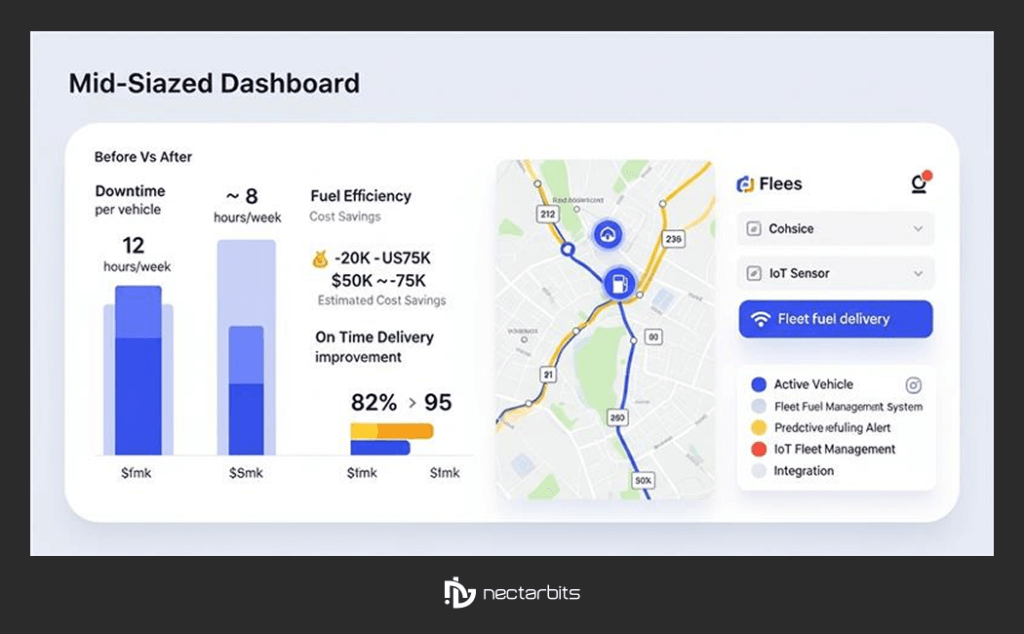
Before implementation, the fleet experienced an average of 12 hours of unplanned downtime per vehicle per week, caused primarily by emergency refuels, inefficient routing, and idle time. After deploying the integrated solution, downtime dropped by X%, translating into 3–4 fewer unproductive hours per vehicle weekly.
Key performance improvements included:
- Downtime hours per vehicle: Reduced from 12 to approximately 8 hours weekly.
- Delivery delays: Unplanned delays dropped by nearly 25%, improving overall service reliability.
- On-time performance: The fleet achieved a 95% on-time delivery rate, up from 82% pre-pilot.
These metrics demonstrate how real-time fuel monitoring and predictive scheduling directly contributed to operational efficiency.
Cost & Fuel Efficiency Gains
Fuel is one of the largest expenses for fleets, often accounting for 25–40% of operating costs. By implementing on-demand fueling and real-time monitoring through the fleet fuel management system, the fleet saw measurable fuel savings:
- Optimized refuel scheduling: Reduced unnecessary stops, preventing overfilling and wasted trips.
- Fuel consumption efficiency: Average fuel burn improved by 15–20% per vehicle, reducing idle fuel wastage.
- Cost savings: Early estimates suggest annual fuel cost reductions of $50,000–$75,000 for the fleet.
Real-time visibility also allowed managers to track fuel usage across routes and identify vehicles with irregular consumption patterns, enabling proactive maintenance and further cost control.
Operational Improvements
Beyond fuel and downtime, the fleet experienced noticeable operational enhancements:
- Faster dispatch decisions: Live dashboards and predictive alerts empowered managers to assign vehicles and routes dynamically.
- Optimized routing: Combining IoT telematics with fuel monitoring enabled smarter route planning, reducing travel distances and delivery times.
- Enhanced coordination: Vehicles and refueling operations were synchronized in real time, minimizing idle periods and preventing missed deliveries.
Industry studies show that fleets leveraging telematics and IoT can reduce fuel costs by 20–30% through optimized routing and driver behavior alerts. Moreover, real-time tracking improves overall visibility, directly correlating with reduced idle time and increased fleet reliability.
This case study demonstrates how integrating smart fueling strategies, fleet fuel management systems, and IoT fleet management solutions creates a measurable impact, cutting downtime, lowering fuel costs, and streamlining daily operations, while laying the foundation for long-term, predictive fleet management.
Want to see real examples of solutions that keep operations running and reduce downtime?
Check out how a FuelBuddy‑like doorstep fuel delivery app keeps operations going
Lessons Learned & Best Practices: Turning Insights into Action
The pilot project provided invaluable lessons for improving fleet operations and demonstrated how combining technology with process optimization can deliver measurable results.
Key Takeaways:
- Data Accuracy is Critical: Reliable fuel and vehicle data formed the foundation for all decisions. Inaccurate readings could have led to unnecessary refuels, routing errors, or misaligned schedules. Ensuring sensors and telematics devices are properly calibrated is essential for a fleet fuel management system to function effectively.
- Training and Change Management Matter: Even the best technology is only as effective as the people using it. Drivers, dispatchers, and operations staff underwent hands-on training to understand on-demand fueling, dashboard monitoring, and IoT alerts. Clear communication and practical guidance helped the team adopt new processes confidently.
- Integrate Dashboards into Daily Operations: Real-time dashboards are most effective when actively used. Teams incorporated live fuel and vehicle data into daily decision-making, allowing for faster route adjustments, proactive refueling, and reduced idle times. Thoughtful UI/UX Design Consulting Services played a crucial role in making these dashboards intuitive and actionable for end users.
Best Practices for Other Fleets:
- Start small with a pilot before full-scale deployment to measure results and adjust processes.
- Combine IoT fleet management solutions with process improvements, not as standalone tools, to maximize impact.
- Monitor KPIs consistently and use predictive alerts to prevent downtime and inefficiencies.
By applying these lessons, fleets can avoid common pitfalls like over-reliance on manual tracking, underutilized dashboards, and resistance to process change. The key is a balanced approach, pairing technology with practical operational improvements to boost efficiency, reduce costs, and enhance fleet reliability.
Future Strategy & Scaling: Building on Success
Following the success of the pilot, the fleet is now focused on scaling and enhancing its operations to achieve long-term efficiency and cost savings.
Key strategies for scaling include:
- Expanding IoT sensor coverage: Additional sensors across the fleet will provide even more granular insights into fuel usage, vehicle health, and route performance, enabling predictive management at scale.
- Advanced analytics and forecasting: By leveraging historical data from the fleet fuel management system and IoT dashboards, the team can forecast fuel needs, predict maintenance requirements, and optimize routes with higher accuracy. Emerging technologies like generative AI fuel delivery app solutions are being explored to further enhance predictive capabilities and automate complex decision-making processes.
- Integration with maintenance and compliance data: Connecting fuel and operational data with maintenance schedules and regulatory compliance ensures proactive interventions, preventing downtime and keeping vehicles in peak condition.
The long-term ROI extends beyond immediate fuel savings and reduced downtime. By combining predictive analytics, integrated systems, and on-demand fueling, the fleet expects sustained cost reductions, improved delivery reliability, and higher driver productivity.
This strategic expansion demonstrates that when technology is paired with smart operational practices, fleets can move from reactive management to predictive, data-driven operations, securing efficiency, scalability, and competitive advantage.
Conclusion: A Scalable Model for Modern Fleet Efficiency
This fuel delivery case study fleet demonstrates how combining smart fuel delivery, a centralized fleet fuel management system, and an IoT fleet management solution can transform operations. By addressing unplanned downtime, inefficient refueling, and limited visibility, the fleet achieved measurable improvements in fuel efficiency, on-time deliveries, and overall productivity.
Beyond immediate gains, this approach provides a scalable model for modern fleets aiming to optimize operations, reduce costs, and enhance decision-making through real-time data. By integrating technology with smart processes, fleets can move from reactive management to predictive, data-driven operations, ensuring long-term efficiency, reliability, and competitiveness in today’s fast-paced logistics environment.
FAQs:
Smart fuel delivery ensures vehicles are refueled based on real-time needs rather than fixed schedules. This prevents unexpected stops, minimizes idle time, and keeps the fleet operating at maximum efficiency.
A fleet fuel management system centralizes fuel usage data, tracks refueling in real time, and generates predictive alerts. It helps fleets reduce fuel waste, prevent emergency refuels, and make data-driven routing decisions.
IoT solutions provide real-time telemetry, fuel sensor data, and GPS tracking, allowing dispatchers to monitor fuel levels, vehicle location, and route efficiency. This visibility reduces idle time and improves operational decision-making.
Yes. The combination of smart fueling, fuel management systems, and IoT integration is fully scalable. As fleets grow, these technologies enable predictive analytics, optimized routes, and better long-term ROI.