
 Himanshu Patel
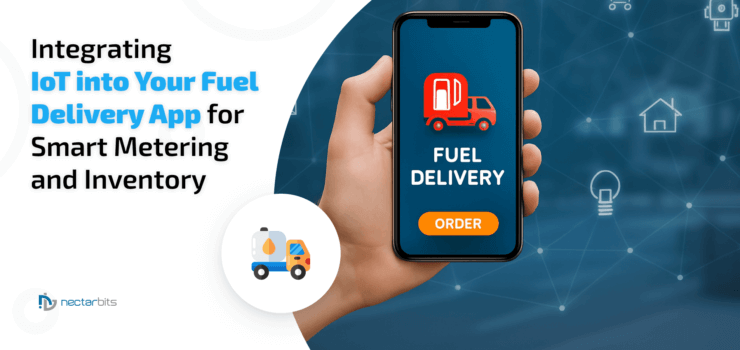
Quick summary: Automation is a phenomenon of the present, powered by IoT and smart sensors. IoT-driven smart meters integration with a fuel delivery app is an upgrade that helps fuel delivery businesses lead the competition. Explore how IoT- the silent guardian of fuel delivery apps makes the business sustainable and competitive with seamless inventory management.
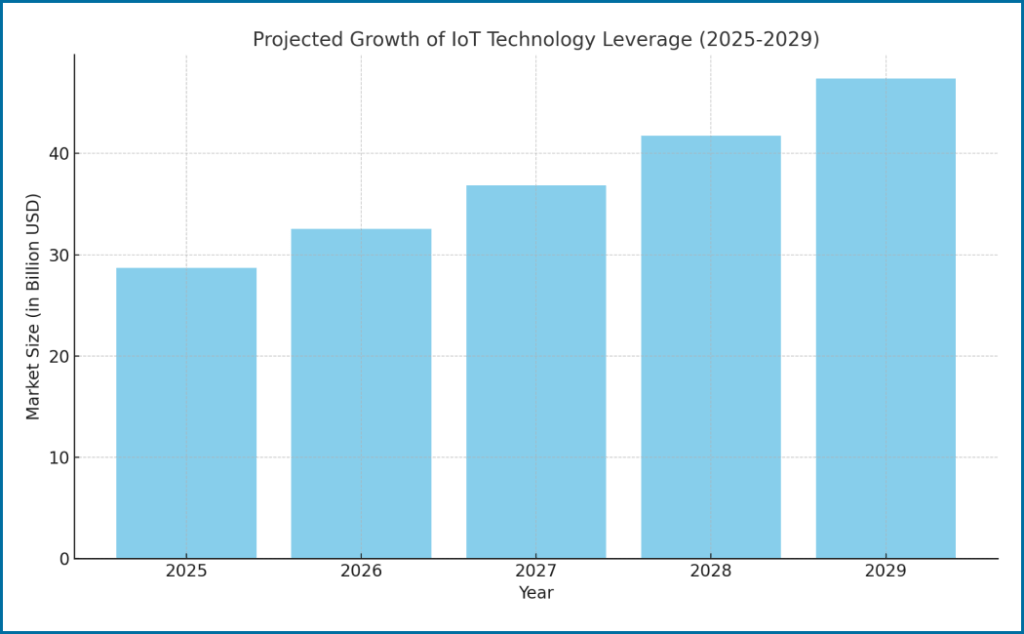
IoT technology leverage is projected to grow rapidly from $28.68 billion in 2025 to $47.41 billion in 2029 at a CAGR of 13.4%. The capability to monitor assets in real-time, manage energy consumption, and provide detailed reports is making it the top preference of various industry verticals, including the fuel delivery space.
Recently, it was embraced by an Indian company named Repos Energy and launched an IoT-driven fuel delivery solution- DATUM. It provides real-time data on the availability, quality, quantity, and usage of fuel, which allows businesses to monitor fuel consumption and access records at different intervals. The anti-theft mechanism prevents fuel theft and makes fuel delivery available to consumers’ doorsteps with just a few clicks.
IoT integration in fuel delivery apps is making the solution reliable, efficient, and faster with a fuel delivery IoT solution. The range of benefits with IoT fuel delivery apps, including real-time fuel monitoring, improved inventory and stock management, smart metering, and remote maintenance, makes its usage indispensable.
In this blog, we will discuss the impact of IoT fuel delivery apps for inventory management and smart metering. Let’s first explore smart meters and then their impact on fuel delivery inventory management.
What Is Smart Metering in Fuel Delivery Apps?
Smart metering is the process of digitizing fuel storage tanks and delivery vehicles using connected sensor devices — called smart meters — that continuously measure fuel levels, temperature, pressure, and flow rates, then transmit that data in real time to a centralized fuel delivery app.
Unlike traditional mechanical gauges that require manual reading, smart meters send readings automatically at configurable intervals (typically every few minutes, or instantly when a threshold is crossed). The data flows through a wireless communication network — typically NB-IoT, LoRaWAN, or 4G LTE — into a cloud platform, where it is processed and displayed on an operator dashboard accessible from any web browser or mobile device.
In practical terms, smart metering in fuel delivery apps gives fleet managers the ability to:
- Know exactly how much fuel is in every tank at any moment — storage tanks, delivery trucks, and mobile refuelling stations included
- Receive instant alerts when fuel drops below a reorder threshold, when an anomalous drop suggests theft, or when temperature readings indicate fuel quality degradation
- Automate procurement by triggering supplier orders when inventory hits preset minimums
- Generate audit-ready records of every fuel transaction without manual data entry
This is the foundation on which modern IoT fuel delivery apps are built. Everything from predictive analytics to regulatory compliance sits on top of this real-time metering layer.
Traditional vs. IoT-Enabled Fuel Inventory Management
| Challenge | Traditional Approach | IoT-Enabled Approach |
| Inventory visibility | Manual dip readings, once or twice daily | Real-time sensor data, updated every few minutes |
| Reorder triggers | Human-initiated, often reactive | Automated alerts when threshold is crossed |
| Fuel theft detection | Discovered after the fact via discrepancy | Instant anomaly alert on unexpected fuel drop |
| Demand forecasting | Based on gut feel or basic spreadsheets | AI models analyzing historical + real-time data |
| Billing disputes | Common — manual delivery records | Eliminated — digital metering records fuel delivered |
| Compliance reporting | Manual paperwork, prone to error | Automated logs with timestamps and calibration data |
| Multi-site management | Requires on-site visits or phone calls | Centralized dashboard — manage all sites remotely |
| Carbon emissions tracking | Not tracked | IoT sensors monitor fuel quality and emissions data |
The contrast is stark. The traditional approach demands labour, tolerates inaccuracy, and reacts to problems after they occur. An IoT fuel delivery app prevents most of these problems from happening in the first place.
How IoT Fuel Delivery Apps Transform Inventory Management
The challenges of traditional inventory management, including no real-time visibility, inaccurate data, delayed decision-making, inefficient stock planning, and limited theft detection, aren’t just inconvenient. In the fuel industry, they translate directly into revenue loss, compliance failures, and dangerous safety gaps.
An IoT-enabled inventory system changes the equation by making fuel delivery businesses proactive rather than reactive. Here is how each core function works in practice.
Real-Time Fuel Inventory Visibility with IoT Sensors
IoT-enabled smart fuel tank sensors continuously monitor fuel levels in storage tanks, delivery trucks, and mobile refuelling stations, transmitting data — fuel level, temperature, and pressure- to the fuel delivery app in real time. All readings are displayed on a centralized dashboard that any authorized team member can access from their phone or browser.
The result: fuel delivery businesses can monitor inventory across every tank and every truck simultaneously. Accurate level data prevents overfilling (a safety and environmental hazard) and eliminates stockouts that delay deliveries. Physical checks that involve manual labour and introduce human error become unnecessary.
Predictive Inventory Management
IoT-driven real-time data doesn’t just show where inventory stands right now; it feeds machine learning models that predict where it will stand tomorrow, next week, and next month. Historical consumption patterns are analyzed alongside current delivery schedules, seasonal demand curves, and regional activity to generate demand forecasts.
These predictions allow businesses to support a just-in-time inventory model: fuel arrives when needed, without excess storage costs or spoilage risk. When an unexpected spike in demand hits, the system flags it before stock runs out.
Automated Fuel Reordering: How IoT Triggers Smart Refills
When a smart meter sensor detects that fuel in a storage tank or delivery truck has dropped below a pre-configured threshold, the fuel delivery app automatically initiates one of two actions: it places a reorder request directly with the integrated supplier system, or it schedules a refill and alerts the dispatch team.
Supplier API integration means this procurement loop runs 24/7 without human intervention. Emergency fuel requests and the premium costs associated with them are eliminated. Downtime caused by low inventory becomes a preventable event rather than an unavoidable disruption.
Anomaly Detection and Real-Time Alerts
Smart meters are not just passive sensors — they actively compare current readings against expected consumption patterns. A sudden, unexplained drop in fuel level in a stationary tank at 2 AM triggers an immediate alert to the operator. This pattern recognition covers fuel theft, equipment malfunction, leakage, and tampering.
Early warning saves costs in two ways: it stops the loss immediately, and it prevents the secondary costs of fuel loss, environmental cleanup, safety incidents, and regulatory fines. Businesses using IoT monitoring for theft prevention report reductions of up to 90% in fuel pilferage.
Remote Inventory Tracking and Control
Smart fuel metering systems transmit data continuously, giving fleet managers the ability to monitor and act on fuel levels without being on-site. If a storage tank begins to overfill during a remote delivery, a manager can remotely trigger a shutoff command through the app to prevent a spill.
This level of remote control is especially valuable for businesses managing fuel across geographically dispersed locations — construction sites, mining operations, agricultural estates, and distributed generator networks.
Enhanced Fleet Management for Fuel Delivery Trucks
GPS sensors track delivery vehicles in real time, confirming route adherence and flagging unauthorized detours. IoT-based fuel tracking monitors the fuel level inside each truck’s tank and cross-references it with delivery records — making it immediately visible if fuel is being siphoned or delivered off the books.
Combined with logistics app development integrations, route optimization engines use this real-time fuel and traffic data to recommend the most fuel-efficient delivery paths, reducing operational fuel consumption and improving on-time performance.
Dynamic Pricing Powered by Consumption Data
Smart meters track real-time fuel consumption trends, and when combined with market price feeds, they enable the fuel delivery app to implement dynamic pricing. Customers who order during low-demand periods can be offered lower rates; high-demand windows trigger pricing adjustments to protect margins.
This capability transforms pricing from a static, manually managed process into a responsive, data-driven system — a significant competitive advantage for fuel delivery businesses serving commercial fleets or B2B customers.
Billing and Payment Automation
Disputes over delivered fuel quantities are one of the most common pain points in commercial fuel delivery. Smart meters eliminate this problem by generating a tamper-proof digital record of every delivery: the quantity dispensed, the timestamp, the GPS location, and the operator ID. This record becomes the basis for an auto-generated invoice that neither party can dispute.
Customers settle via integrated payment gateways directly within the mobile fuel delivery app, contactless, pre-payment, or account-based billing, depending on the client agreement.
Carbon Emission Monitoring and Environmental Compliance
Beyond quantity tracking, IoT sensors in fuel delivery trucks can monitor fuel quality and calculate carbon emission levels per delivery. This data is transmitted to the app, giving compliance officers a real-time view of whether the fleet meets environmental standards.
For businesses operating under emissions regulations or pursuing ESG reporting frameworks, this capability turns compliance from a periodic audit event into a continuous, automated process.
The IoT + AI Advantage: Smarter Fuel Delivery in 2026
IoT sensors generate enormous volumes of data. What separates a good fuel delivery app from a great one is what it does with that data. This is where artificial intelligence and machine learning turn raw sensor readings into operational intelligence.
The combination of IoT and AI is now the dominant architecture for modern fuel delivery platforms. Here is how each AI layer works on top of the IoT data foundation.
AI-Powered Demand Forecasting
Machine learning models trained on historical delivery data, seasonal trends, customer usage patterns, and regional activity can predict fuel demand at specific locations days or weeks in advance. This allows dispatchers to plan delivery routes proactively — not reactively — and align supply chain procurement with actual expected need rather than averages.
For fleet operators and commercial fuel buyers, this translates directly into fewer emergency orders, fewer stockouts, and lower inventory holding costs.
Intelligent Route Optimization
AI algorithms process real-time inputs, IoT vehicle tracking data, live traffic feeds, current fuel levels in delivery trucks, and delivery urgency, to recommend the most efficient delivery sequence for each driver. This isn’t static routing: the system recalculates in real time as conditions change.
The result is measurable: reduced mileage, lower per-delivery fuel consumption, faster average delivery times, and improved driver accountability.
Predictive Maintenance for Delivery Vehicles
IoT sensors embedded in delivery vehicles continuously monitor engine performance, fuel system pressure, temperature fluctuations, and component wear indicators. AI models analyze this data stream to identify patterns that precede equipment failure, often days before a breakdown would otherwise occur.
Maintenance teams receive alerts with specific diagnostics, allowing them to schedule repairs during low-demand windows. The cost of a planned maintenance stop is a fraction of the cost of a roadside breakdown that delays a full delivery schedule.
Automated Dispatch and Order Management
AI dispatch systems use real-time data from IoT sensors, vehicle location, current fuel load, delivery progress, and traffic to automatically assign incoming orders to the optimal vehicle and driver. Orders that would previously require a dispatcher to manually match are handled in seconds without human intervention.
This combination of IoT real-time awareness and AI decision-making enables fuel delivery operations to scale without proportionally scaling headcount, a critical capability for businesses growing beyond a single market.
Anomaly Intelligence vs. Simple Threshold Alerts
Basic IoT systems alert when a reading crosses a fixed threshold. AI-enhanced systems go further: they detect patterns that indicate problems even when no threshold is crossed. A fuel level that is declining slightly faster than the historical average for a given route and load, not fast enough to trigger a threshold alarm, can still indicate a slow leak that an AI model will flag for investigation.
This level of nuance is the difference between catching a problem early and discovering it when it becomes expensive.
IoT Hardware Stack for Fuel Delivery Apps
Understanding the physical technology layer is essential for businesses planning an IoT integration project. A fuel delivery IoT system is not a single device; it is a layered architecture where hardware, connectivity, cloud, and software must all work together.
Layer 1: Sensors (The Data Source)
Sensors are the foundation. Different tank configurations and use cases call for different sensor types:
- Ultrasonic sensors: measure fuel level by sending sound waves to the liquid surface and calculating the time of return. Suitable for large stationary tanks; non-contact means no corrosion risk.
- Capacitive sensors: measure fuel level by detecting changes in electrical capacitance. High accuracy, popular for mobile tanker trucks. IP68-rated models handle harsh field conditions.
- Pressure sensors: calculate fuel level by measuring the hydrostatic pressure at the tank bottom. Used in high-capacity industrial storage.
- Temperature sensors: measure fuel temperature to compensate for thermal expansion in volume calculations and to detect quality degradation.
- Flow meters: measure the exact volume dispensed during each delivery, providing the digital record that replaces manual meter readings.
Layer 2: Communication Protocols (How Data Travels)
Sensors need to transmit data to a central system. The protocol chosen depends on the deployment environment and coverage requirements:
- NB-IoT (Narrowband IoT): low-power, long-range wireless standard ideal for remote fuel tanks and generators. Battery life can exceed 10 years. Works in areas with poor 4G coverage.
- LoRaWAN: similar to NB-IoT, designed for low-bandwidth, long-range applications. Ideal for distributed fuel storage across large properties.
- 4G/LTE CAT-M: higher bandwidth than NB-IoT, suitable for delivery vehicles that need more frequent data transmission and GPS tracking.
- Wi-Fi / Bluetooth: used for close-range communication within fueling depots or for configuration and maintenance.
Layer 3: IoT Gateways (The Data Aggregator)
Gateways collect data from multiple sensors within a geographic area and relay it securely to the cloud. They handle protocol translation, local data buffering (so readings aren’t lost during connectivity gaps), and edge computing tasks like basic anomaly detection before data reaches the cloud.
Layer 4: Cloud Platform (Processing and Storage)
The cloud platform is where raw sensor data becomes actionable intelligence. It stores all readings, runs analytics models, manages alerts, handles API integrations with supplier systems and ERP platforms, and serves data to the app’s dashboard. Cloud platforms used in IoT fuel systems include AWS IoT Core, Microsoft Azure IoT Hub, and Google Cloud IoT.
Layer 5: Application Layer (What Users See)
The fuel delivery app is the interface that translates all of this data into actions, monitoring dashboards, alert management, order placement, route assignment, billing, and compliance reporting. Both web and mobile app interfaces are typically required to serve different team roles.
A robust IoT development partner handles all five layers, not just the app, to ensure the system performs reliably end-to-end.
Industry Use Cases: Who Benefits from an IoT Fuel Delivery App?
IoT-enabled fuel delivery is not limited to petrol stations and consumer deliveries. The technology serves a wide range of industries, each with distinct requirements and ROI drivers.
Commercial Fleet Operators
Large fleets, trucking companies, logistics providers, and bus networks consume enormous quantities of fuel across dozens of vehicles. IoT monitoring tracks fuel consumption per vehicle, flags drivers with above-average consumption (a signal of harsh driving habits or route inefficiency), and automates bulk fuel procurement based on fleet-wide demand forecasting.
Construction and Mining Sites
Construction sites operate heavy machinery in remote locations with limited fuel infrastructure. IoT fuel monitoring allows site managers to track fuel consumption across excavators, generators, and haul trucks from a central dashboard, without sending personnel to manually check tanks. Automated refill alerts keep operations running without unplanned downtime.
Data Centers and Critical Infrastructure
Backup generators in data centers, hospitals, and utility facilities must be fueled at all times. IoT fuel monitoring provides continuous visibility into generator tank levels, with immediate alerts if levels drop toward a critical threshold. As described by real-world deployments, systems like GenApp can update fuel levels daily and verify every 10 minutes, ensuring mission-critical infrastructure never runs dry.
Agricultural Operations
Large farming operations run irrigation pumps, tractors, and harvesting equipment, all requiring diesel. IoT fuel monitoring across distributed storage tanks allows farm managers to track consumption seasonally, optimize refill schedules around harvest cycles, and detect theft in remote areas.
Marine and Offshore
Ships, barges, and offshore platforms have complex fuelling needs and limited communication infrastructure. IoT fuel monitoring systems with satellite connectivity provide real-time fuel visibility even at sea, with alerts for unexpected dips in fuel levels that could indicate transfer issues or theft.
On-Demand Consumer Fuel Delivery
The on-demand model, delivering petrol, diesel, or LPG directly to customers’ vehicles or homes, is the fastest-growing segment. IoT enables dynamic routing of delivery trucks based on real-time demand density, automated ETAs, and digital payment confirmation tied to metered delivery quantities. This is the model powering apps like DATUM and the category Nectarbits specializes in building.
ROI and Cost Savings from IoT Fuel Monitoring
The business case for investing in an IoT fuel delivery app is well-established. Here are the quantified outcomes businesses commonly achieve:
| ROI Driver | Typical Impact |
| Fuel theft reduction | Up to 90% reduction in pilferage incidents |
| Overall fuel cost reduction | 20–47% reduction through efficiency and theft prevention |
| Inventory accuracy | Near 100% vs. 85–90% with manual methods |
| Emergency order elimination | 60–80% reduction in unplanned procurement |
| Labour cost savings | Elimination of manual tank checks and meter readings |
| Equipment downtime | Reduced by 30–50% through predictive maintenance |
| Billing dispute resolution | Near zero when digital metering records are in place |
The initial investment covers IoT sensors, communication hardware, cloud platform setup, and app development. Businesses typically achieve full payback within 12–18 months through fuel savings alone, before accounting for labour savings and theft prevention.
For businesses managing fleets of 10 or more vehicles, or multiple storage locations, the ROI case becomes compelling within the first year of operation.
Understanding the full fuel delivery app development cost, including IoT integration, is an important planning step before beginning a project.
Regulatory Compliance Made Easy with IoT
Fuel delivery is one of the most heavily regulated industries in the world. Operators must comply with environmental standards (EPA regulations in the US, equivalent bodies in other regions), weights and measures laws governing dispensing accuracy, and health and safety requirements around storage and handling.
Historically, compliance meant maintaining paper records, scheduling periodic third-party audits, and hoping that manual processes were accurate enough to pass inspection. IoT changes all of this.
Automated Dispensing Accuracy Records
Smart meters continuously monitor dispensing accuracy against calibration standards. Every transaction is recorded with a timestamp, operator ID, volume dispensed, and flow rate, creating an automatically maintained audit trail that satisfies weights and measures requirements without manual record-keeping.
Environmental Monitoring and Leak Detection
IoT sensor systems monitor fuel tanks for signs of leakage by cross-referencing volume changes against expected consumption and delivery records. Any unexplained discrepancy triggers an immediate alert, allowing the operator to investigate and contain a potential leak before it becomes an environmental incident and a regulatory violation.
Vapor recovery systems can also be monitored via IoT sensors, ensuring compliance with VOC (volatile organic compound) emission standards at fuelling depots.
Carbon Emissions Reporting
For businesses with emissions reporting obligations, increasingly common as ESG regulations extend to fleet operators, IoT sensors provide the fuel consumption and emissions data needed for regulatory submissions. Reports that previously required manual compilation can be auto-generated from sensor logs.
SCADA and ERP Integration
Larger fuel distribution operations often use SCADA (Supervisory Control and Data Acquisition) systems for site-wide monitoring. IoT fuel monitoring systems integrate with SCADA platforms via standardized protocols, allowing fuel quality and inventory metrics to appear alongside other operational data, and feeding into ERP systems for financial compliance reporting.
How to Integrate IoT into Your Existing Fuel Delivery App
The most common question businesses ask is: Can IoT be added to an app we already have, or do we need to rebuild from scratch?
The answer is that most existing fuel delivery apps can be extended with IoT integration through API connectivity and cloud platform additions; a full rebuild is rarely necessary. Here is the integration roadmap Nectarbits follows.
Step 1: Audit Your Existing App Architecture
Before selecting any hardware, assess what your current app can and cannot handle. Key questions: Does it have a cloud backend that can receive real-time data streams? Does it have a notification system that can handle threshold-based alerts? Can the database handle the volume of timestamped sensor readings IoT generates? The answers determine the scope of backend work required before hardware deployment.
Step 2: Define Business Objectives and KPIs
IoT integration should be scoped around specific business goals, not deployed as a general technology upgrade. Common objectives include reducing fuel theft by X%, eliminating Y manual labour hours per week, or achieving Z% inventory accuracy. KPIs are set before development begins so that system performance can be measured post-deployment.
Step 3: Select the Right Sensors and Communication Protocol
Based on your deployment environment, number of tanks, geographic spread, connectivity availability, and tank materials, the appropriate sensor types and communication protocol are selected. NB-IoT is typically recommended for remote or dispersed deployments; 4G LTE for vehicle-mounted applications with higher data frequency needs.
Step 4: Choose and Configure the IoT Cloud Platform
AWS IoT Core, Azure IoT Hub, or a specialist fuel IoT platform is configured to receive and process sensor data. Connectivity between sensor gateways and the cloud platform is established with security protocols (TLS/SSL encryption, device authentication) that protect against unauthorized access.
Step 5: Build or Extend the API Integration Layer
The IoT cloud platform is connected to your existing fuel delivery app via RESTful APIs or webhooks. This integration layer handles real-time data ingestion, threshold-based alert routing, and supplier system connectivity for automated reordering.
Step 6: Update the App Dashboard and Notification System
The front-end fuel delivery app is updated to display sensor data on a real-time dashboard: fuel levels by tank, vehicle tracking, alert history, and consumption analytics. Mobile notifications are configured for threshold alerts, anomaly detections, and reorder triggers.
Step 7: Prototype, Test, and Iterate
A controlled pilot deployment, typically one or two storage locations, validates that sensor readings are accurate, alerts fire correctly, and data flows cleanly from sensor to dashboard. Issues identified in the pilot are resolved before full fleet rollout.
Step 8: Deploy, Train, and Monitor
Full deployment is followed by stakeholder training: operators need to understand the dashboard, alert management, and escalation procedures. Post-deployment monitoring tracks system performance against the KPIs established in Step 2, with ongoing refinement of alert thresholds and forecast models based on real operational data.
The technology stack for fuel delivery apps, including the IoT integration layer, plays a crucial role in determining the overall system architecture and long-term scalability.
How Nectarbits Builds IoT Fuel Delivery Apps
At Nectarbits, IoT fuel delivery app development is not a theoretical service; it is a delivery we have scoped, built, and deployed for clients across logistics, commercial fleet management, and on-demand fuel sectors. Our approach covers every layer of the system, from hardware selection to cloud configuration to mobile app interface.
We Start with Your Business Goals, Not Technology Choices
Our team begins every engagement by understanding the specific operational challenges you are trying to solve, whether that is fuel theft in a distributed fleet, inventory inaccuracy across multiple storage sites, or the need to launch an on-demand fuel delivery product. The IoT architecture is then designed to solve those specific problems, not adapted from a generic template.
IoT Platform Selection and Architecture Design
Our IoT development specialists evaluate the right platform, AWS IoT, Azure IoT Hub, or purpose-built fuel IoT solutions, based on your scale, security requirements, and integration landscape. We design the full data architecture: sensor network, gateway configuration, cloud ingestion pipeline, and API connectivity plan.
Hardware Specification and Vendor Coordination
We specify the sensor types, communication modules, and gateway hardware appropriate for your deployment. We coordinate with hardware vendors on quality, lead times, and field installation, so you are not managing three separate relationships to get a working system.
Security-First Development
Every IoT system we build follows security-by-design principles: encrypted data transmission, device authentication, role-based access control, and regular penetration testing. Fuel data, delivery records, consumption patterns, and pricing logic are valuable and sensitive. We treat it accordingly.
Full-Stack App Development
The fuel delivery app development itself, whether building new or extending an existing platform, is handled by our full-stack mobile and web development teams. Dashboard design, alert systems, driver apps, dispatch interfaces, and billing modules are all built and tested as a unified product.
Deployment, Training, and Ongoing Support
We handle deployment to your cloud environment, conduct user training for operational teams, and provide ongoing maintenance support to keep the system performing optimally as your fleet grows and your requirements evolve.
Conclusion
The future of the fuel delivery app is an IoT-enabled smart meter that turns guesswork into precision, leads to zero downtime with real-time alerts, lets businesses stay compliant in an eco-conscious world, delivers a proactive, predictive, and personalized experience, and detects anomalies before losses add up. The smart fuel inventory management with actionable insights revolutionizes fuel delivery businesses. Companies can explore successful fuel delivery apps to understand market trends and stay one step ahead with an IoT fuel delivery app enabled by a reliable fuel delivery app development company.

FAQ
An IoT fuel delivery app connects smart meters, GPS sensors, flow meters, and tank-level sensors with a mobile or web application to monitor fuel levels, track usage, automate reordering, detect theft, and generate digital billing records, all in real time and without manual intervention.
Smart meters replace manual dip readings with continuous automated level monitoring. They trigger reorder alerts when inventory drops below a threshold, detect anomalies that indicate theft or leakage, generate tamper-proof delivery records, and feed data into AI demand forecasting models, together achieving near 100% inventory accuracy versus the 85–90% typical of manual methods.
Yes. IoT fuel monitoring systems detect unauthorized fuel removal by identifying sudden, unexplained drops in tank levels and cross-referencing them against expected consumption and scheduled deliveries. Businesses deploying IoT monitoring for theft prevention commonly report reductions of up to 90% in fuel pilferage incidents, combined with significant reductions in the siphoning that occurs during vehicle transit.
In most cases, IoT can be integrated into an existing fuel delivery app through API connectivity between the IoT cloud platform and your current backend; a full rebuild is not required. The extent of backend modifications depends on whether your current architecture can handle real-time data streams and threshold-based alert routing. A technical audit by an experienced IoT development partner will clarify scope and cost before any commitment is made.
Cost varies based on the number of sensors, geographic deployment scope, cloud platform selection, and the extent of app modifications required. A ballpark range for a mid-size fleet operator (20–50 vehicles, 3–5 storage locations) is typically $30,000–$80,000 for a complete IoT-integrated fuel delivery platform, with ongoing cloud and maintenance costs thereafter. For a detailed estimate tailored to your requirements, contact the Nectarbits team for a free consultation.

 Anil Patel