
 Himanshu Patel
Across the globe, the UAE is known as the most innovative nation, with its visionary leader aiming to stimulate technological innovations in various industry verticals. In an effort to make Dubai a smart city, leading players have redefined the whole refueling process, making it simple, faster, and convenient.
The impact was notably observed during the coronavirus outbreak, where the lives of people were made easier even when they couldn’t leave their homes, all thanks to advancements in excellent mobile app development. CAFU, one of the best examples of on-demand fuel delivery app development, enabled people to refill their tanks at the time and place they desired. During the pandemic, CAFU removed delivery charges to encourage users to transition to digital refueling services. This long-term strategic decision has undoubtedly benefited the company in the post-corona era through an increased user base and strengthened trust.
Why the On-Demand Fuel Delivery Market Is Growing
The fuel industry is undergoing a digital transformation. On-demand fuel delivery apps are redefining how individuals and businesses access fuel, replacing traditional petrol station visits with doorstep convenience and tech-driven logistics.
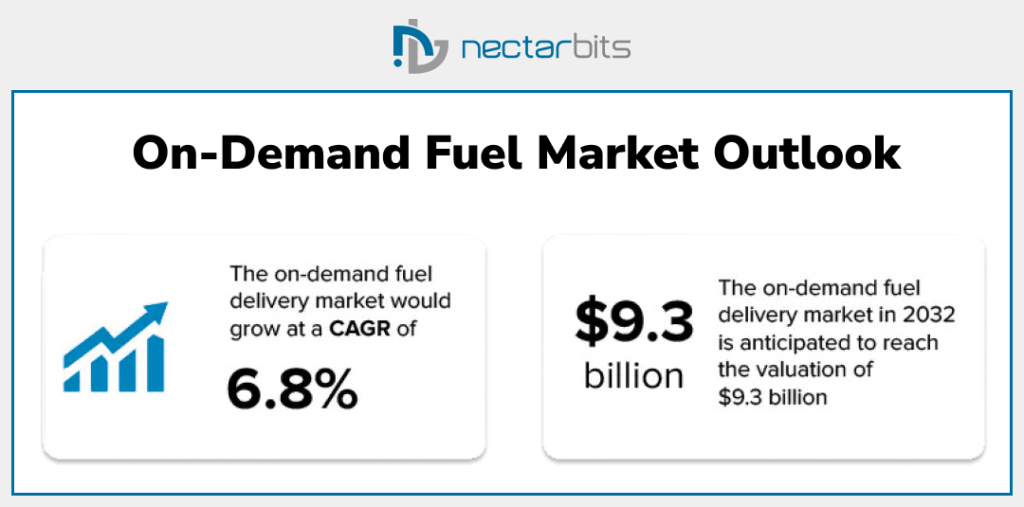
Market Growth Snapshot: According to industry research, the global on‑demand fuel delivery market is expected to grow from about USD 5.06 billion in 2025 to USD 12 billion by 2035, reflecting a strong CAGR of approximately 9.1% during this period, highlighting rising demand for convenient, app‑based fuel services.
Here are the key factors driving market growth:
1. Convenience-Driven Consumer Behavior
Modern consumers value time and efficiency. Fuel delivery apps allow users to schedule refueling at their home, office, or parking location, eliminating queues, traffic delays, and manual payments. This shift toward app-based services mirrors the broader on-demand economy trend.
2. Fleet Digitization
Commercial fleets are rapidly adopting GPS tracking, telematics, and automated reporting systems. Fuel delivery platforms integrate with these tools, helping businesses:
- Reduce driver downtime
- Track fuel consumption in real time
- Improve operational efficiency
- Fuel becomes a controlled, trackable asset rather than an unmanaged expense.
3. Rising Corporate Fuel Management Demand
Enterprises with large fleets need centralized billing, fraud prevention, and real-time fuel analytics. On-demand platforms provide automated invoicing, usage monitoring, and bulk refueling solutions — making them attractive for corporate partnerships.
4. Smart City Initiatives
Cities like Dubai are promoting smart mobility and digital infrastructure. Companies such as CAFU have leveraged this environment to scale mobile fuel delivery under regulated safety standards.
5. Tech-Enabled Logistics
Modern fuel delivery apps use AI-based route optimization, GPS tracking, and IoT-enabled smart meters to reduce inefficiencies and improve profitability. This technology-driven approach makes the model scalable and future-ready.
Meet the CAFU Fuel Delivery App
The company analyzed that drivers or individuals in the UAE spend at least 10-30 minutes at petrol stations to refill their tanks, equating to 9-27 hours wasted annually—time that can be saved by adopting on-demand services. By eliminating delivery charges, users can put 1,000 Dirhams back in their pockets.
With the CAFU launch, users simply need to download the mobile app for iOS or Android devices, register, and enter their car and payment details. When refueling is required, they enter their location, and the refueling trucks (Super 98 and Special 95) arrive at the scheduled time. Customers pay no extra amount for doorstep fuel delivery, with prices sometimes lower than those at fuel stations—a win for consumers.
Read More:-Top 7 Success Fuel Delivery Apps: Features and Technology Stack
Essential Features Required to Build an App Like CAFU
To build an app like CAFU, you need more than basic fuel booking functionality. A successful on-demand fuel delivery app development strategy must combine real-time logistics, compliance monitoring, smart routing, and secure digital payments. Our white-label fuel delivery software provides these ready-to-deploy features for gas stations and distributors
A scalable fuel delivery platform typically consists of three major components: the Customer App, Driver App, and Admin Dashboard. Each plays a critical role in operational efficiency and user satisfaction.
Customer App Features
The customer application is the core revenue-driving component. It must be simple, fast, and highly reliable.
1. Schedule Fuel Delivery
Users should be able to request instant refueling or schedule deliveries in advance. Scheduled deliveries improve fleet planning and reduce last-mile inefficiencies.
2. Real-Time Tracking
Live GPS tracking allows customers to monitor fuel truck arrival time. Integration with mapping APIs ensures accurate ETA visibility and increases trust.
3. Multiple Vehicle Profiles
Users can add and manage multiple vehicles (personal cars, bikes, corporate fleets). This is essential for B2B fuel delivery models.
4. Subscription Plans
Recurring fuel subscription models improve retention and predictable revenue. Businesses often prefer weekly or monthly fuel supply plans.
5. Digital Invoices & Order History
Automatic invoice generation helps both individual users and corporate clients maintain transparent expense tracking.
6. Secure Payments
Integration with secure payment gateways (cards, UPI, wallets, corporate billing) with encrypted transactions ensures regulatory compliance and user confidence.
Driver App Features
The driver app ensures safe, optimized, and compliant fuel delivery operations.
1. Route Optimization (Google Maps API Integration)
Smart routing reduces fuel consumption, shortens delivery time, and lowers operational costs through automated route suggestions.
2. Fuel Volume Logging
Drivers must digitally record dispensed fuel volume to prevent discrepancies and ensure inventory accuracy.
3. Delivery Proof Capture
Photo verification, digital signatures, or OTP-based confirmation ensures accountability and reduces disputes.
4. Order Batching
Drivers can manage multiple nearby delivery requests in one optimized trip, increasing delivery efficiency and ROI.
5. Hazard Safety Checklist
A mandatory pre-delivery safety checklist ensures compliance with fuel transportation regulations and minimizes risk.
Admin Dashboard Features
The admin panel acts as the control center of the entire fuel delivery ecosystem.
1. Fleet Management System
Monitor fuel trucks, driver performance, maintenance schedules, and vehicle availability in real time.
2. Advanced Analytics & Reporting
Track KPIs such as delivery time, customer acquisition cost, repeat orders, fuel consumption trends, and revenue metrics.
3. Heat Maps (High-Demand Zones)
Demand heat mapping helps identify high-frequency delivery areas, enabling better resource allocation and expansion planning.
4. Zone-Based Pricing
Dynamic pricing based on delivery location, demand density, or fuel type increases profitability.
5. Corporate Account Management
Dedicated dashboards for enterprise clients allow bulk ordering, invoicing control, and fuel usage tracking — critical for fleet fuel management solutions.
Ready to launch your CAFU-like app?
Get the complete feature roadmap and cost breakdown
How CAFU Fuel Delivery App Seizes an Edge in the Crowded Market
As other fuel delivery service providers have emerged, CAFU has continued to offer value-added services to stay ahead. Key initiatives include:
- Making cities smarter by eliminating physical fuel stations.
- Using smart meters and fuel pumps to ensure accurate fuel filling.
- Reducing the probability of fuel spillage.
- Ensuring quality and safety with ESME-certified petrol usage.
- Providing service at the moment customers need refueling, regardless of time or place.
Despite these advancements, maintaining user attention and retention requires a strategic plan incorporating the right mix of technology, tools, and people. CAFU effectively executed this strategy.
The Marketing Strategy – CAFU Fuel Delivery App
Brand awareness was crucial, and CAFU employed intelligent tactics, including:
- Offline advertising with huge billboards on Sheikh Zayed Road and in Cairo to increase brand visibility.
- Designing special CAFU vans for fuel delivery.
- Offering the first refueling service free to entice first-time customers.
- Investing significantly in corporate social responsibility initiatives to raise social awareness.
Once customers experienced the car refueling service, CAFU engaged them with unique tactics to earn loyalty, such as:
- An influencer campaign with Kris Fade to boost customer engagement.
- Giveaway campaigns like the “Night Owl” award and other referral initiatives to intrigue users with free perks and improve retention rates.
- Implementing Google ads and retargeting campaigns.

Diversified Portfolio
CAFU is not just focusing on car refueling services in the UAE; the company has diversified its offerings to include motorcycles, corporate fleets, boats, and vehicle maintenance services. Additionally, it is investing in AI and ML technology for app development to enhance user experience and product quality.
These expanded market segments and technological investments have allowed CAFU to keep pace with industry giants and drive innovation. However, it is crucial for the company to establish KPIs to measure performance and success since high ROI or positive feedback doesn’t reveal everything.
Operational Challenges in the Fuel Delivery Business
While the on-demand fuel delivery business model offers strong revenue potential, operating a mobile fuel distribution platform is far more complex than traditional delivery services.
Fuel delivery involves hazardous materials, high-value inventory, volatile pricing, and strict regulatory oversight. Without the right operational systems and technology infrastructure, profitability can quickly decline.
Understanding these real-world challenges is essential before investing in fuel delivery app development.
1. Dead Mileage & Empty Runs
One of the most significant operational issues in fuel logistics is dead mileage — when tanker vehicles travel without completing revenue-generating deliveries.
This typically happens due to:
- Poor route planning
- Low-demand zones
- Returning to depots with partial loads
- Uneven order distribution
Dead mileage increases fuel costs, labor expenses, and vehicle depreciation, directly affecting margins.
Reducing dead mileage requires intelligent dispatch systems and demand heat mapping. Deploy our automated Fuel Delivery Dispatch Software that eliminates empty runs through AI-powered order batching.
2. Route Inefficiency & Urban Constraints
Fuel trucks face additional restrictions compared to regular delivery vehicles:
- Traffic congestion
- Hazard transport route limitations
- Parking constraints
- Residential safety concerns
Without AI-based route optimization and real-time fleet tracking, delivery time and operational cost increase significantly.
3. Fuel Theft & Inventory Shrinkage
Fuel is a liquid asset, making it vulnerable to:
- Unauthorized siphoning
- Meter tampering
- Quantity misreporting
- Internal fraud
Even minor discrepancies per trip can result in substantial annual losses.
To prevent this, companies must integrate:
- IoT-enabled smart fuel meters
- Real-time volume validation systems
- GPS-based tanker monitoring
- Automated reconciliation dashboards
This challenge directly influences hardware and backend architecture decisions.
4. Fuel Price Volatility
Fuel prices fluctuate due to:
- Global crude oil markets
- Government taxes
- Distribution margins
- Regional supply constraints
Price instability affects subscription plans, corporate contracts, and profit margins.
Fuel delivery platforms need dynamic pricing models and zone-based pricing logic to remain profitable.
5. Fleet Management & Compliance Complexity
Managing a fuel fleet involves more than assigning drivers. Operators must monitor:
- Hazardous goods driver certifications
- Tanker maintenance and calibration
- Insurance documentation
- Regulatory compliance deadlines
- Safety inspection records
Without centralized fleet management software, compliance risks increase and operational visibility decreases.
Why These Challenges Matter
These operational complexities explain why fuel delivery is not just a simple mobile app — it requires advanced technology architecture, IoT integration, and compliance systems.
Technology Behind the CAFU On-Demand Fuel Delivery App
With CAFU on-demand fuel delivery apps, thanks to advanced technologies, fuel delivery is ensured to provide seamless fuel delivery for the users. Because CAFU combines geolocation services with real-time tracking, they are always able to pinpoint customers and send out fuel trucks quickly. In the fuel pumps, fuel meters are smart meters that eliminate discrepancies.
Additionally, CAFU has spent a great deal of money on AI & Machine Learning in order to improve route planning, shorten delivery time, and accurately predict demand. Payment gateway integration makes payments secure, and a user-friendly mobile interface for both iOS and Android helps for a smoother customer journey from order to delivery. By using these cutting-edge technologies, CAFU not only streamlines the process but also scales efficiently, as demand for on-demand fuel increases.
Ready to make your own unique on-demand fuel delivery app? Contact our team of experts today for a free consultancy!
Hardware & IoT Integration in Fuel Delivery Platforms
Building a fuel delivery app like CAFU is not just about mobile app development. A successful on-demand fuel delivery platform requires deep integration between software systems and physical fuel distribution hardware.
Unlike food or grocery delivery apps, fuel delivery operations rely heavily on IoT devices, smart meters, tanker sensors, and anti-theft systems to ensure accuracy, safety, and compliance. Our IoT-ready white-label fuel delivery software provides seamless hardware integration out-of-the-box.
This hardware layer significantly impacts both platform architecture and overall development cost.
Why Hardware Integration Is Critical in Fuel Delivery
Fuel is a high-value, hazardous commodity. Even minor discrepancies in fuel quantity or handling can result in financial losses, safety risks, or regulatory violations.
To prevent this, modern fuel delivery platforms integrate real-time hardware validation systems.
Core Hardware & IoT Components Required
1. Smart Fuel Meters
Digital fuel dispensing meters are installed in tanker trucks to:
- Measure precise fuel volume
- Prevent over-dispensing
- Record transaction data automatically
- Sync fuel quantity data with the backend system
These meters integrate with the app dashboard to ensure transparent billing and eliminate disputes.
2. IoT Tank Sensors
IoT-enabled sensors monitor:
- Fuel tank levels in delivery vehicles
- Temperature and pressure conditions
- Leak detection alerts
- Real-time fuel availability
This data is transmitted to cloud servers, enabling centralized monitoring and predictive maintenance.
3. Anti-Theft & Tamper Detection Systems
Fuel theft is a common risk in fuel logistics. Advanced systems include:
- Tamper-proof valve monitoring
- GPS geofencing alerts
- Unauthorized fuel extraction detection
- Real-time tanker lock control
These systems protect inventory and improve operational accountability.
4. Real-Time Volume Validation
To maintain accuracy, platforms integrate:
- Automated fuel volume reconciliation
- Backend cross-verification with meter readings
- Digital proof of fuel dispensing
- Audit-ready transaction logs
This ensures regulatory compliance and customer trust.
How IoT Integration Impacts App Architecture
Hardware integration requires:
- Secure API communication between IoT devices and backend servers
- Real-time data streaming architecture
- Cloud-based data storage for fuel logs
- Encrypted device authentication
- Fail-safe error detection systems
This adds complexity to system design but ensures reliability and scalability.
Regulatory & Safety Compliance in Fuel Delivery Apps
Fuel delivery is not a conventional on-demand service like food or grocery delivery. It involves transporting flammable and hazardous materials, making regulatory compliance a critical pillar of any fuel delivery app development strategy.
Before launching a platform similar to CAFU, businesses must comply with hazardous goods transport laws, environmental standards, and fire safety regulations specific to their operating region.
Global Regulatory Authorities & Compliance Requirements
Below is a comparison of major regulatory authorities and how their requirements influence fuel delivery app architecture:
| Region | Regulatory Authority | Key Compliance Requirements | Impact on App Architecture |
|---|---|---|---|
| UAE | Dubai Civil Defence | Fire safety approvals, tanker certification, fuel handling permits | Integrated safety checklist, tanker monitoring, emergency response module |
| United States | Environmental Protection Agency | Spill prevention control, emissions standards, fuel storage monitoring | Environmental reporting dashboard, automated compliance logs |
| India | Petroleum and Explosives Safety Organisation | Hazardous goods transport license, fuel storage approval, certified drivers | License tracking system, audit-ready documentation management |
Key Compliance Requirements for Fuel Delivery Platforms
To operate legally, a fuel delivery business must ensure:
- Hazardous materials (HAZMAT) transportation permits
- Licensed fuel storage facilities
- Certified tanker vehicles with pressure-tested tanks
- Driver hazardous goods certification
- Real-time GPS tracking for fuel trucks
- Emergency spill response protocols
- Insurance coverage for fuel transportation
These requirements are not optional. Regulatory audits can occur without notice, and non-compliance may result in fines, suspension, or permanent operational shutdown.
Why Compliance Directly Impacts App Cost & Architecture
Regulatory requirements significantly affect both the technical design and total development cost of a fuel delivery app.
1. Advanced Backend Infrastructure
Unlike traditional delivery apps, fuel platforms require:
- Real-time fuel volume monitoring
- IoT-enabled smart dispensing integration
- GPS fleet tracking with tamper-proof logs
- Cloud-based compliance data storage
- Role-based access control for audit readiness
This increases backend development complexity.
2. Higher Development & Maintenance Costs
Compliance modules such as:
- Safety checklist automation
- Digital documentation storage
- Environmental reporting tools
- License expiration tracking
- Incident reporting systems
Add additional development hours, security layers, and long-term maintenance expenses.
3. Security & Data Protection Requirements
Since fuel logistics data is sensitive and subject to inspection, platforms must implement:
- End-to-end encryption
- Secure API integrations
- Multi-factor authentication
- Regulatory-compliant cloud hosting
This directly increases infrastructure investment but ensures legal and operational stability.
On-Demand Fuel Delivery App Development Cost
Factors like the complexity of the on-demand fuel delivery app, its features, and the region where the app is within determine the cost of developing an on-demand fuel delivery app like CAFU. Key factors influencing the fuel delivery app development cost include:
- App Features: For example, basic features like user registration, location tracking, and payment integration will be more cost-effective than its advanced functionalities like real-time tracking, AI-based route optimization, and predictive demand model will increase the time to build the development cost.
- Development Team: The cost varies depending on whether or not you hire an in-house team, or outsource app development. The price of developers also varies based on location, regions like North America will charge more than South Asia.
- App Platform: Focusing on a single platform will cost less to develop apps than if you would develop apps for both iOS and Android.
- Maintenance and Upgrades: The fuel delivery app development project has its own ongoing costs such as post-launch maintenance, bug fixing, and updates.
| Cost Factor | UAE | South Africa | US |
| App Platform (iOS & Android) | $20,000 – $35,000 | $15,000 – $30,000 | $30,000 – $50,000 |
| UI/UX Design | $5,000 – $10,000 | $3,000 – $8,000 | $10,000 – $20,000 |
| Backend Development | $15,000 – $30,000 | $10,000 – $25,000 | $25,000 – $40,000 |
| Real-time GPS Tracking | $10,000 – $15,000 | $7,000 – $12,000 | $12,000 – $20,000 |
| Payment Gateway Integration | $5,000 – $10,000 | $3,000 – $7,000 | $8,000 – $12,000 |
| AI/ML Integration (Predictive Analysis) | $10,000 – $20,000 | $7,000 – $15,000 | $20,000 – $35,000 |
| API Integration for Fuel Suppliers | $8,000 – $15,000 | $5,000 – $10,000 | $12,000 – $20,000 |
| Security Features (SSL, Encryption) | $5,000 – $8,000 | $3,000 – $6,000 | $8,000 – $12,000 |
| Testing & QA | $5,000 – $10,000 | $3,000 – $7,000 | $10,000 – $15,000 |
| App Maintenance (1 year) | $15,000 – $25,000 | $10,000 – $18,000 | $25,000 – $40,000 |
| Total Development Cost (Range) | $98,000 – $178,000 | $66,000 – $138,000 | $160,000 – $264,000 |
The cost of building an on-demand fuel delivery app like CAFU would normally be somewhere between $60k to $270k on average, depending on these variables and the location you choose to hire professional developers.
How Does CAFU Make Money? The Business Model Explained
The big question that every successful startup has to answer is, “How does CAFU make money?” The CAFU revenue business model is based primarily on fees for delivering fuel to customers, although the platform has many additional streams of revenue that make it extremely lucrative.
Delivery Charges: During the pandemic, CAFU took delivery charges off for a period, but of course, delivery is now for a fixed fee per delivery. 18 AED per order or a monthly subscription of 26 AED that comes with free deliveries, customers can choose.
Fuel Sales: The CAFU business model partners with certified fuel suppliers which means they are sometimes able to offer fuel at competitive prices compared to petrol stations within the locality. This pricing strategy does what it wants without lowering too much profit margins and still attracts cost-conscious customers.
Corporate Partnerships: Corporate fleet services have also generated revenue for CAFU. For large companies with large fleets of vehicles, the CAFU business model provides fuel delivery services to the whole fleet, resulting in a constant income source for CAFU.
Diversified Services: In addition to fuel delivery, CAFU has also grown into services such as vehicle maintenance, boat refueling, and motorcycle fuel delivery, driving CAFU revenue and attracting new customer segments.
Over the years through these various business strategies, CAFU has created a solid and scalable business model and has risen to be a leader in the on-demand fuel industry.
How to Start Your Own Fuel Delivery Business
Starting a fuel delivery business requires a structured approach that combines market validation, regulatory compliance, fleet infrastructure, and advanced technology. Here’s a simplified roadmap entrepreneurs can follow:
1. Conduct Market Research
Begin by analyzing fuel demand in your target region. Identify high-density residential zones, commercial hubs, and corporate fleet opportunities. Study competitors, pricing regulations, and government fuel policies to determine long-term profitability. Strong market research reduces risk and improves scalability. Use insights from our top fuel delivery apps analysis to benchmark against market leaders.
2. Obtain Legal Approvals & Licenses
Fuel delivery involves hazardous material transportation, which means regulatory approvals are mandatory. You will need transport permits, certified storage approvals, fire safety clearance, and commercial liability insurance. Compliance is not optional — it directly impacts operational eligibility and credibility.
3. Acquire and Equip Your Fleet
Your fuel tanker vehicles must be certified and equipped with smart fuel dispensing meters, GPS tracking, and IoT monitoring systems. These technologies ensure accurate fuel measurement, prevent theft, and maintain safety standards. Fleet investment is typically one of the largest startup costs.
4. Develop a Scalable Fuel Delivery App
Professional fuel delivery app development is essential for managing orders, tracking deliveries, optimizing routes, and processing secure payments. The platform should include a customer app, driver interface, and admin dashboard. Real-time tracking, route optimization, and compliance monitoring are critical features for operational success.
5. Launch a Pilot Program
Instead of expanding immediately, start with a controlled launch in a limited service area. This allows you to test logistics efficiency, validate pricing strategies, collect customer feedback, and refine operational workflows before scaling.
6. Scale Strategically
Once your model is validated, focus on expansion through fleet growth, subscription plans, corporate fuel contracts, and AI-driven demand forecasting. Strategic scaling helps maintain profitability while increasing market share.
Starting a fuel delivery business is not just about entering a trending industry — it requires aligning logistics, compliance, hardware infrastructure, and technology into one integrated system. Entrepreneurs who execute these steps carefully can build a sustainable and scalable on-demand fuel delivery platform.
Conclusion
On-demand solutions have effectively addressed people’s instant gratification needs. No one could have imagined that a combustible commodity would also be available anytime, anywhere. However, since the pandemic, customer behavior has changed from visiting storefronts to purchasing products from the comfort of their homes. This is why on-demand app services are seeing rapid growth in both popularity and revenue as they try to capitalize on this growing trend in the global market.
CAFU in the UAE is a prime example of this innovation. The company has captured a significant market share while adhering to all safety and regulatory requirements set by the nation’s government. The right mix of technology, tools, and tactics has strengthened its foothold, built customer trust, and significantly increased revenue.
Frequently Asked Questions (FAQs)
CAFU primarily generates revenue through fuel delivery charges, corporate partnerships, and diversified services. During the pandemic, they waived delivery fees, but now, they charge a fixed fee per order or offer a subscription model for unlimited free deliveries.
1) Delivery charges: 18 AED per order
2) Subscription option: 26 AED/month
3) Partnering with certified fuel suppliers
4) Expanding into services like vehicle maintenance
The CAFU business model revolves around providing on-demand fuel delivery services to individual customers and corporate fleets. By partnering with certified fuel suppliers, they can offer competitive fuel prices. CAFU also offers a subscription service for regular users.
1) Fuel delivery to homes, businesses, and fleets
2) Subscription service for regular customers
3) Diversified into motorcycle and boat fuel delivery
4) Vehicle maintenance services added to the portfolio
CAFU began with on-demand fuel delivery but has expanded into several other services, making it a versatile player in the UAE market. In addition to refueling, CAFU now caters to corporate fleets, motorcycles, and boats, and offers vehicle maintenance services.
1) Car, motorcycle, and boat refueling
2) Corporate fleet fuel delivery
3) Vehicle maintenance services
4) AI-driven route optimization for faster delivery
CAFU’s app allows users to refuel their vehicles without visiting petrol stations. By downloading the app, registering, and scheduling a time for fuel delivery, users can enjoy a convenient, hassle-free experience.
1) Users register and enter car/payment details
2) They schedule refueling via the app
3) Fuel trucks arrive at the set location and time
4) Smart meters ensure accurate fuel measurements
CAFU leverages advanced technologies to enhance its service. The app integrates real-time GPS tracking and AI-based route planning to ensure fast and efficient fuel delivery.
1) Real-time GPS tracking for customer location
2) AI for route optimization and delivery prediction
3) Smart meters to ensure accurate fuel delivery
4) Secure payment gateway for seamless transactions



 Anil Patel