
 Himanshu Patel
Fuel Delivery App Development Cost Analysis
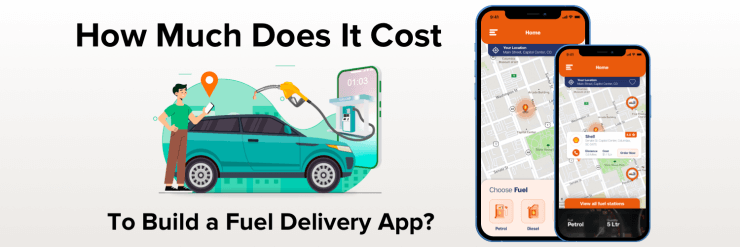
Navigating the complexities of fuel delivery app development involves a comprehensive understanding of the associated costs. From backend infrastructure to user interfaces, each element influences the overall expenditure. Businesses aiming to penetrate the fuel delivery market must grasp the intricacies of cost analysis. In this blog, we explore the exact expenses involved in developing a fuel delivery app, providing insights into key considerations and budgetary implications.
The Cost of Developing an On-Demand Fuel Delivery App Development around $10000 to $20000.
Have you ever heard about fuel delivery stations on wheels a decade back?
The answer is NO. Even carrying fuel delivery app tanks for the long journey was not preferred by the people as it’s a combustible commodity. However, the things that were difficult-to-imagine has now become possible.
The disruptive innovation- Uber for refilling the fuel tanks anytime, anywhere, is the hottest trend in the niche market. From start-ups to the leading players are expanding the market reach in the most regulated and complicated industry. Even the investors are considering an investment in fuel delivery apps as a hotbed of opportunities.
- FuelBuddy raises $2 million to expand business across different nations.
- Booster raises $56 million to expand the business services and improve the tech stack.
- Yoshi which raised $2.1 million in seed funding, has raised more amount to launch its services in more states.
- Other players are booming.
Market Size and Growth Projections for Fuel Delivery Apps
The momentum behind on-demand fuel delivery isn’t just fueled by startups and investors; it’s reflected in the numbers, too. Currently, the global market for these apps is valued at over $3.2 billion. And this ride is only picking up speed: industry experts predict the sector will experience a robust compound annual growth rate of nearly 18% through 2026.
Such impressive growth clearly signals that on-demand fuel delivery is more than a fleeting trend; it’s carving out a permanent spot in the transportation and logistics landscape.
It seems that On-Demand Fuel Delivery App Solutions is a profitable business from an easy accessibility perspective.
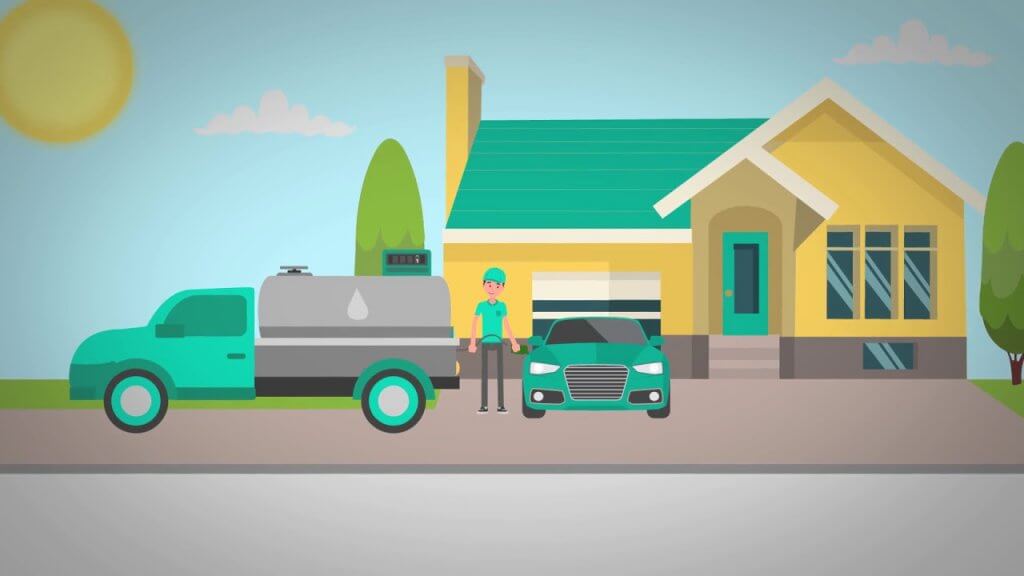
Benefits of On-Demand Fuel Delivery App
Reasons Why On-Demand Fuel Delivery Apps Are Popular
- Save Time And Efforts
- Deliver High-Quality Resources
- Assistance in Emergencies
- Low maintenance Charges
- Higher Customer loyalty
Here are the reasons why customers and fuel stations are giving more credence to the on-demand model:
Time savvy
Eliminating the need to physically move to the fuel station and wait in long queues for their turn, the app enables the customers to get the tanks refilled at the time and place they want.
Ensure quality:
Fuel tanks on wheels don’t have fuel stored for a long time, which reduces the chances of fuel quality getting negatively affected.
Instant help:
How about the situation you were stuck in the middle of the way with fuel running out? It’s the biggest nightmare. That’s where the on-demand fuel delivery provides a big help in such emergencies.
Eco-friendly:
Adulteration of fuel spills is one of the problems associated with fuel station visits. On-Demand Fuel Delivery App Solutions bid goodbye to all of them.
Reasonable rates:
The on-demand fuel Delivery service providers don’t need to invest in maintaining and operating a gas station, and other legal activities. That’s why they deliver the fuel at lower rates than fuel stations.
Improve retention:
In the age of instant gratification, no one likes to stand in long queues, and sometimes, the customers leave the stations without getting the tank refilled. It’s not the case with the on-demand model, which ultimately turns the customer into a loyal fan.
Benefits for Fuel Providers
But it’s not just customers who are reaping the rewards. For fuel providers, the on-demand model unlocks a whole new level of operational effectiveness:
- Streamlined Operations: Digital order management accelerates the shipping process and slashes paperwork, making day-to-day tasks far more efficient.
- Wider Reach: Providers are no longer limited by the physical locations of their stations. The app allows them to serve customers beyond their immediate neighborhoods, tapping into new markets.
- Smarter Business Decisions: With robust data collection features, providers gain valuable insights into demand patterns and customer behavior. This paves the way for better-targeted marketing campaigns and sharper inventory control.
In short, the on-demand fuel delivery model is a win-win for both consumers and providers, offering unmatched convenience, efficiency, and a modern approach to an age-old need.
Must-Have Features of a Custom Fuel Delivery App Solution
Features of Demand Fuel Delivery Apps like Filld
- Sign Up
- Profile Management
- Location Sharing
- Request Fuel Delivery
- Real-Time Tracking
- Payment Integration
- Delivery Schedule
- Push Notification
- Cost Comparison
When building your custom fuel delivery app, it’s crucial to focus on the features that matter most to your users and your business goals. Prioritizing these core functionalities as part of your MVP (Minimum Viable Product) helps you launch faster, gain valuable feedback from early adopters, and refine your service based on real-world use.
Start by identifying which features are absolutely essential for your target market. For instance, seamless sign-up and profile management ensure quick onboarding, while accurate location sharing and real-time tracking give users peace of mind about their delivery. Integrating secure payment options and flexible delivery scheduling meets user expectations for convenience and safety. Meanwhile, push notifications keep customers updated on order status, and cost comparison tools help them make informed decisions.
By focusing on these high-impact features first, you position your app for efficient expansion and a smoother market entry while ensuring your development efforts are aligned with what users need most.
If you want a detailed breakdown of the business model, operational workflow, revenue streams, and real-world implementation strategy, explore our in-depth Filld App Case Study to understand how Filld built a scalable on-demand fleet fueling platform and how you can replicate a similar model.
With this attended to, let’s move to the last but most-awaited section of this article, the cost of fuel delivery apps like Filld.
Order Records and Bill Management
Keeping track of where your fuel is going is just as crucial as getting it delivered to your doorstep. That’s why order records and detailed billing history are must-have features for any successful fuel delivery app.
With these in place, both individuals and businesses can easily:
- Monitor spending: Get a clear overview of past orders, total costs, and usage patterns. This is especially handy for fleet managers keeping an eye on multiple vehicles.
- Effortless expense tracking: Sort and filter order history by delivery address, fuel type, or dates—making it simple to reconcile bills or prep for tax season.
- Instant access to documentation: No more digging through emails for receipts. Printable bills and digital summaries are available right in the app for easy sharing with your accounts team or for reimbursing company expenses.
For businesses and busy families alike, this transparency transforms a simple delivery into a seamless, hassle-free experience.
The Cost to Develop a Fuel Delivery App like Filld
If you are planning to build a mobile app for fuel delivery services with all the features we have mentioned above, the cost range would come out to be somewhere around $40,000 to $60,000.
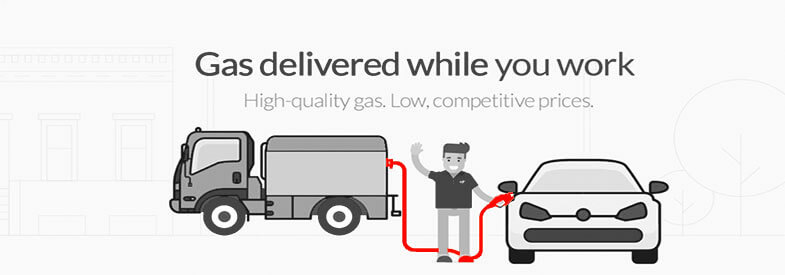
How Long Does It Take to Develop a Fuel Delivery App? The timeline for building a fuel delivery app, much like Filld or Booster, can vary depending on the complexity and features you’re aiming for. Typically, you’re looking at a development window of about 4 to 6 months. This includes everything from initial planning and design to core functionality, testing, and launch.
If you want more advanced features, think AI-driven route optimization, integrations with IoT devices, or robust payment gateways, the process may take a bit longer to ensure everything runs smoothly. To implement these advanced capabilities effectively, choosing the right tech stack for fuel delivery app becomes essential for ensuring seamless performance and scalability. Thorough testing and optimization are key, especially when dealing with real-time deliveries and customer data.
Understanding the MVP: Your First Step Toward a Successful App
Before diving headfirst into bells-and-whistles territory, it’s wise to start with what’s known in the tech world as a Minimum Viable Product (MVP). Think of the MVP as your app’s starter kit: it includes just the essential features needed to meet your customers’ most pressing needs and nothing more.
Why is this so important? Launching an MVP lets you test your business idea in the real world without breaking the bank. You can get your app into the hands of users quickly, gather feedback, and see how your concept holds up under actual day-to-day use. This approach not only saves time and money, but it also helps you avoid building features no one wants. In fact, industry giants like Dropbox and Uber famously started with tightly-focused MVPs before expanding to the platforms we know today.
Ultimately, building an MVP positions your fuel delivery app for smarter, customer-driven growth down the line.
Impressed? Let’s see how the on-demand fuel delivery works:
- The customers download the fuel delivery app and register.
- The fuel delivery request is initiated by manually providing the location or sharing the current location, specifying the fuel type, and quantity, and confirming the price.
- Before confirmation, the customers are allowed to compare the costs of different fuel service providers to make a profitable decision.
- The location-aware app tags the customer’s location and sends the fuel delivery request to the nearby fuel truck driver.
- Before the driver reaches the destination, the customers can track the driver in real-time from the moment the fuel delivery request is made. It helps them know ETAs that improve the customer experience.
- The driver reaches the customer’s location by navigating through an in-built map.
- The car tank was refilled while maintaining all the safety regulations.
- Later, the customers can make the payment using various payment modes, once the car tanks are refueled.The app supports a range of secure and convenient options—think virtual wallets, credit or debit cards, and even in-app credit systems. Instant payment authorization ensures a smooth experience, and any applicable discounts or rebates are automatically applied. For added convenience, users can also save their preferred payment methods for faster checkout in the future.
- Push notifications are sent to the customer for all the activities associated with fuel delivery service to keep the customers informed. The push notifications for discounts or coupon codes is also famous.
Registration-fuel delivery booking request- request confirmation- driver marches to customer’s location- tanks refilled with fuel- customer makes the payment you can show it in a picture form.
It’s damn easy. Do you want to make the most out of the lucrative opportunities? If so, there are a couple of things you need to get ready.
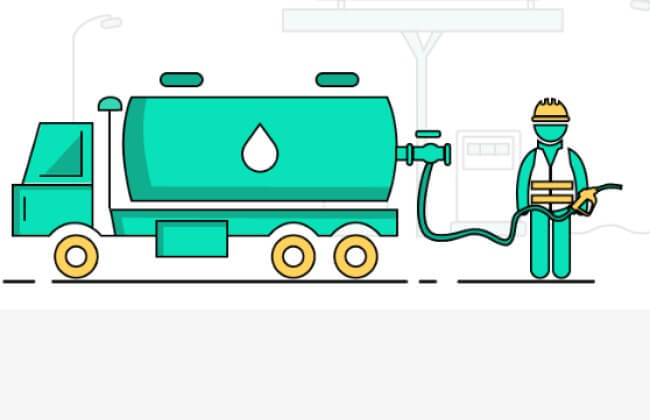
How can you build an on-demand fuel delivery business?
Choose the Right Business Model
When launching your fuel delivery app, choosing the right business model is crucial. Here are a few options to consider:
- Commission-Based Model: Charge a percentage or flat fee on each fuel delivery made via your platform, much like Uber or DoorDash do in their respective spaces.
- Subscription Plans: Offer recurring plans for individuals or fleets that need regular refueling—think of it as the “Amazon Prime” of fuel delivery, with added perks or discounted rates.
- Direct Fleet Service: Cater to companies with in-house vehicles by providing exclusive fuel delivery contracts, ideal for logistics businesses or transportation companies like DHL or FedEx.
- Partner Model: Collaborate with existing fuel stations or suppliers, acting as their tech-powered delivery arm. You act as the bridge, while they handle sourcing the fuel.
Selecting the model that matches your market and goals will set the foundation for a sustainable, profitable business.
Infrastructure:
IT infrastructure is all-important to operating the fleet of fuel tanks. Well, GPS technology can help in tracking truck drivers in real time and providing additional information, but it’s not enough when an inflammable commodity is delivered through trucks.
Smart IoT devices and Bluetooth devices have intelligent sensors that can track critical data (fuel chambers’ temperature and pressure) and report it to the owner immediately. Moreover, it makes suggestions to drivers based on the severity of the problem else the sensors make the decisions by themselves.
Real-Time Monitoring & Reliable Delivery
Along with GPS, integrating telematics technology and real-time monitoring systems is crucial for maintaining transparency and safety. Automatic notifications keep operators and customers informed about delivery status, estimated arrival times, and any potential delays. These systems don’t just improve efficiency—they’re essential for building customer trust and ensuring that every delivery complies with strict safety regulations. With continuous surveillance and instant alerts, you can guarantee timely pickups, safe transit, and reliable, hassle-free service that customers can count on.
Managing Inventory and Fuel Quality
Having your infrastructure and fleet in place is a solid start, but inventory management and fuel quality control are just as crucial for your fuel delivery venture.
To keep things smooth, you’ll want to implement robust systems that track how much fuel is in each delivery truck and storage facility at any given time. This could mean using integrated inventory management tools, smart meters, or even RFID tagging to avoid dreaded shortages (or overstock).
But, let’s not forget about quality. No one wants contaminated fuel delivered to their car or generator! Here’s where real-time monitoring comes in: equip your trucks and storage tanks with modern sensors (think IoT devices from brands like Siemens or Honeywell) that constantly check fuel temperature, pressure, and purity. These sensors flag any irregularities—like water contamination or temperature spikes—so action can be taken before fuel ever reaches the customer.
Periodic lab testing, automated alerts, and digital checklists for drivers also help ensure your fuel always meets regulatory and safety standards. When you combine smart tech with vigilant processes, you get a delivery service that’s not only efficient but also totally trustworthy.
The fleet of vehicles:
When you have an infrastructure in place, it’s essential to do grassroots work, that is building a fleet of fuel delivery trucks. Try to keep the fuel trucks that can deliver all types of fuels such as diesel, petrol, and gasoline. Also, the fleet of fuel trucks must abide by the safety and regulatory compliances adhered to by the nation’s government.
Regulatory Compliance and Safety Laws
Navigating the maze of safety laws and fuel handling regulations is a core part of running an on-demand fuel delivery operation—there’s simply no way around it. Just like how you need to track temperatures and pressures with smart IoT sensors, you also need to stay alert for the complex and ever-changing rules set by government agencies. These aren’t guidelines you can gloss over. Forgetting or ignoring them can quickly lead to penalties, hefty fines, or your service coming to a screeching halt.
Every location might have its own licensing requirements and safety standards (think: DOT in the U.S. or TSSA in Ontario), so it pays to stay a step ahead with routine compliance checks and a lawyer who lives for the fine print. Make it a habit to update your operations based on the latest legal updates, whether it’s for hazardous materials handling, emergency procedures, or driver certifications, so your business keeps running safely and smoothly.
Software solution:
You have built the fleet of vehicles and infrastructure, it’s time to begin fuel delivery operations. But you can’t start without having the mobility solution in place. Develop a mobile interface for the customers that’s easy to use and has a robust back-end that easily integrates with your existing system and is compatible with required devices.
Testing Your Fuel Delivery App
Before you hit the road with your fuel delivery app, make sure it’s been rigorously tested—think of it like a pre-drive checklist for your business.
- Functional Testing: Ensure every feature, from fuel selection to payment processing, operates smoothly without hiccups.
- User Acceptance Testing (UAT): Let real users take the wheel and interact with your app. Their feedback helps you fine-tune the experience before launch.
- Integration Testing: Confirm all modules—like GPS tracking, payment gateways, and notification systems—work together seamlessly, much like making sure all parts of an engine run in sync.
- Performance Testing: Stress test your app under various scenarios (peak hours, multiple simultaneous bookings) to guarantee fast response times and zero crashes.
- Security Testing: Since you’re dealing with sensitive user data and payments, check for vulnerabilities using tools and best practices inspired by big players like OWASP and Norton.
Thorough testing is the fuel that keeps your digital engine purring and your customers happy.
Reporting and analytics:
It’s vital to check whether the operations and services are performing as defined or not to keep the system up and going. The daily, weekly, or monthly reports reveal the same. Additionally, measuring the performance and analyzing the meaningful insights is all-important to reflect the changes and keep the system functioning as expected.
Everything looks so good. You may feel like starting the fuel delivery business today. Isn’t it? But, hold on. There are a lot of challenges that fuel delivery service providers face that make the business tricky to handle. They are:
- Standing out from the crowd and convincing the investors about the unique idea with a proper plan in place is a hard nut to crack.
- Keeping tabs on all the safety measures and regulations enforced by the governments is challenging. Meeting all the safety concerns to keep the business sustainable is also difficult. In fact, delivering fuel through an app is legal in many countries, such as the USA and India, but it’s not a free-for-all, businesses must strictly adhere to local, state, and federal rules. This means securing the right licenses, obtaining permits, and earning safety certifications from transportation and fire authorities before your trucks ever hit the road. Staying compliant not only ensures lawful and secure operations but also helps maintain your company’s reputation and customer trust in an industry where one small oversight can have serious consequences.
- Creating a USP to allure the customers and retain the existing ones is quite a task due to fierce competition.
The tactics and technology will help you to resolve the challenges. Let’s accept these things and handle them intelligently to build an on-demand delivery business. Finally, you want to know the app development cost.
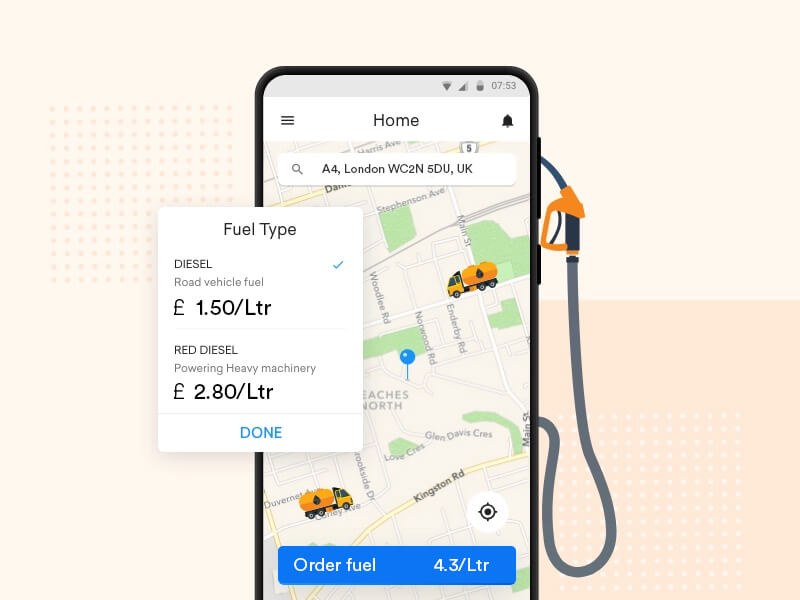
How much does it cost to build a Booster Fuel like a Fuel Delivery App Development?
The fuel delivery app cost ranges from $10,000 to $30,000. The precise estimation is done based on some parameters. They are:
- The number of features = basic
features + advanced features you want. - UI/UX complexity you desire in
the app. - Number of platforms
- Technology stack decision
- Front-end and back-end
development - Development location
- Readymade solution or app development
from scratch
The factors help in calculating the actual cost because every business has a different set of requirements. The best way is to get connected with our business consultants to discuss your fuel delivery app requirements and get a quote for the same. We would love to hear from you.
FAQ
How do I start my Custom fuel delivery service?
Fuel startups can start their own custom fuel delivery services by making doorstep delivery of fuel by making an Uber-like on-demand fuel delivery app. This fuel delivery app will help fuel businesses make fuel deliveries.
Why is it an on-demand fuel delivery app?
With an on-demand fuel delivery app solution, customers can easily order fuel by making a few taps on their smartphones. Also, you can offer the scheduled delivery feature to your customers so that they can get their fuel at a convenient time
Conclusion: How To Get Started With The On-Demand Fuel Delivery App Solutions?
it must be convenient that Custom fuel delivery apps are gradually making their mark in parts of the world. And in the coming years, many other companies will come forward and try hard to set up their foothold in Developing an on-demand fuel delivery app business. But if you are already planning to enter into the fuel-delivery business, then hire a mobile app development Company to create a Custom solution embracing the best choice of features and technologies. The overall knowledge and stability they bring will help you create high-quality code.
So if you have any ideas in mind for making a Custom fuel delivery app or want to migrate your gap and oil business to the digital platform, then you can Contact Us at sales@nectarbits.com or drop a query to our experts for a free consultation.


 Anil Patel