
 Himanshu Patel
What your driver will answer if asked to choose the delivery route? Obviously, he would prefer the highway over the road. The reason for this choice is that the city road is full of problems such as traffic congestion, roadblock, or unexpected diversions which makes it hard for the drivers to deliver fuel. Due to this, you may have to bear exorbitant fuel costs.
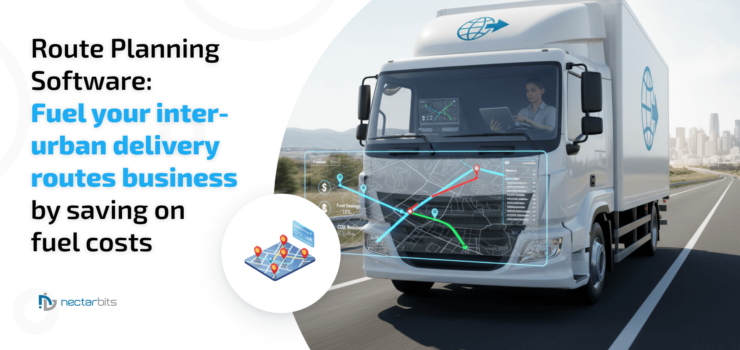
Also, fuel costs can impact the operating budget of the fleet. So if your fuel cost keeps on changing then it’s time for you to tighten your spending on the fuel of your fleet as every inch of fuel costs saved will result in the profitability of your on-demand fuel delivery service. That is why you need to use route planning software. It considers all the delivery constraints like traffic congestion, long turns, and intersections.
Route planning becomes important when it comes to making cost-effective deliveries. But planning your delivery routes is not an easy task. In this blog, we will show you how route planning can help you to save fuel costs along with its benefits.
What is Route Planning Software?
Route planning and optimization software is a technology solution designed to help delivery businesses plan the most efficient routes for their fleets. Unlike manual planning, it uses advanced algorithms, real-time traffic updates, and historical route data to reduce fuel consumption, travel time, and vehicle wear and tear. This technology is often a crucial part of Fleet Management Software, helping businesses coordinate all aspects of their vehicle operations efficiently.
Modern software supports multi-stop routing, vehicle capacity management, and dynamic rerouting, ensuring deliveries are completed efficiently even when traffic, roadblocks, or urgent orders arise. By integrating with GPS, telematics, and on-demand fuel delivery services, this software allows businesses to optimize every route, cut operational costs, and improve overall fleet productivity.
With route planning software, delivery companies can enhance service reliability, meet customer expectations for timely deliveries, and maximize profitability by saving on fuel and vehicle maintenance.
Top Benefits of a route planning software
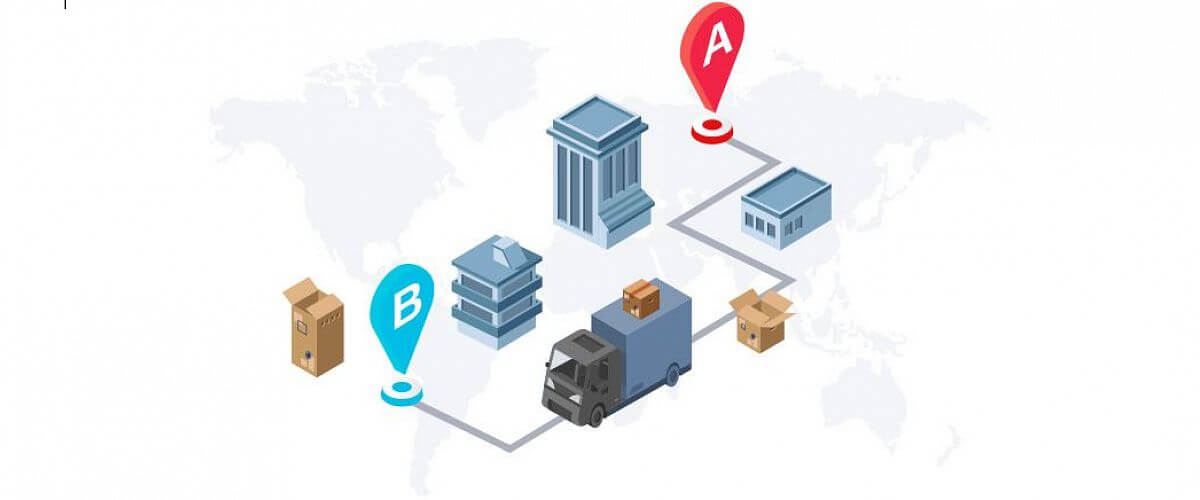
Delivery businesses have to cover several points while making deliveries. Also, there are multiple routes to reach a particular location. Some routes are long and some routes are short and easy. Thus, the choice of an effective delivery route becomes important. This is where the route planning software comes into the picture.
A route planning software uses complex algorithms for route optimization. Also, it can be used to plan the delivery stoppages. Furthermore, a route optimization software considers offers you several benefits:
1. Enhanced safety
Safety becomes a top priority while planning the delivery routes. By using route planning software, admins can plan their delivery routes better so there’s no more unnecessary wastage of time. Minimal time on roads means better safety.
Read more: Start an on-demand fuel delivery business in your region?
When your drivers are on the road, they have to take many turns. Due to these tricky turns, the chances of delays and accidents get increased. But you can avoid such incidents by using route planning software. A route planning software automatically chooses the route with less distance after the entry of location by the driver.
2. Better revenues
Who doesn’t want to earn better revenues in the business? If you are also looking to generate high revenues then you think of using an efficient route planning software into your business.
A route optimization software mainly focuses on reducing the time spent by vehicles on the road. When your vehicles are not on the road frequently, your maintenance costs will decrease and the functional time gets reduced as vehicles are in service for a longer time. Thus, your vehicles wear out slowly which means lower premiums and replacement costs.
3. Higher productivity
An advanced route planning software provides you with a real-time tracking feature that can be used to monitor your driver’s activities. You can know where your drivers are stopping unnecessarily. Also, you can ascertain whether your drivers are using lengthy delivery routes. Thus, by monitoring your driver activities, you can easily remove the bottlenecks in deliveries and improve the productivity of your drivers.
4. Great customer experience
A route planning software allows you to provide a great experience to the customer by suggesting you the best route for delivery. So, now your customer does not have to keep waiting for their deliveries.
You can allow your customers to track their deliveries in real-time. Also, the customer can get updates on their phones about the changes done in the delivery routes or timings.
5. Lower Fuel Costs & Mileage
Optimized routes reduce unnecessary mileage, cutting fuel consumption by 15–25%. By avoiding detours, traffic jams, and backtracking, businesses save significantly on fuel costs while also extending vehicle lifespans and reducing maintenance needs.
6. Time Savings for Planners & Staff
Manual route planning is time-consuming and prone to errors. Automated route optimization completes scheduling in minutes, freeing planners to focus on strategy, managing deliveries more efficiently, and reducing human errors that can cause delays or extra costs.
7. Environmental / Sustainability Gains
Efficient routing lowers fuel usage and reduces vehicle emissions, supporting sustainability goals. By minimizing idle time, unnecessary trips, and excess mileage, businesses contribute to eco-friendly logistics while also benefiting from long-term cost savings.
How route planning software can cut down your fuel costs?
Providing a consistent delivery service and making supply chain and logistics operations cost-effective are two major challenges that delivery businesses are meddling with. But it is not easy to solve both of these issues. Hence they need to embrace an innovative technology such as route planning software that minimizes the delivery delays. Here is how a route planning software can help you to curtail fuel costs:
1. Automatic route planning
It becomes time-consuming to plan the delivery routes manually. But with a route planning software, you can do this planning in just a few minutes. This software contains features that can do lengthy and complicated calculations in less time and with great accuracy. Thus, you don’t have to waste much time in planning and managing delivery routes.
Apart from these, drivers can get higher earnings by making more deliveries. This will ultimately allow you to do more business with your customers.
2. Reduces idle costs
Idling of vehicles is one of the obstacles to route planning. Unnecessary idling wastes fuel due to which may incur high costs. However, you can reduce this idle time by integrating advanced route planning software into your business.
A route planning software sends you a notification while your vehicle is idle so that you can assign deliveries to your drivers. Also, it helps you to manage driver behaviour by providing you with an accurate and customizable report about the idle times of your drivers. It helps you to stop fuel wastage.
3. Predictive Traffic & Historical Data Use
By analyzing historical traffic patterns and using predictive analytics, route planning software anticipates congestion and identifies optimal travel times. This proactive approach reduces stop-and-go driving, saving fuel and improving delivery reliability.
4. Increases number of daily jobs
Every retailer wants their driver to complete more deliveries on a given day. However, you would have to ensure that your drivers do not leave jobs due to an increase in deliveries can increase their workload. That is why you should think of using a robust route planning software for making deliveries.
Route planning software uses real-time tracking tools that enable the admin to optimize the route in such a way that it can reduce both the service costs and timings. Thus, the admins can assign more jobs to the drivers as the delivery timings get decreased.
5. Upgrades the fleet capacity
Nowadays, customers do not think much about the delivery mode but they are mainly concerned about the time of delivery. And with the tremendous increase in orders, businesses need to make more delivery at the same time.
Read more : Fuel Delivery App Technology Stack
To combat this issue, many companies decide to increase the number of fleets. However, this increase in the number of fleets can affect your budget. Instead, you need to fill up your vehicle as per its capacity and plan routes accordingly. By doing so, you can have limited fleets on the road which means lesser fuel consumption.
6. Lessens Fleet management costs
If your vehicle needs frequent repairs that can adversely affect your deliveries. These repairs can incur you high costs that can decrease your profits. That is why you need to manage your fleets carefully so that you do not have to bear the burden of high costs.
However, you can minimize fleet management costs by using route management software. By using this software, you can make efficient deliveries, get better service, and pick up calls. This can lead to minimal wear and tear of vehicles, which results in increased mileage of vehicles.
7. EV / Low-Emission Route Constraints
- Supports electric and low-emission vehicles by factoring in charging station locations, range, and low-emission zones.
- Ensures energy-efficient delivery routes.
- Promotes sustainability while saving costs on fuel or electricity.
Real-World Challenges in Route Planning Software Implementation
While route planning software offers substantial benefits, businesses often encounter several challenges during adoption and daily operations. Understanding these limitations is crucial for effective implementation and optimization. To learn more about common route planning software challenges that businesses face and how to overcome them, keep reading.
1. Data Quality Issues
- Inaccurate or outdated data can lead to inefficient routing decisions, increasing fuel consumption and delivery times.
- Incomplete address information or incorrect geocoding can cause delays and missed deliveries.
- Lack of real-time updates on road conditions or traffic can result in suboptimal route planning.
Example: A study by Kardinal.ai highlights that poor data quality can significantly undermine the effectiveness of route optimization, leading to increased operational costs and customer dissatisfaction.
2. Handling Last-Minute Changes
- Dynamic scheduling is often required to accommodate urgent orders, cancellations, or unexpected traffic conditions.
- Manual intervention may be needed to adjust routes on the fly, which can be time-consuming and error-prone.
- Real-time communication between dispatchers and drivers is essential to implement changes effectively.
Example: According to EliteExtra, automated routing systems can address challenges like last-minute route changes by generating real-time, optimized routes, thereby reducing unnecessary mileage and improving delivery times.
3. Driver Deviations and Compliance
- Drivers may deviate from optimized routes due to unfamiliarity with the software or personal preferences.
- Monitoring compliance with planned routes can be challenging without real-time tracking systems.
- Training and incentives are necessary to ensure adherence to optimized routes and schedules.
4. High Initial Costs
- Upfront investment in software, hardware, and infrastructure can be substantial.
- Ongoing maintenance and updates require additional resources and budget allocation.
- Small businesses may find it challenging to justify the return on investment without clear, measurable benefits.
Example: AI route optimization can lead to long-term savings, but the initial expense may be a barrier for companies with limited budgets.
5. Training and Adaptation Challenges
- Staff training is essential for the effective use of route planning software.
- Resistance to change from employees accustomed to traditional methods can hinder adoption.
- Continuous support and updates are necessary to keep the system aligned with evolving business needs.
While route planning software offers significant advantages, businesses must address these challenges to fully leverage its potential. By investing in quality data, preparing for dynamic changes, ensuring driver compliance, managing costs, and providing adequate training, companies can overcome these limitations and enhance their delivery operations.
Best Practices for Implementing Route Planning Software
Successfully adopting route planning software requires careful planning, structured implementation, and ongoing optimization. Following these best practices ensures maximum benefits while minimizing disruptions:
1. Pilot Deployment
- Start with a small-scale pilot before rolling out the software across the entire fleet.
- Test the software on selected routes to identify potential issues and refine processes.
- Collect data and feedback during the pilot to make informed adjustments.
2. Ensure Clean and Accurate Data
- Maintain up-to-date addresses, delivery locations, and traffic data.
- Validate geocoding and location information to prevent routing errors.
- Accurate data ensures the software generates efficient, fuel-saving routes consistently.
3. Driver Training and Engagement
- Provide hands-on training for drivers to understand the software interface and features.
- Explain the benefits of adhering to optimized routes, including reduced fuel consumption and safer driving.
- Encourage feedback from drivers to improve adoption and compliance.
4. Integration with Existing Systems
Integrate route planning software with your fleet management, dispatch, and CRM systems. Seamless integration ensures real-time tracking, better reporting, and efficient communication. This integration approach aligns with best practices in courier delivery software development, where robust connectivity between systems is crucial.
5. Continuous Monitoring and Adjustment
- Use real-time tracking and analytics to monitor performance and identify bottlenecks.
- Adjust routes dynamically based on traffic conditions, vehicle status, or urgent delivery requests.
- Regularly analyze performance metrics to optimize operations further.
6. Feedback Loops and Continuous Improvement
- Establish feedback mechanisms for drivers, planners, and customers.
- Regularly update routing algorithms based on insights and historical performance.
- Continuous improvement ensures sustained fuel savings, productivity gains, and customer satisfaction.
Final Words
Delivery businesses and logistics companies are finding ways to reduce the fuel costs of their fleet. And they can achieve this goal by making an advanced on-demand delivery solution.
Due to this, their deliveries become more consistent, transparent and cost-effective. Also, your delivery route gets shortened due to which your drivers can make more deliveries. Apart from this, your driver will not have to sit idle now as they would have enough work on hand.
I hope you find this blog insightful. Feel free to reach us if you want to know more about the route planning software
Frequently Asked Questions (FAQs)
On average, route optimization software can help businesses save between 15% and 30% on fuel costs by reducing unnecessary mileage, idle time, and route overlaps. Real-time optimization and automated scheduling also minimize driver downtime, leading to lower operational costs and improved fleet utilization.
Dynamic rerouting uses real-time traffic, weather, and road condition data to automatically adjust routes when disruptions occur. This ensures faster deliveries, better customer satisfaction, and reduced fuel wastage by avoiding congested or blocked routes. It’s especially valuable for on-demand fuel delivery services, where timing and efficiency are critical.
Yes. Modern route planning software supports EV and hybrid fleet optimization by considering factors like battery range, charging station locations, low-emission zones, and terrain conditions. This helps reduce range anxiety and ensures efficient, eco-friendly delivery operations.
The cost depends on the fleet size, number of users, and feature set. For small businesses, plans may start around $50–$200 per vehicle per month, while enterprise solutions with advanced AI-driven analytics and integration features can range from $5,000 to $20,000 annually. Many providers offer free trials or pilot programs to help evaluate ROI before full deployment.

 Anil Patel