

 Anil Patel
In a world captivated by 10-minute grocery deliveries, a quieter but far more powerful revolution is reshaping India’s industrial backbone: on-demand B2B fuel delivery. For decades, businesses have battled chronic fueling inefficiencies, wasted man-hours, capital lost to pilferage, and safety risks from on-site storage.
Enter Fuel4U by Jio-bp, a high-tech, mobile energy distribution service from the formidable joint venture between Reliance Industries and global energy giant bp. Fuel4U isn’t just delivering diesel; it’s delivering a new paradigm of operational efficiency. By bringing a PESO-certified, digitally-tracked fuel station directly to construction sites, corporate campuses, and vehicle fleets, it is systematically eliminating the industry’s biggest pain points.
This is the definitive deep dive into the Fuel4U business model and B2B fuel delivery strategy. We will deconstruct its strategy, analyze its competitive advantages, and provide a blueprint for understanding how it is poised to dominate India’s last-mile energy landscape.
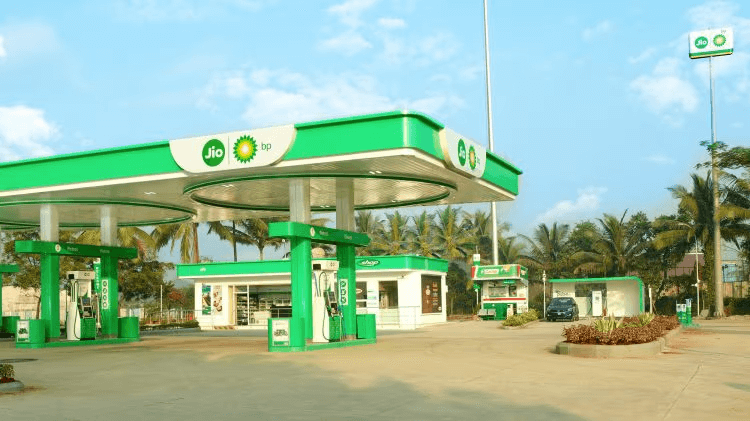
Jio-bp: A Titan Partnership of Tech and Energy
To understand Fuel4U is to understand the immense power of its parentage. The Jio-BP partnership is a strategic fusion of two industry behemoths:
- Reliance Jio: Contributes its disruptive digital DNA, a vast customer ecosystem, and a proven playbook for using technology to capture a market at unprecedented scale.
- bp (British Petroleum): Brings a century of global expertise in fuel science, world-class safety protocols, a robust supply chain, and premium products like its diesel with ACTIVE technology.
Fuel4U is the powerful offspring of this union, designed to be the undisputed leader in on-demand fuel delivery.
Fuel4U at a Glance
| Metric | Value / Description |
| Parent Company | Jio-bp (Reliance & bp JV) |
| Core Service | On-demand, doorstep delivery of high-quality diesel |
| Primary Target Market | B2B: Construction, Manufacturing, Logistics, Mining, Malls, Hotels, Residential Societies (for Gensets), Telecom Towers, Data Centers, Hospitals |
| Value Proposition | Efficiency, Cost Savings, Theft Prevention, Guaranteed Quality & Quantity, Safety, Digital Auditing |
| Key Technology | Mobile App, IoT-enabled Bowsers, Geo-fencing, Digital Payments, WhatsApp Ordering, 24×7 Online Portal |
| Delivery Mediums | Mobile Dispensing Units (MDUs) + HDPE Smart Fuel Containers |
| Regulatory Status | Fully compliant, using only PESO-certified mobile dispensing equipment |
| Current Scale | 20+ states, 1,400+ active delivery sites, 100+ delivery units |
| Ordering Availability | 24×7 via fuel4u.com, WhatsApp, or phone |
Traditional Fueling vs. Fuel4U: A Head-to-Head Comparison
For B2B decision-makers evaluating whether to switch, the numbers speak for themselves. Here’s a direct comparison of traditional fuel procurement versus on-demand delivery through Fuel4U:
| Factor | Traditional Fuel Procurement | Fuel4U On-Demand Delivery |
| Ordering Method | Manual calls, purchase orders, fixed schedules | Mobile app, WhatsApp, 24×7 online portal |
| Delivery Time | 1–3 days, inflexible | Same-day or pre-scheduled, on-demand |
| Fuel Quality Assurance | No independent guarantee, adulteration risk | bp-certified ACTIVE technology fuel, IoT-verified |
| Theft / Pilferage | Industry average: 5–10% loss per cycle | Near-zero — IoT-sealed, digitally logged dispensing |
| On-Site Storage Risk | Barrels and jerry cans = fire/safety/compliance risk | No storage required — fuel arrives as needed |
| Invoicing & Auditing | Manual logbooks, error-prone, hard to audit | Instant GST-compliant digital invoices, full audit trail |
| Regulatory Compliance | Buyer’s responsibility to maintain | Fully PESO-compliant, managed entirely by Fuel4U |
| Payment Options | Limited, often cash-heavy | Online, debit/credit, UPI, JioMoney, fleet cards |
| Minimum Order Flexibility | Often large MOQs required | Flexible — from small site requirements to bulk volume |
Why the Fuel4U Model is Built for India’s Economic Engine
The Fuel4U model isn’t just a good idea; it’s a perfect fit for the specific challenges and opportunities within India’s rapidly growing economy.
- The Infrastructure Boom: With massive government and private investment in construction, highways, and manufacturing, there is an unprecedented number of static and semi-mobile diesel-powered machines operating in remote or hard-to-reach locations.
- The High Cost of Inefficiency: In a competitive market, businesses can no longer afford the “hidden costs” of traditional fueling—machinery downtime, fuel spillage, and an average of 5-10% loss due to pilferage. Fuel4U directly addresses these bottom-line issues.
- The Digital Transformation: The widespread adoption of UPI, smartphones, and GST has made Indian businesses more receptive to digital solutions. They are ready to move from manual logbooks to digital dashboards for better financial control and auditing.
- A Regulatory Push for Safety: Increased government focus on safety and environmental standards makes the old method of storing fuel in unsafe barrels and jerry cans a major compliance risk. Fuel4U offers a fully regulated and safe alternative.
The Five Pillars of the Fuel4U Engine
Fuel4U’s dominance is built on a hybrid model that merges heavy industrial assets with a cutting-edge digital platform.
Pillar 1: The Heavy-Asset Foundation (The Bowsers)
The core of the operation is its fleet of state-of-the-art Mobile Dispensing Units (MDUs) — colloquially known as bowsers. These are not just trucks; they are mobile, compliant, and intelligent assets equipped with IoT sensors, calibrated dispensers, and advanced safety features. This physical fleet creates a high barrier to entry and is the foundation of the service’s reliability. Alongside MDUs, Fuel4U also deploys patented HDPE Smart Fuel Containers — a compact, tamper-proof alternative for sites where a full MDU isn’t needed.
Pillar 2: The Jio Digital Overlayer (The App & Platform)
This is the “Jio” magic. A simple, powerful fuel delivery app allows customers to order fuel, schedule deliveries, track the bowser in real-time, and make digital payments. For B2B clients, a central dashboard provides complete control over fuel consumption, offering digital invoices and auditable records that eradicate paperwork and enable precise financial tracking.
Pillar 3: The B2B Problem-Solving Core (The Value Proposition)
Fuel4U is engineered to solve critical business problems while significantly improving overall fuel delivery performance for B2B operations. It delivers not just fuel, but cost savings by preventing theft, increased productivity by eliminating downtime, guaranteed quality with bp’s advanced diesel, and enhanced safety by removing hazardous storage practices from the worksite.
Pillar 4: The Vertically Integrated Trust Factor (The Supply Chain)
Unlike aggregators, Jio-bp controls the entire fuel journey from its own terminals to the customer’s machine. This vertical integration is the ultimate trust factor, guaranteeing that the fuel is unadulterated, the quantity is precise, and the quality is consistent with the high standards of the bp brand.
Pillar 5: The Partner/Franchise Expansion Model
This fifth pillar is what separates a good on-demand service from a genuinely scalable one. Fuel4U has built a partner/entrepreneurship program that allows local business owners to operate Fuel4U-branded mobile delivery units in their region. This asset-light expansion model means Fuel4U doesn’t need to own every truck or hire every driver centrally. Instead, it franchises the model to local operators who have ground-level knowledge of their markets — rapidly increasing reach, creating employment, and ensuring hyperlocal service quality across India’s diverse geographies.
For entrepreneurs reading this as a business opportunity: this partnership model is itself a viable entry point into the on-demand fuel delivery market without building a brand from scratch.
How Fuel4U Works: The End-to-End Delivery Flow
One of the key reasons for Fuel4U’s rapid B2B adoption is its frictionless, zero-confusion delivery process. Here is exactly how a delivery works from order to engine — start to finish:
Step 1: Place Your Order (Anytime, Any Channel) B2B clients place fuel orders through the Fuel4U website (fuel4u.com), WhatsApp, or by phone — 24 hours a day, 7 days a week. New customers can complete onboarding and place their first order within a single business day. The platform supports advanced scheduling, recurring orders, and emergency same-day requests for critical operations.
Step 2: Dispatch & Smart Routing The Fuel4U operations system assigns the nearest available Mobile Dispensing Unit (MDU) or Smart Fuel Container to the order. Route optimization ensures deliveries are efficient, timely, and cost-effective — especially important for clients managing multiple delivery sites across an industrial zone or city.
Step 3: Real-Time GPS Tracking From the moment the delivery unit departs, clients receive live location updates — just like tracking a food delivery. Site managers can plan machinery schedules, coordinate labour, and prepare receiving points around the arrival time, eliminating idle waiting.
Step 4: IoT-Verified Delivery On arrival, fuel is dispensed via an IoT-calibrated meter that digitally records the exact quantity delivered (in litres), timestamp, GPS coordinates, and delivery agent details. This data is immutable and feeds directly into the client’s digital account dashboard — eliminating any possibility of short delivery or quality disputes.
Step 5: Instant Digital Invoice. Immediately after delivery confirmation, an automated, GST-compliant invoice is generated and delivered to the client’s registered email or accounting system. No paper trail. No manual entries. No month-end reconciliation headaches.
This five-step flow is the operational backbone that makes Fuel4U genuinely valuable for businesses, not just as a convenience, but as a procurement system upgrade.
Fuel4U’s Revenue Model: How the Business Actually Makes Money
A surprisingly overlooked question when analyzing Fuel4U is: how does it actually generate profit? The answer reveals a sophisticated multi-stream model designed for scale and stickiness — not per-litre margin.
1. Volume-Based Fuel Margin Fuel4U purchases diesel at wholesale/bulk rates and delivers it at the prevailing retail selling price (RSP) of the nearest Jio-bp station. The margin per litre is intentionally thin — typically in the range of ₹0.50–₹2/litre — but with 100+ delivery units operating across 1,400+ sites in 20+ states, the model wins at volume, not per transaction.
2. Delivery Fee Revenue A nominal delivery fee applies based on distance, quantity, and frequency. For large or recurring B2B contracts, this fee is often waived or deeply discounted — creating a powerful incentive for clients to commit to long-term volume deals rather than one-off orders.
3. Subscription & Long-Term Contracts The highest-value segment is predictable: construction companies on 12-month contracts, telecom tower operators with weekly refuelling schedules, hospitals and data centres with daily generator requirements. These recurring B2B clients provide stable, high-margin revenue with minimal incremental sales effort.
4. Cross-Sell of Lubricants & Fleet Services. Every fuel delivery is also a sales touchpoint. Fuel4U leverages the full Jio-bp product portfolio — Castrol lubricants, Trans-Connect fleet management, loyalty reward programs (Jio-bp Smiles/4ever) — to generate ancillary revenue from the same client relationships.
5. Partner/Franchise Revenue Share Through the Fuel4U entrepreneurship program, local partners operate delivery units under the Fuel4U brand and share revenue with the parent network. This model rapidly extends geographic coverage while keeping Jio-bp’s capital expenditure lean.
This multi-layered revenue engine is why Fuel4U is built as a scale play, not a margin play, and why it is difficult for underfunded competitors to replicate even if they copy the surface-level model.
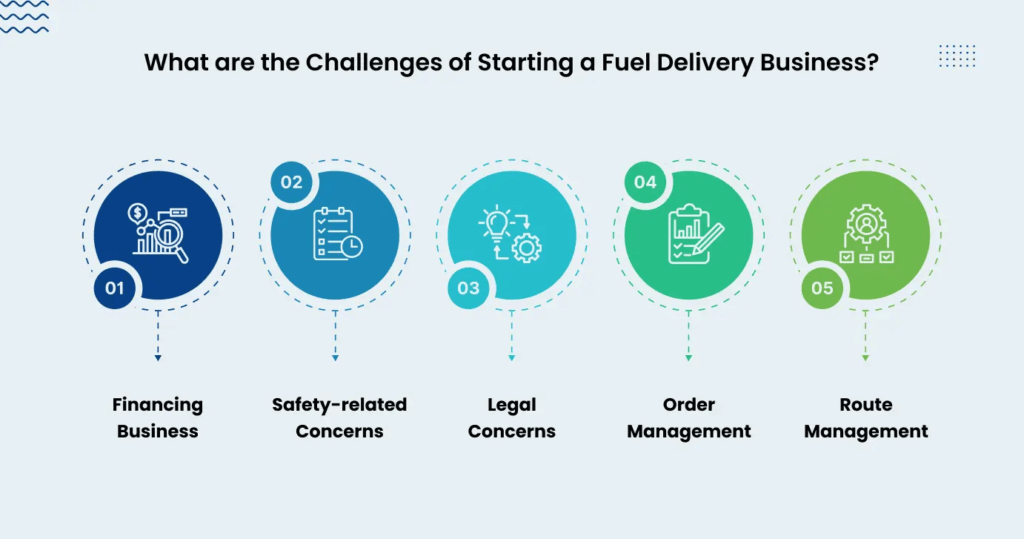
The Blueprint: How to Build a Fuel Delivery Business in 5 Steps
While competing with Jio-bp is daunting, a focused startup can enter this market.
- Step 1: Niche Down to Win.
Don’t try to be everything to everyone. Focus on a specific, underserved niche. This could be a particular industrial zone, the mining sector in a specific state, or providing fuel exclusively for agricultural equipment during harvest season. - Step 2: Obsess Over Compliance First.
This is non-negotiable. Your top priority must be securing all necessary licenses and ensuring your bowsers are 100% PESO-certified. In this industry, safety and regulatory compliance are your license to operate. - Step 3: Build a Lean and Reliable Tech Stack.
You need three core software components: a customer app for ordering, real-time tracking, and digital receipts; a driver app for route navigation, delivery confirmation, and IoT meter integration; and an admin dashboard for managing orders, inventory, invoicing, and analytics.
At the MVP stage, resist the temptation to over-engineer. A white-label fuel delivery app solution can get you to market in weeks rather than months, allowing you to validate your niche before committing to full custom development. Focus entirely on uptime reliability — a single failed delivery due to a software glitch can cost you a client relationship that took months to build. - Step 4: Secure Your Supply Chain.
Your business is only as reliable as your fuel source. Forge a strong partnership with a trusted local dealer of a major Oil Marketing Company (OMC) to ensure a consistent and high-quality supply. - Step 5: Sell Trust, Not Just Fuel.
In the B2B space, you are selling to procurement managers, operations heads, and CFOs — people who need accountability, documentation, and zero-surprise billing. Your entire sales and marketing approach should lead with three things: theft prevention (show them what pilferage is actually costing them), fuel quality guarantee (explain what adulteration means for their machinery lifecycle), and digital audit trails (show them a sample invoice and dashboard report on the first sales call).
Collect testimonials from your first 3–5 clients and make them central to your sales collateral. A reference call from a happy construction site manager is worth more than any digital ad campaign at this stage.
Future Outlook & Expansion Plans
India’s on-demand fuel delivery market is still in its early innings. The country consumes approximately 85–90 million metric tonnes of diesel annually, with the vast majority powering industrial, agricultural, and commercial operations rather than personal vehicles. Even capturing 1–2% of addressable industrial diesel through doorstep delivery represents a multi-thousand-crore annual opportunity. Fuel4U currently dominates this space, operating across 20+ states with 1,400+ active delivery sites, but the market scale is large enough for focused regional operators to build highly profitable businesses alongside the market leader.
Fuel4U is positioned as the launchpad for Jio-bp’s ambition to dominate the “Energy-as-a-Service” (EaaS) market. The following expansion areas are where the model is expected to evolve:
- Mobile EV Charging: The most anticipated expansion. Deploying mobile charging vans that can rescue stranded EVs or provide on-site charging for corporate EV fleets represents a massive adjacent market — and one where Fuel4U’s operational model (dispatch, track, deliver, invoice) translates almost perfectly.
- Battery Swapping as a Service: The same on-demand logistics model can be adapted to create a mobile battery swapping network for India’s booming electric 2- and 3-wheeler market — a segment that is growing at tens of millions of units annually.
- Integrated Fleet Management: The platform is perfectly positioned to evolve into a one-stop solution for fleet owners, bundling fuel, lubricants, telematics, maintenance scheduling, and even vehicle supplies through JioMart — transforming Fuel4U from a fuel vendor into an indispensable operations partner.
- Expansion into Alternative Fuels: As India’s energy mix evolves, the Fuel4U distribution network could be extended to deliver biofuels, CNG in portable form, and eventually green hydrogen — future-proofing the business model against the long-term decline of diesel.
- Pan-India Coverage via Partner Network: Through its entrepreneurship/franchise program, Fuel4U continues to expand into Tier 2 and Tier 3 cities and remote industrial zones — areas that traditional fuel suppliers have always underserved and that represent significant untapped volume.
4. Expanding Reach and Accessibility:
- Pan-India Delivery: Fuel4U aims to provide fuel delivery services across India, catering to a wide range of businesses.
- Mobile Dispensing Units (MDUs) and Smart Fuel Containers: They utilize specialized equipment for efficient and safe fuel delivery.
Conclusion: The Blueprint for a Fuel Delivery Empire
The Fuel4U business model is a formidable blueprint for the future of industrial services. It demonstrates that by identifying and solving the deep-seated inefficiencies of a traditional industry, a hybrid model combining heavy assets with a superior digital interface can create an unshakeable competitive moat. It masterfully leverages the core strengths of its parent companies—bp’s industrial expertise and Jio’s digital dominance—to deliver a service built on the non-negotiable pillars of trust, safety, and efficiency.
For entrepreneurs and industry leaders, Fuel4U provides the ultimate lesson: the next great disruption may not be in creating a new consumer habit, but in digitizing and perfecting the essential services that power our economy.
Frequently Asked Questions (FAQ)
Absolutely. The service is fully approved by the Indian government, and Fuel4U exclusively uses PESO-certified Mobile Dispensing Units (MDUs) and Smart Fuel Containers that meet the highest safety and regulatory standards.
The ideal customer is any business that consumes diesel in bulk for static or off-road equipment — construction companies, manufacturing plants, logistics hubs, telecom tower operators, hospitals, data centres, and large residential or commercial complexes for their power generators.
The fuel price is set at the retail selling price (RSP) of the nearest Jio-bp station — so the fuel itself costs the same. A nominal delivery fee may apply based on distance and order size. Most businesses find the service highly cost-effective once they factor in the complete elimination of fuel theft (typically 5–10% of volumes), spillage loss, and machinery downtime from manual fueling trips.
As per government regulations, Fuel4U delivers diesel exclusively to non-transport assets — generators, construction equipment, agricultural machinery, and industrial equipment. The service is not designed for personal passenger vehicles.
Fuel4U offers two distinct delivery formats for different operational needs. Mobile Dispensing Units (MDUs) are large, truck-mounted dispensing systems — ideal for high-volume sites like construction projects, industrial campuses, and logistics hubs that require frequent, large refuelling. Smart Fuel Containers (HDPE SFCs) are Jio-bp’s patented, tamper-proof portable containers — better suited for smaller volumes, remote sites, or situations where a full MDU is logistically impractical. Both delivery formats are PESO-compliant and IoT-monitored for quantity and quality assurance.
Every Fuel4U delivery uses IoT-calibrated dispensing meters that digitally log the exact litres delivered, time, location, and delivery agent — creating an immutable digital record for every transaction. This data is instantly available in the client’s dashboard and reflected in the digital invoice. The vertical supply chain — where Jio-bp controls the fuel from its own terminals to the customer’s machinery — means there is no third-party handling point where adulteration could occur. This end-to-end accountability is one of the most compelling reasons B2B clients switch from traditional suppliers.