
 Himanshu Patel
Why B2C or B2B Business Models needed?
How to plan to start a business? – Yes.
Decided which product to sell and which audience to target? – Yes.
It brings another question to the table, that’s- which type of your business is? – B2C or B2B Business Models.
The answer to this question helps entrepreneurs make vital business decisions. We will make it easy for you by walking you through a complete breakdown of both models, their differences, and how technology, especially mobile app development and eCommerce platforms, plays a key role in each.
What are the B2B business models?
B2B model involves one business selling products/services to other businesses. It’s like commercial transactions occurring between two or more organizations, like a manufacturer, supplier, wholesaler, or retailer. Here, customers are businesses themselves that want to purchase products/services from B2B sellers.
Some of the successful B2B business models
- Microsoft
One of the leading IT players ranked as the 20th top global B2B business founded in 1975. The organization has made a valuable contribution to the world
selling the best technology solutions such as Microsoft Azure, Microsoft Office, Microsoft Advertising, and others to businesses.
- MailChimp
The popularly known marketing automation platform helped millions of businesses to connect and engage the target audience. Startups and SMBs to large enterprises are embracing the incredible tool for better executing the marketing campaigns. The company has made it easy for businesses of varied sizes and types to create emails that fit well with the business purpose.
- Salesforce
It provides the best CRM solution for businesses to manage customer data, customer activities, and customer preferences. It allows business tycoons to organize sales processes, automate repetitive tasks, and provide rich insights under the hood.
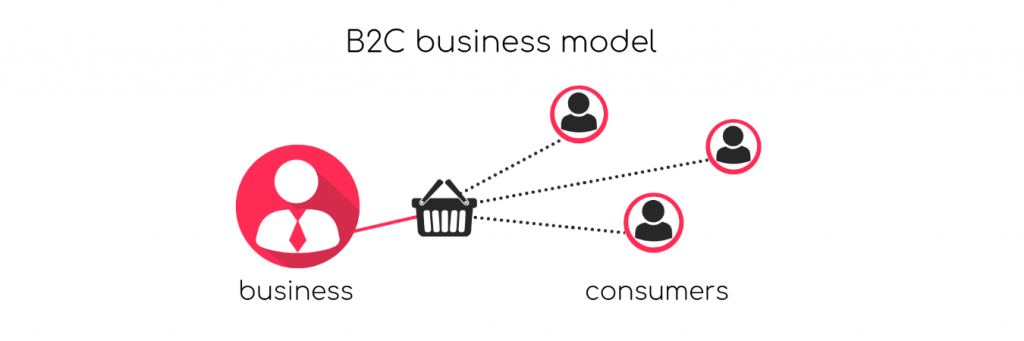
What is the B2C Business Model?
B2C businesses depend heavily on fast, intuitive experiences. Today, most B2C transactions happen through mobile apps, from food delivery and grocery to fashion and travel booking. Whether you are building a B2C startup or scaling an existing store, the right eCommerce platform and UI/UX design are what set you apart.
Read More: Top Best Ecommerce App Development Companies
Some of the successful B2C Business Models
- Amazon
The Ecommerce giant has made its debut as the leading brand that’s selling different types of products (Nearly 353 million) to its millions of customers worldwide. The popularity of the Amazon B2C model has grown to the level that people search more on Amazon for products rather than on Google.
The successful social media channel has provided a platform for people to connect with their friends, access information, and share special moments with zero restrictions. Facebook is the best marketplace to promote B2C Products/Services and allow businesses to execute marketing campaigns and achieve impressive results.
- Airbnb
The well-known example of the B2C model in the travel industry provides a platform that has allowed businesses to list millions of accommodations, rental rooms, flats, and other trip itineraries. The network of suppliers provides all these things to the customers.
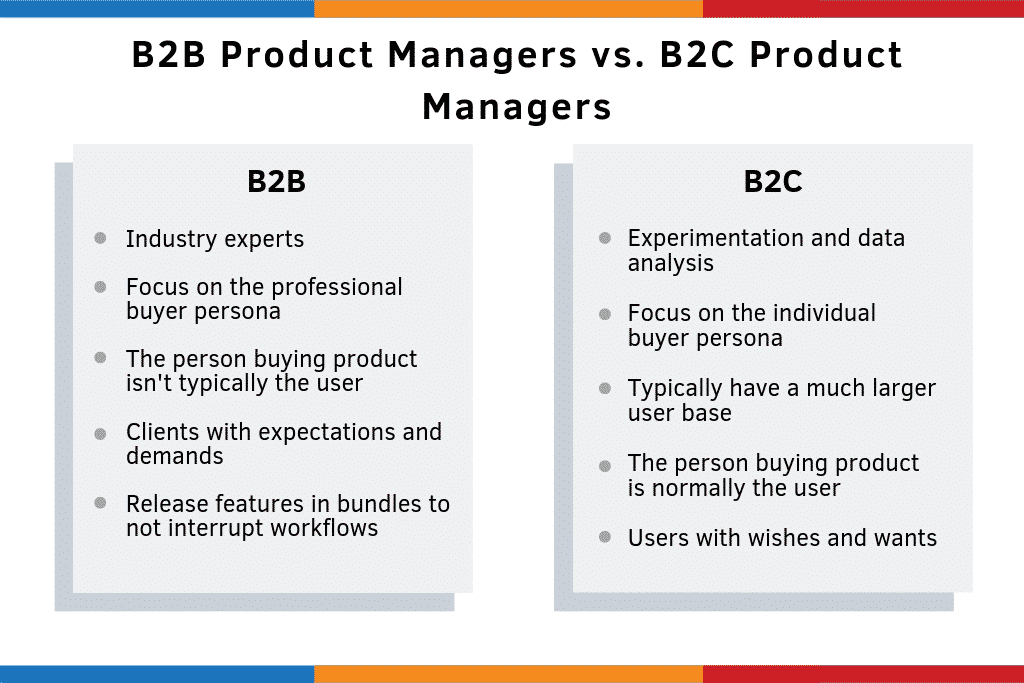
How is the B2C model Different from the B2B model?
Still, unclear or confused with differences between B2C and B2B models. Here are the key parameters that help you understand the differences between the two.
Parties involved in buying
B2C target users utilize the purchased products/services for themselves and not for future production or sales purposes. B2B customers are of varied types that purchase products/services for business purposes or internal processes.
Read more : 10 Types Of Ecommerce Fraud That Businesses Should Be Aware Of
Content context- emotional or rational?
The marketing channels are the same for both B2B and B2C customers, but there’s a wide difference between the marketing tactics employed. For instance, advertising on a mix of traditional and digital media like- TV, radio, and online magazine would work for B2C customers, but B2B customers’ preferences are different. It makes crucial to market them differently.
The marketing content sent to the B2C customers is emotional and entertaining at the same time, which influences the purchase decisions. For B2B customers, the content should be more rational and logical to convert them.
Buying decision lifecycle- longer or shorter?
The decision-making lifecycle is longer in the B2C model because of the different types of business persona involved in decision-making while dealing with a single enterprise. The more is merrier, but not in this case because a large number of people involved in the decision-making, which makes it complex. In the B2C model, the decision-making is plain-sailing because it’s a game of emotions.
Sales speed creates a difference
In the B2C model, the customers want to purchase the products as early as possible, which enables transactions at speed. On the other hand, in the B2B business model, with multiple people or departments involved in the purchase decision, the final purchase takes time, and thus, transaction completion takes time from weeks to months.
Customer relationships
The B2B market size is smaller as compared to the B2C market. That’s why B2B businesses build and strengthen their relationships with B2B customers. It’s difficult to generate leads, so they nurture relationships to improve loyalty. The B2C market despite its large market size finds nurturing customer relationships a hard nut to crack. The B2C customers are less often show patronage to one brand.
ROI that matters
The B2C customers purchase to meet their needs or luxury, which changes frequently and won’t bring huge profits to the B2B businesses. On the flip side, B2B customers buy technology solutions or services to optimize the existing operations, which, in turn, increase the businesses’ ROI.
Read More: Types of Ecommerce Business Models That Work In 2022
The Role of Technology in B2B vs B2C
One of the biggest differentiators today is how technology powers each business model. The right combination of mobile apps, eCommerce platforms, UI/UX design, and payment systems determines whether your business scales successfully.
1. Mobile App Development
B2C apps (food delivery, grocery, taxi) focus on simple UI/UX, push notifications, and fast checkout. B2B apps need dashboards, inventory management, and deep API integrations. NectarBits builds both — explore mobile app services.
2. eCommerce Platforms
B2C businesses use Shopify or WooCommerce for quick setup. B2B needs custom platforms with quote requests, bulk pricing, and account management built in.
3. UI/UX Design
B2C platforms need visually engaging, conversion-focused designs that reduce friction. B2B platforms require clean, functional dashboards that prioritize workflow efficiency. See our UI/UX design services.
4. Payment Gateways
B2C uses Apple Pay, Stripe, and Razorpay for one-click checkout. B2B requires invoice-based payment, net-30 terms, and support for bulk transactions and multi-currency support.
5. Technology Stack
B2C apps need fast, scalable frontends, built with React Native or Flutter. B2B systems need robust backends with enterprise-grade security and deep API integrations.
6. On-Demand Apps
Food delivery, grocery, and service apps are prime B2C examples. B2B on-demand apps handle logistics, procurement, and enterprise workflows at scale. View our on-demand app solutions.
Which is better and when? – B2B Vs. B2C
Declaring the winner between the two or giving credence to one model is impossible because none of the models are inherently better. The comparison is done based on the business goals, infrastructure, and niche. We will understand it with the example of Ecommerce stores.
Product type
When the company is involved in the massive products manufacturing and ships products in bulk, then the B2C model is the right selection. Such businesses require warehouses or opt for dropshipping and handling the shipping operations. The profits are optimal, and the businesses can strengthen relationships with customers. When the company creates and sells products in small batches, then the B2C model is the right choice. The businesses enjoy high profits which are accompanied by high inventory turnover, that’s critical to handle.
Pricing
B2C businesses have a single tier of pricing for all the customers, which is minutely affected by the variety of discounts and membership that customers have. On the other hand, the B2B business model involves asking for quotes, wherein there is a large variation in the payment is observed.
Checkout
In both B2C & B2B models, the steps on the checkout page are nearly the same. However, in the B2C model, the number of steps is kept limited to reduce the cart abandonment rate. On the other hand, in the B2B model, there are some additional steps including- multiple shipping addresses, auto-reorder points, and others.
Customer service
The B2C companies have a customer support team to better handle and respond to customer queries. In the B2B business models, the new account managers are employed to acquire new customers and communicate with them to increase user retention.
Website structure
B2C businesses build appealing websites with continuous upgrades to keep up with evolving market conditions. The B2B businesses build functional dashboards to easily access products and manage accounts. NectarBits specialises in both, from Shopify development to fully custom web app development.
Quick B2B vs B2C Comparison Table
Here is a quick side-by-side comparison to help you identify which model fits your business best:
| Parameter | B2B | B2C |
| Target Audience | Businesses & organizations | Individual consumers |
| Decision Cycle | Long — weeks to months | Short- minutes to hours |
| Content Style | Rational, data-driven | Emotional, engaging |
| Pricing Model | Custom quotes & negotiated | Fixed price with discounts |
| Relationship Focus | High — account managers | Medium- support teams |
| App Type | Dashboard & integrations | UX-first, simple flows |
| eCommerce Platform | Custom / enterprise | Shopify, WooCommerce |
| Payment Methods | Invoices, net-30 terms | Apple Pay, UPI, cards |
| Sales Volume | Low volume, high value | High volume, lower value |
Planning to Build a B2B or B2C Platform? Start with an MVP
Before committing significant time and budget to full-scale development, smart businesses validate their idea with an MVP (Minimum Viable Product).
An MVP is not just a “basic version” of your product—it’s a strategic approach to:
- Test your business model with real users
- Identify what actually works (and what doesn’t)
- Reduce development risks and unnecessary costs
- Gather actionable feedback before scaling
Whether you’re building a B2B platform or a B2C app, starting lean allows you to move faster and make data-driven decisions instead of assumptions.
A Proven 4-Step MVP Approach
1. Define Core Features
Focus only on the essential functionalities that solve your users’ primary problem. Avoid feature overload in the early stage.
2. Build MVP Quickly
Develop a functional, user-ready version using agile methodologies to reduce time-to-market.
3. Test with Real Users
Launch to a targeted audience, track behavior, and collect feedback to validate your idea.
4. Scale Based on Insights
Use real data to enhance features, improve UX, and confidently expand into a full-scale platform.
NectarBits has helped startups and enterprises turn early-stage MVPs into scalable digital products. From food delivery apps and multi-vendor eCommerce platforms to SaaS solutions, the focus is always the same—build fast, validate early, and scale smart.
Related Read: Comprehensive Guide to Mobile App Development Costs →
Who wins the tug of war? – B2B or B2C
The answer is none. It’s because both models- B2C & B2B are capable of allowing businesses to upload and sell massive products. Depending on your business and customers’ needs, make the right decision and grow your business while keeping the costs low.
Still, if unsure, feel free to connect with a single-vendor or multi-vendor marketplace development company to get the required assistance and help.
Frequently Asked Questions:
Yes. Many companies operate hybrid models. For example, Amazon sells directly to consumers (B2C) and also provides AWS cloud services to businesses (B2B). Many eCommerce stores also sell both retail and wholesale.
B2B typically has higher per-transaction value and stronger margins per deal. B2C can generate higher volume and faster cash flow but at lower per-order margins. The right model depends on your product and market.
B2C businesses benefit most from on-demand apps with intuitive UI/UX, push notifications, GPS tracking, and seamless payment gateways. Talk to NectarBits to explore your options and get a free estimate.
Shopify and WooCommerce are the most popular choices for B2C eCommerce due to ease of use and strong plugin ecosystems. For custom requirements, NectarBits builds fully tailored solutions. Explore our Shopify development services.
A basic B2C eCommerce platform can be ready in 4–8 weeks. A full custom platform with advanced features typically takes 3–6 months. Starting with an MVP helps reduce time to market significantly.

 Anil Patel