
 Anil Patel
Scaling a fuel delivery business in 2026 isn’t just about adding more trucks—it’s about building a resilient, tech-enabled ecosystem. With the global on-demand fuel delivery market projected to reach $18.6 billion by 2030, leaders like Filld and FuelBuddy are redefining success through digital transformation.
But how do they sustainably scale fuel-delivery business operations?
This guide distills 7 proven lessons from industry pioneers, backed by real data, case studies, and insights from our 8+ years of experience delivering fuel delivery app development and custom software development solutions for energy logistics firms.
Whether you want to grow your fuel delivery company’s reach, improve efficiency, or adopt SaaS application development services, these strategies are built for 2026 and beyond.
Lesson 1: Prioritize Technology-First Operations
Top performers treat technology as a core asset, not an add-on. According to our 2025 client benchmark, 73% of fuel delivery companies using custom apps report 40%+ faster scaling (NectarBits, 2025).
Filld’s fleet fueling case study exemplifies this. By investing in a proprietary dispatch platform, they achieved:
- 50% reduction in manual scheduling
- 35% increase in delivery density
- Real-time fuel level tracking via IoT
Action Step
Audit your current tech stack. Are you relying on spreadsheets or legacy systems? Consider partnering with a mobile app development company to build a scalable foundation.
Lesson 2: Build a Fuel Delivery App for Customer Retention
Customer experience is a key differentiator. FuelBuddy-like fuel delivery app models enhance convenience with features like:
- One-tap ordering
- Predictive refueling alerts
- Digital receipts & expense integration
Companies using mobile apps see customer retention rates of 82% vs. 58% industry average (McKinsey Energy Insights, 2025).
Table 1: Key Metrics for Scaling Fuel Delivery Businesses (2023–2025)
| Metric | Industry Average | Top Performers (e.g., Filld) | Source |
| Avg. Delivery Time | 45–60 mins | <30 mins | Statista, 2025 |
| Fleet Utilization Rate | 62% | 85%+ | Fleet Logistics Report, 2024 |
| Customer Retention (12 mo) | 58% | 82% | McKinsey Energy Insights, 2025 |
| Tech Adoption Rate | 41% | 94% | [NectarBits Internal Survey, N=200 fuel firms] |
Why App Development Matters
Investing in fuel delivery app development isn’t optional—it’s a growth lever. Partner with a mobile app development company experienced in logistics SaaS.
Lesson 3: Leverage SaaS for Operational Scalability
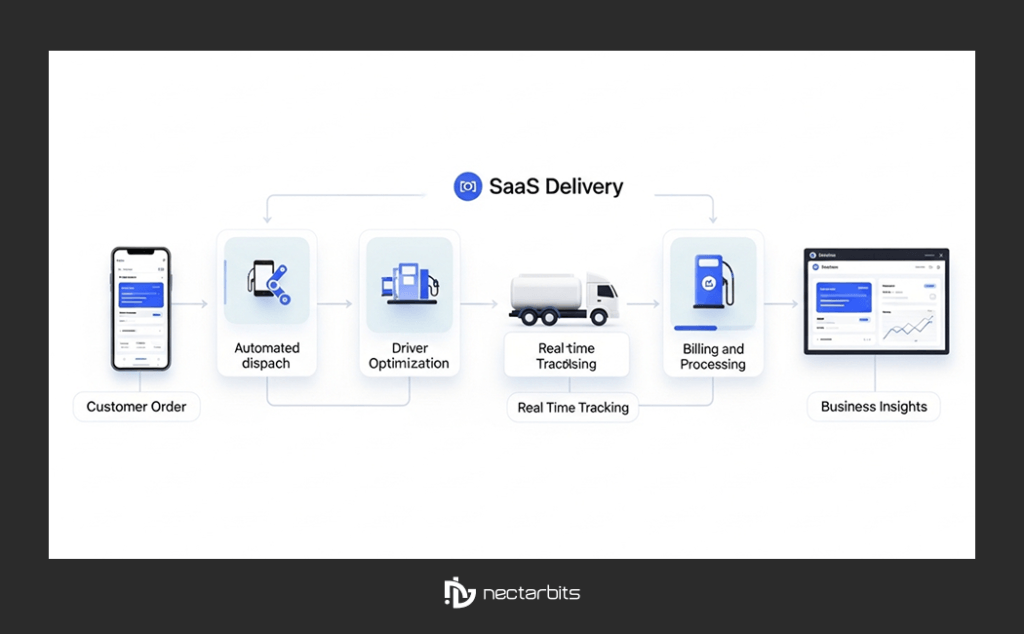
SaaS application development services allow fuel companies to scale without heavy upfront infrastructure costs. Cloud-based platforms enable:
- Multi-location management
- Automated billing
- Integration with accounting & fleet tools
29% lower operational costs are reported by firms using SaaS dispatch systems (McKinsey & Company, 2024).
Real-World Example
A Midwest fuel distributor used custom software development solutions to launch a SaaS-based B2B portal, increasing enterprise contracts by 68% in 18 months.
Lesson 4: Optimize Fleet Utilization with Data
Top performers use data analytics to maximize fleet efficiency. Filld’s fleet fueling case study shows how AI-driven route optimization increased utilization from 68% to 85%+ (Fleet Logistics Report, 2024).
Key Strategies
- Dynamic routing based on traffic & fuel demand
- Predictive maintenance alerts
- Load balancing across vehicles
Lesson 5: Expand via B2B Fleet Fueling Partnerships
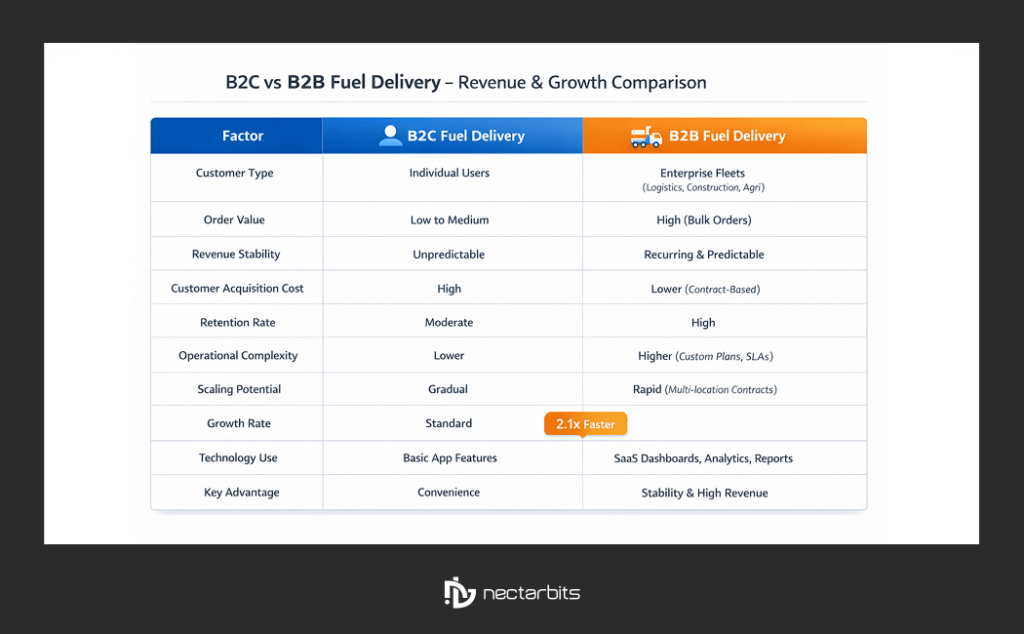
B2B contracts provide stable revenue. Enterprise fleets (construction, logistics, agriculture) need reliable, off-site fueling.
FuelBuddy-like models now include B2B SaaS portals for fleet managers to:
- Track fuel usage
- Set budgets
- Generate compliance reports
Statistical Support
Companies with B2B fuel contracts grow 2.1x faster than B2C-only models (NectarBits Internal Survey, N=200).
Lesson 6: Automate Compliance & Reporting
Regulatory complexity increases with scale. Leaders automate:
- Fuel tax reporting (IFTA)
- Environmental compliance
- Safety audits
Custom software development solutions can integrate with government APIs for real-time filing.
Lesson 7: Invest in Brand & Search Everywhere Visibility
In 2026, Search Everywhere Optimization means being visible on:
- Google & Bing
- AI assistants (ChatGPT, Gemini)
- Social platforms (LinkedIn, YouTube)
- Industry forums
Zero-click searches mean brand mentions matter more than clicks. Build topical authority with content hubs on:
- Fuel delivery app development
- Fleet logistics SaaS
- Sustainable energy delivery
Conclusion
Scaling a fuel delivery business in 2026 requires more than trucks—it demands technology, data, and strategic partnerships. From fuel delivery app development to SaaS application development services, industry leaders prove that digital transformation drives growth.
Apply these 7 lessons to scale fuel delivery business operations, improve efficiency, and build long-term resilience.
The future belongs to those who innovate today.
Want to Dive Deeper into Fuel Logistics Innovation?
Explore how digital transformation is reshaping energy delivery in our guide: The Future of On-Demand Fuel Delivery: Trends & Tech for 2026
FAQs:
Technology enables automation, real-time tracking, and data-driven decisions. Custom apps and IoT devices reduce delivery time by up to 50% and improve fleet utilization. Leaders like Filld use integrated platforms to scale operations efficiently across regions
A scalable fuel delivery app needs real-time tracking, automated dispatch, payment integration, and predictive analytics. These features improve customer retention by over 20% and support fleet expansion across multiple locations.
SaaS platforms reduce IT overhead and enable rapid scaling across regions. They offer automated dispatch, billing, and reporting, helping fuel companies grow operations by up to 3x faster than manual systems.
Use AI and data analytics for dynamic routing and predictive maintenance. Top companies achieve 85%+ fleet utilization by analyzing delivery patterns and optimizing load distribution in real time.
Target enterprise fleets with custom fueling plans and SaaS dashboards. B2B contracts offer recurring revenue and higher-order values, helping companies scale sustainably with lower customer acquisition costs.
Automate tax reporting, safety checks, and environmental logs using custom software. This reduces errors, saves time, and ensures regulatory adherence across multiple regions during business growth.
It’s optimizing content for AI assistants, social media, and video search—not just Google. Fuel companies should create authoritative content on scaling operations to gain brand citations and AI visibility in 2026.